
The Importance of Continuous Learning for Ministry Civil Servants
Gusti Ayu Tita P
27 Juli 2026
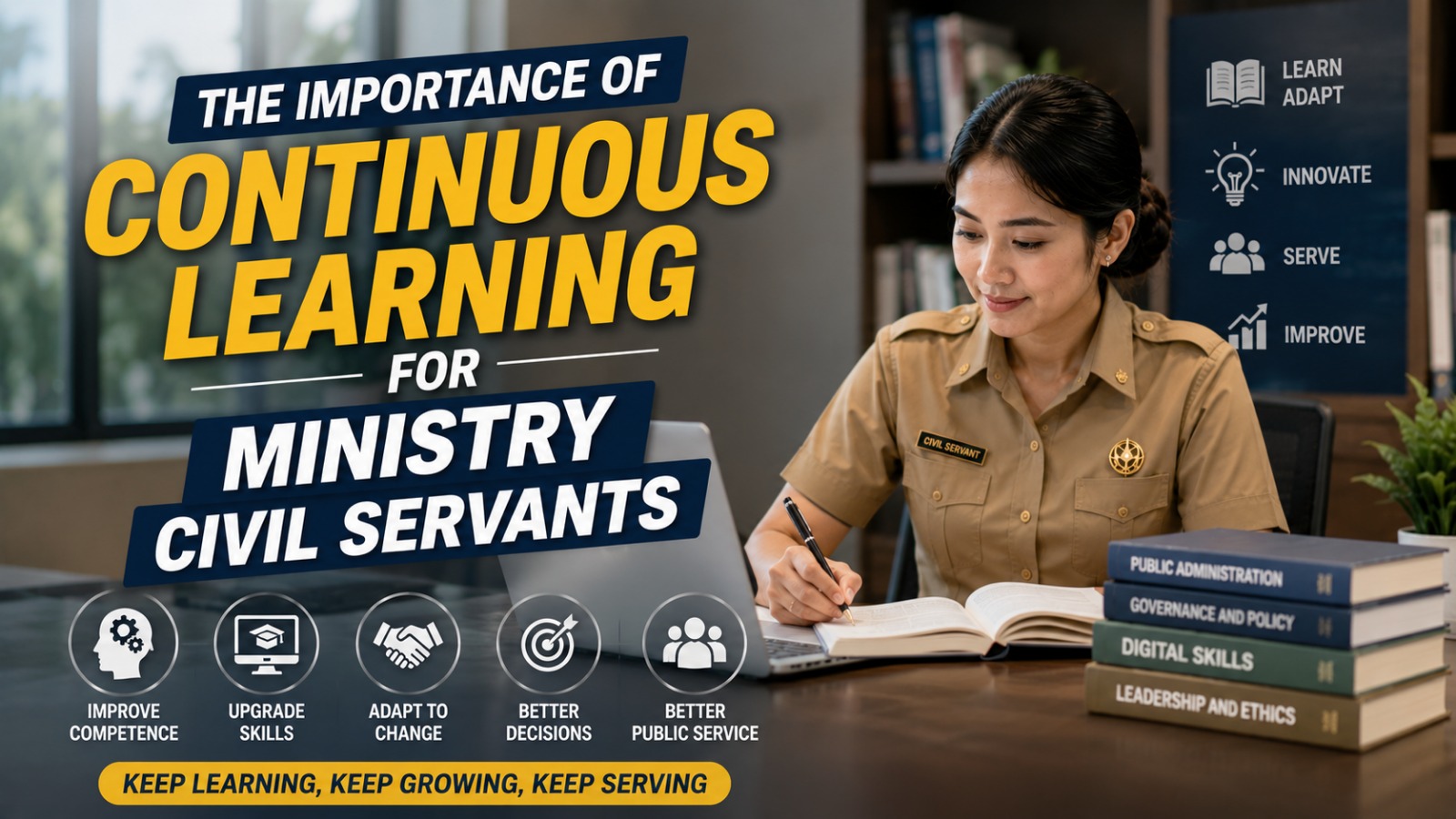
The role of ministry civil servants continues to change as government institutions face new technologies, evolving regulations, and increasingly diverse public needs. Civil servants are expected to perform their duties professionally while adapting to changes in the workplace and society. For this reason, continuous learning is an important part of building a competent and responsive public service workforce.
Continuous learning is not limited to formal education or mandatory training. It can include attending workshops, participating in professional development programs, learning new digital tools, reading updated regulations, sharing knowledge with colleagues, and gaining lessons from daily work experiences. By developing a habit of learning, ministry civil servants can improve their abilities and contribute to more effective government administration and better public services.
UNDERSTANDING CONTINUOUS LEARNING IN THE CIVIL SERVICE
Continuous learning refers to the ongoing process of developing knowledge, skills, and professional attitudes throughout a person's career. For ministry civil servants, this process is important because government work is influenced by changes in policies, technology, organizational priorities, and public expectations. Employees who continue to learn are better prepared to respond to these changes.
Learning can take many forms depending on the needs of each position. Civil servants may participate in formal training, online courses, seminars, mentoring, knowledge-sharing sessions, or independent study. They can also learn by evaluating previous work and applying lessons from real situations. This approach makes professional development a continuous part of everyday work rather than an activity that happens only occasionally.
KEEPING UP WITH CHANGING TECHNOLOGY
Technology has become an important part of modern government administration and public service delivery. Ministry civil servants may use digital platforms for communication, document management, data analysis, reporting, and various administrative processes. As these systems develop, employees need to update their knowledge to remain effective in their roles.
Continuous learning helps civil servants develop the digital skills required to work with new technologies. They can learn how to use relevant applications, understand basic data security practices, and adapt to changes in digital systems. This ability can improve efficiency while supporting the broader digital transformation of government institutions.
IMPROVING PROFESSIONAL COMPETENCE
Every ministry position requires specific knowledge and skills. Continuous learning allows civil servants to strengthen their expertise and keep their professional competencies relevant. As responsibilities become more complex, employees may need to develop new abilities in areas such as policy analysis, administration, communication, project management, or data management.
Improved competence can have a direct effect on work quality. Civil servants who understand their responsibilities and have the right skills are more likely to complete tasks accurately and efficiently. By investing in civil service competence, government institutions can build a workforce that is better prepared to support organizational objectives and public needs.
SUPPORTING BETTER DECISION MAKING
Government decisions can have significant effects on citizens and communities. Civil servants therefore need reliable knowledge and the ability to evaluate information carefully. Continuous learning helps employees understand new regulations, emerging issues, and relevant developments that may influence their work.
Learning also strengthens critical thinking and problem-solving skills. Employees who regularly update their knowledge can consider different perspectives before making recommendations or taking action. This can support more informed decisions and help government institutions develop policies and programs that are better aligned with actual conditions.
ENCOURAGING INNOVATION IN PUBLIC SERVICES
Innovation often begins with a willingness to learn and question existing ways of working. Civil servants who are open to new knowledge may identify opportunities to improve procedures, reduce unnecessary administrative steps, or introduce better ways of delivering services. Continuous learning can therefore create an environment where innovation becomes part of organizational development.
New ideas should still be evaluated carefully and implemented according to applicable regulations. Civil servants can learn from successful practices, research, public feedback, and experiences from other institutions. This approach can encourage public service innovation that focuses on practical improvements and meaningful benefits for citizens.
STRENGTHENING ADAPTABILITY AND RESILIENCE
Government institutions operate in an environment that can change quickly. New policies, unexpected challenges, technological developments, and changing public expectations can require employees to adjust their working methods. Civil servants who are committed to learning are generally better prepared to respond to these changes.
Continuous learning builds adaptability by encouraging employees to remain open to new approaches. It also helps them develop confidence when facing unfamiliar situations. Instead of viewing change only as a challenge, civil servants can see it as an opportunity to improve their skills and contribute to organizational progress.
CONCLUSION
Continuous learning is essential for ministry civil servants who want to remain effective in a rapidly changing government environment. It helps employees strengthen professional competence, improve digital skills, adapt to new challenges, support innovation, and make better decisions. More importantly, continuous learning can help ensure that government services remain relevant to the needs of citizens.
A strong culture of learning requires cooperation between individuals and organizations. Civil servants need to take responsibility for developing their knowledge and skills, while ministries should provide opportunities and support for professional growth. By making continuous learning a consistent part of civil service development, government institutions can build a stronger workforce and deliver more effective, responsive, and trustworthy public services.
About the Author
Gusti Ayu Tita P
Author — STEKOM University
An active author focused on academic issues, educational technology, and human resource development in the campus environment.















