The Importance of Fairness and Justice in Political Leadership
Gusti Ayu Tita P
31 Juli 2026
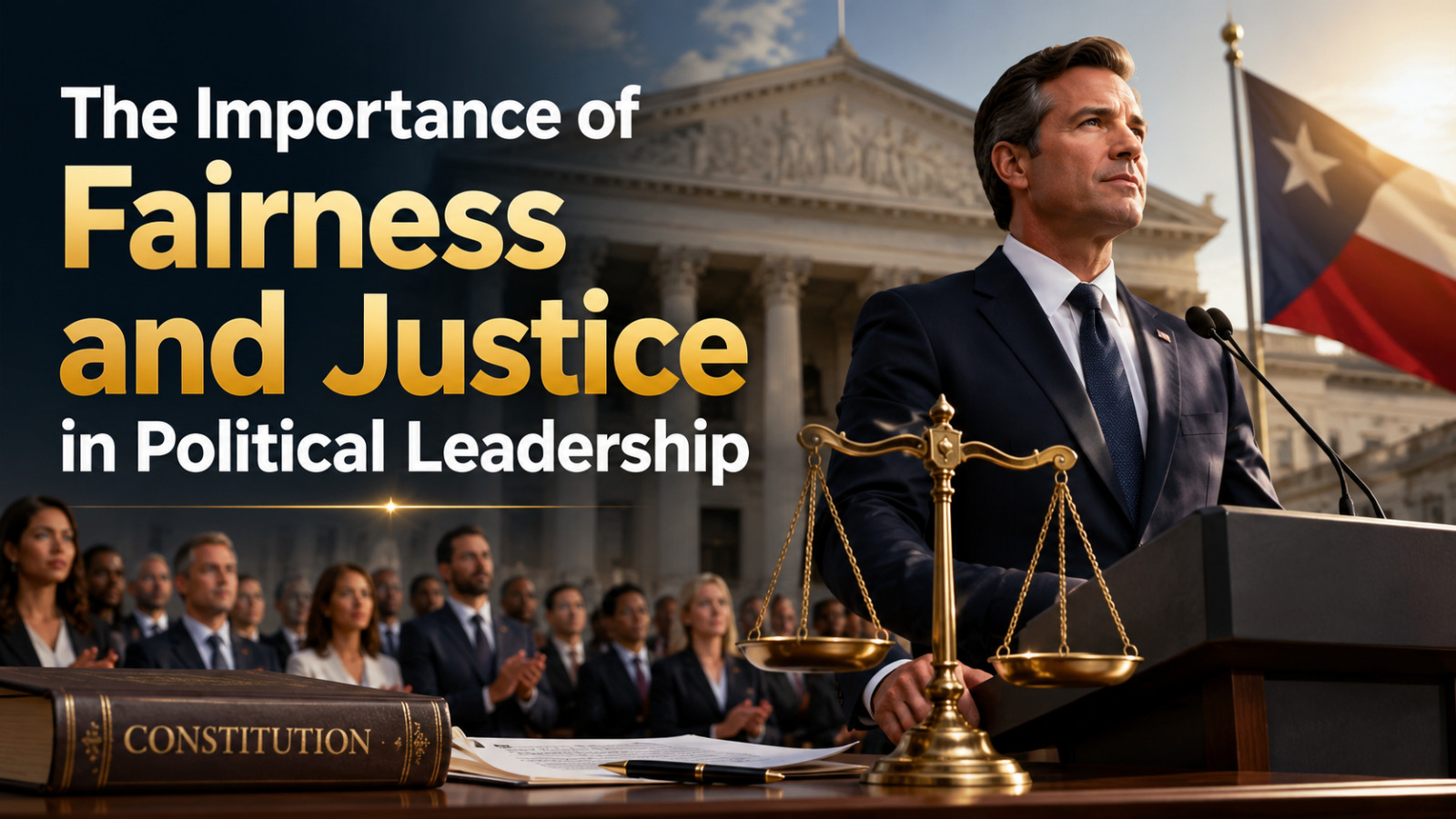
Political leadership plays a crucial role in shaping a nation's future. Leaders are responsible for making decisions that influence the economy, public services, security, education, and the overall well-being of society. Among the many qualities expected from political leaders, fairness and justice stand out as essential values that create trust, stability, and sustainable development. When leaders prioritize these principles, they strengthen democratic institutions and encourage citizens to actively participate in national progress.
UNDERSTANDING FAIRNESS AND JUSTICE IN POLITICAL LEADERSHIP
Fairness means treating every citizen equally without discrimination based on race, religion, gender, social status, or political affiliation. Justice involves making decisions that uphold the law while protecting the rights and dignity of every individual. Together, these principles ensure that government policies benefit society as a whole rather than serving the interests of a select few. Political leaders who embrace fairness and justice create an environment where people believe their voices matter. This trust becomes the foundation for effective governance and long-term national unity.
WHY FAIRNESS BUILDS PUBLIC TRUST
Citizens are more likely to support governments that make impartial and transparent decisions. When public officials distribute resources fairly, provide equal opportunities, and enforce laws consistently, people develop confidence in public institutions. Trust also encourages greater civic participation, including voting, community engagement, and cooperation with government initiatives. A trusted government can respond more effectively to economic challenges and social issues because citizens believe that decisions are made in the public interest. As a result, fairness becomes a key driver of political stability.
THE ROLE OF JUSTICE IN STRENGTHENING DEMOCRACY
Justice ensures that everyone is accountable under the law, including political leaders themselves. Democratic systems thrive when legal institutions remain independent and capable of addressing corruption, abuse of power, and violations of human rights. Fair judicial processes protect citizens from arbitrary decisions while ensuring that public officials are held responsible for their actions. This balance of power prevents authoritarian practices and strengthens democratic values. Consequently, justice helps maintain peace, equality, and respect for constitutional principles.
CHALLENGES TO MAINTAINING FAIRNESS IN POLITICS
Political leaders often face pressure from interest groups, political parties, and influential organizations that seek special treatment. Corruption, favoritism, misinformation, and conflicts of interest can undermine fair decision-making. In highly polarized political environments, leaders may also struggle to balance competing demands from different segments of society. Addressing these challenges requires strong ethical principles, transparent governance, and independent oversight institutions. Continuous public scrutiny and media accountability further help ensure that fairness remains a central value in political leadership.
HOW ETHICAL LEADERS PROMOTE FAIRNESS AND JUSTICE
Ethical leaders prioritize the common good above personal or political gain. They make evidence-based decisions, communicate honestly with citizens, and remain accountable for their actions. Such leaders encourage transparency in government spending, support equal access to education and healthcare, and implement policies that reduce social inequality. They also respect the rule of law and protect the rights of minority groups. By consistently demonstrating integrity, ethical leaders inspire confidence and encourage ethical behavior throughout public institutions.
THE LONG-TERM IMPACT OF FAIR AND JUST POLITICAL LEADERSHIP
Governments that uphold fairness and justice often experience greater political stability, stronger economic growth, and improved social cohesion. Investors are more likely to support countries with transparent legal systems, while citizens enjoy greater confidence in public services and democratic institutions. Fair governance also reduces social tensions by ensuring that all communities receive equal opportunities for development. Over time, these positive outcomes contribute to sustainable national progress and a higher quality of life. Ultimately, fairness and justice are not merely ethical ideals—they are practical foundations for successful political leadership.
CONCLUSION
Fairness and justice are indispensable qualities for effective political leadership. They strengthen public trust, reinforce democratic institutions, promote accountability, and support sustainable national development. Although political leaders face numerous challenges, maintaining these principles helps create governments that genuinely serve the public interest. By embracing ethical leadership, transparency, and equal treatment under the law, political leaders can build societies that are more inclusive, stable, and prosperous for future generations.
About the Author
Gusti Ayu Tita P
Author — STEKOM University
An active author focused on academic issues, educational technology, and human resource development in the campus environment.