The Importance Of Food Quality In Supporting The Success Of The MBG Program
Gusti Ayu Tita P
20 Agustus 2026
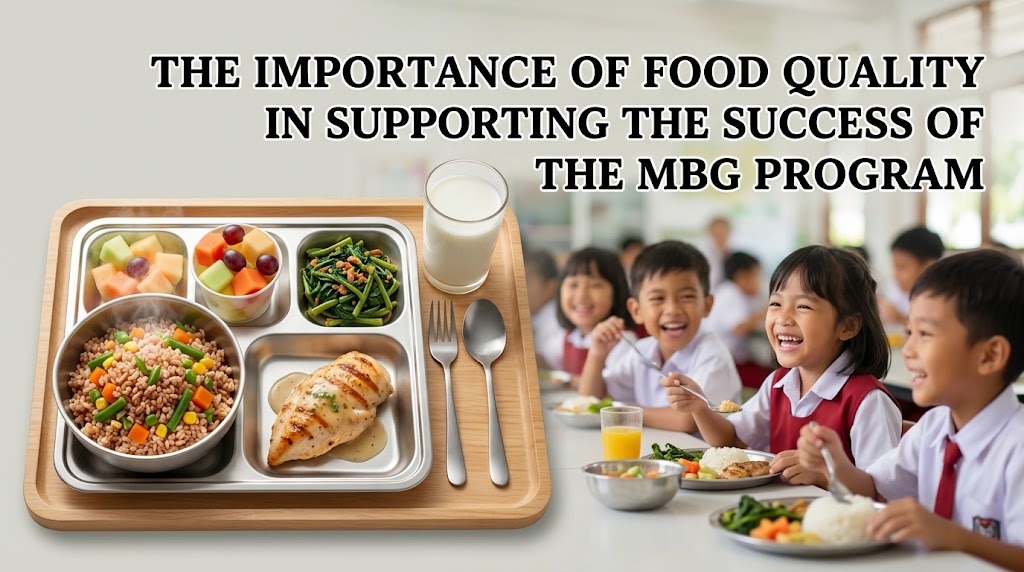
Makan Bergizi Gratis (MBG) is a government program that aims to improve access to nutritious meals for targeted beneficiaries, including children and students. The success of this program does not depend only on how many meals are distributed, but also on the quality, safety, and nutritional value of the food provided. A meal that is available but lacks important nutrients may not provide the expected benefits for children's growth and wellbeing. Therefore, maintaining food quality is an essential part of effective MBG implementation. High-quality meals can help ensure that the program delivers meaningful nutritional benefits to Indonesia's younger generation.
UNDERSTANDING FOOD QUALITY IN THE MBG PROGRAM
Food quality refers to several important aspects, including nutritional value, freshness, safety, hygiene, taste, and suitability for consumers. In the MBG program, these aspects need to be considered from the selection of ingredients until meals are served to beneficiaries. Food should provide appropriate nutrients while remaining safe for consumption. Quality should therefore be viewed as a complete process rather than simply the appearance of a meal.
The quality of food can influence whether children actually consume the meals provided. If food is nutritious but poorly prepared or does not meet reasonable taste and texture expectations, students may leave it uneaten. This can increase food waste and reduce the nutritional benefits of the program. Maintaining quality at every stage can help ensure that nutritious food is both safe and accepted by children.
FOOD QUALITY AND CHILD NUTRITION
Children need adequate energy, protein, vitamins, minerals, healthy fats, and dietary fiber to support growth and daily activities. High-quality MBG meals should therefore contain a balanced combination of different food groups. Staple foods can provide energy, while protein sources support tissue development and maintenance. Vegetables and fruits can contribute vitamins, minerals, and fiber.
Nutritional needs differ according to age, development, activity level, and other individual factors. For this reason, menu planning should consider the nutritional requirements of the intended beneficiaries. Dietary diversity can help provide a wider range of nutrients than relying on a limited number of foods. Regular nutritional evaluation can help maintain the quality and suitability of MBG menus.
FOOD SAFETY AS A TOP PRIORITY
Food quality cannot be separated from food safety. Ingredients must be obtained from reliable sources and handled appropriately during preparation, storage, transportation, and serving. Poor hygiene or improper food handling can increase the risk of contamination and foodborne illness. This is especially important when meals are prepared and distributed on a large scale.
Food handlers need appropriate training in personal hygiene, sanitation, safe food preparation, and proper storage. Kitchen facilities should also support safe preparation and cleaning practices. Monitoring should continue throughout the supply chain rather than only at the final serving stage. Strong food safety procedures can protect children while strengthening public confidence in the MBG program.
THE IMPORTANCE OF FRESH INGREDIENTS
Using fresh and suitable ingredients can contribute to both nutritional quality and meal acceptance. Fresh vegetables, fruits, protein sources, and other ingredients can provide valuable nutrients when properly stored and prepared. Ingredient quality should be checked before food preparation begins. Damaged, spoiled, or unsafe ingredients should not be used.
Proper storage is equally important because food can deteriorate when exposed to unsuitable temperatures or conditions. Perishable ingredients require appropriate handling to maintain their safety and quality. Procurement systems should therefore consider both freshness and reliable delivery. Good ingredient management can reduce food losses while helping maintain the quality of meals.
CREATING BALANCED AND VARIED MENUS
A successful MBG menu should provide balanced nutrition and sufficient variety. Children should have opportunities to consume different sources of protein, vegetables, fruits, and staple foods. Menu rotation can prevent meals from becoming repetitive and may increase student interest. Variety can also help introduce children to a broader range of nutritious foods.
Menus should consider local food availability and cultural preferences while maintaining nutritional standards. Foods commonly consumed in a particular region may be easier for students to accept. However, preferences should not become the only basis for menu decisions. Nutrition, safety, diversity, and acceptability need to be considered together.
FOOD TASTE AND STUDENT ACCEPTANCE
Nutritional value alone does not guarantee that children will eat their meals. Taste, aroma, texture, appearance, and familiarity can influence food acceptance. If students frequently leave meals unfinished, the program may not achieve its intended nutritional impact. Understanding student preferences can therefore help improve menu planning.
Schools can collect simple feedback about which foods students enjoy and which foods are commonly left uneaten. This information can be shared with menu planners and food providers. However, improving taste should not involve excessive sugar, salt, or unhealthy fats. The goal should be to create nutritious meals that are also appealing and appropriate for children.
MAINTAINING HYGIENE DURING PREPARATION
Hygiene is a fundamental part of food quality. Food preparation areas should be clean, organized, and properly maintained. Food handlers should wash their hands appropriately and follow safe practices when handling ingredients. Equipment and surfaces also need regular cleaning to reduce contamination risks.
Hygiene procedures should be applied consistently rather than only during inspections. Supervisors can conduct routine checks and provide additional training when problems are identified. Clear hygiene standards can help create consistent practices across different food preparation facilities. Strong sanitation procedures are essential for protecting children's health.
SAFE STORAGE AND DISTRIBUTION
Food quality can decline if meals are stored or transported under inappropriate conditions. The MBG supply chain therefore needs suitable storage, packaging, transportation, and serving procedures. Meals should be protected from contamination during transportation. Delivery schedules should also be planned to maintain food quality and safety.
Different regions may face different logistical challenges. Remote locations may require additional planning because transportation distances and infrastructure can vary. Local preparation facilities may help reduce unnecessary transportation when appropriate. Efficient and safe distribution ensures that nutritious meals reach students in suitable condition.
REDUCING FOOD WASTE
Food waste can reduce the efficiency of a large-scale meal program. Uneaten food may occur because of excessive portions, unfamiliar ingredients, poor taste, or meals that do not match student preferences. Monitoring food waste can provide useful information about meal acceptance and program efficiency. Reducing waste can also help make better use of available resources.
Solutions should focus on improving menu planning rather than simply reducing portions without considering nutritional needs. Schools can identify commonly wasted foods and provide feedback to program managers. Menu variety and appropriate portion planning can help increase consumption. At the same time, food safety and nutritional standards should never be sacrificed merely to reduce costs or waste.
SUPPORTING LOCAL FOOD PRODUCERS
Food quality can also be connected to the strength of local supply chains. Indonesia has diverse sources of agricultural, fisheries, livestock, and other food products that may contribute to nutritious MBG menus. When appropriate local suppliers are involved, the program can potentially support farmers, fishers, and food producers. Local sourcing may also make certain ingredients easier to adapt to regional food preferences.
However, local sourcing must maintain clear safety and quality requirements. Suppliers should be evaluated based on their ability to provide ingredients that are safe, suitable, and consistent. Strong cooperation between food producers and program managers can improve supply reliability. This can create a connection between child nutrition and local economic development.
MONITORING AND EVALUATING FOOD QUALITY
Continuous monitoring is necessary to maintain food quality across a large program. Evaluation can examine nutritional composition, ingredient quality, food safety, hygiene, student acceptance, and food waste. Monitoring should cover the entire process from procurement to meal distribution. Reliable data can help identify problems before they become widespread.
Feedback from students, teachers, parents, food handlers, and nutrition professionals can provide valuable information. Program managers can use this information to improve menus, procedures, and distribution systems. Regular evaluation also strengthens accountability. Continuous improvement can help ensure that food quality remains a central priority as the MBG program develops.
CONCLUSION
Food quality is one of the most important factors supporting the success of the MBG program. Nutritious meals must also be safe, fresh, hygienic, appealing, and suitable for children's needs. Strong food quality management can improve the nutritional benefits of the program while reducing food safety risks and unnecessary waste. Success requires cooperation among nutrition professionals, food handlers, schools, suppliers, families, communities, and program managers. With consistent quality control and continuous evaluation, MBG can provide safer and more nutritious meals while supporting the healthy growth and development of Indonesia's younger generation.
About the Author
Gusti Ayu Tita P
Author — STEKOM University
An active author focused on academic issues, educational technology, and human resource development in the campus environment.