
The Importance of Mutual Respect in a Big Family
Gusti Ayu Tita P
8 September 2026
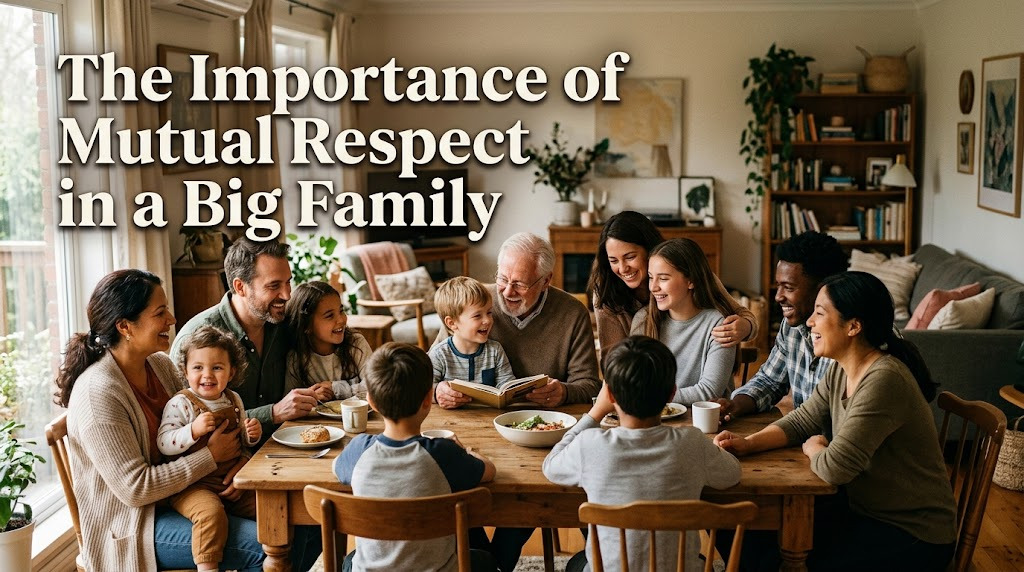
Mutual respect is an important foundation for maintaining healthy relationships in a big family. Family members may have different ages, personalities, opinions, habits, and life experiences. These differences are natural, but they can sometimes lead to disagreements or misunderstandings. Respect helps family members accept these differences while maintaining positive relationships.
Respect is not only shown through words. It can also be demonstrated by listening to others, considering their feelings, respecting personal boundaries, and avoiding behavior that makes someone uncomfortable. When mutual respect becomes part of everyday family life, it can create a more peaceful, supportive, and harmonious environment.
RESPECT DIFFERENT OPINIONS
Different opinions are common in a big family because every member has their own experiences and perspectives. Family members may have different ideas about education, work, daily routines, or important decisions. Mutual respect allows everyone to express their opinions without feeling attacked or ignored. Disagreement does not necessarily mean that family relationships have to become distant.
Family members should listen carefully before responding to an opinion they do not agree with. They can explain their own perspective politely instead of forcing others to think the same way. Sometimes, finding a compromise is a better solution than trying to prove who is right. This approach can reduce tension and strengthen family relationships.
BE CAREFUL WITH WORDS AND BEHAVIOR
Words and behavior can have a strong influence on relationships within a family. Comments that seem harmless to one person may make another person feel uncomfortable or unappreciated. Therefore, family members should think carefully before speaking, especially when discussing sensitive subjects. Using respectful language can create better family communication.
Behavior is equally important. Interrupting someone, ignoring their concerns, or making decisions for them without discussion can weaken trust. Showing appreciation, listening attentively, and responding calmly are simple ways to demonstrate respect. Small positive actions can gradually create a more comfortable family environment.
RESPECT PERSONAL SPACE AND BOUNDARIES
Being part of a close family does not mean that everyone has unlimited access to another person's personal life. Every family member may need privacy, personal space, or time to make their own decisions. Respecting these needs can help create healthier family relationships. Personal boundaries should be treated as part of maintaining mutual trust.
Family members should communicate their needs clearly when they require privacy or personal space. Others should make a reasonable effort to respect those boundaries. At the same time, boundaries can be discussed when they affect shared family responsibilities. This balance allows family members to remain close while still respecting individual needs.
RESPECT DIFFERENT AGES AND GENERATIONS
A big family may include several generations with different experiences and perspectives. Older relatives may have valuable knowledge from their life experiences, while younger members may bring new ideas and perspectives. Both can learn from one another when communication is based on mutual respect. Age should not automatically determine whose opinion is more valuable.
Communication between generations may require patience and understanding. Younger family members can listen to advice while still expressing their own opinions respectfully. Older family members can also give younger relatives opportunities to make appropriate decisions. This two-way respect can strengthen relationships between different generations.
SOLVE PROBLEMS WITH A MATURE ATTITUDE
Disagreements can happen even in families with strong relationships. When problems occur, family members should focus on understanding the situation instead of immediately blaming one another. Speaking calmly and allowing everyone to explain their perspective can make problem-solving more effective. A mature approach can help protect family harmony.
Apologizing when necessary is also an important part of resolving conflicts. Family members can acknowledge mistakes and work together to prevent similar problems in the future. Not every disagreement needs to end with someone being declared right or wrong. Finding a reasonable solution while maintaining respect should be the main goal.
CONCLUSION
Mutual respect is essential for maintaining a healthy and harmonious big family. Respect can be shown by accepting different opinions, choosing words carefully, respecting personal boundaries, appreciating different generations, and handling conflicts maturely. These habits can strengthen trust and make family members feel valued. When everyone contributes to a respectful environment, family relationships can become stronger despite differences.
About the Author
Gusti Ayu Tita P
Author — STEKOM University
An active author focused on academic issues, educational technology, and human resource development in the campus environment.