
The Importance Of Nationalism In Maintaining National Unity
Gusti Ayu Tita P
4 Agustus 2026
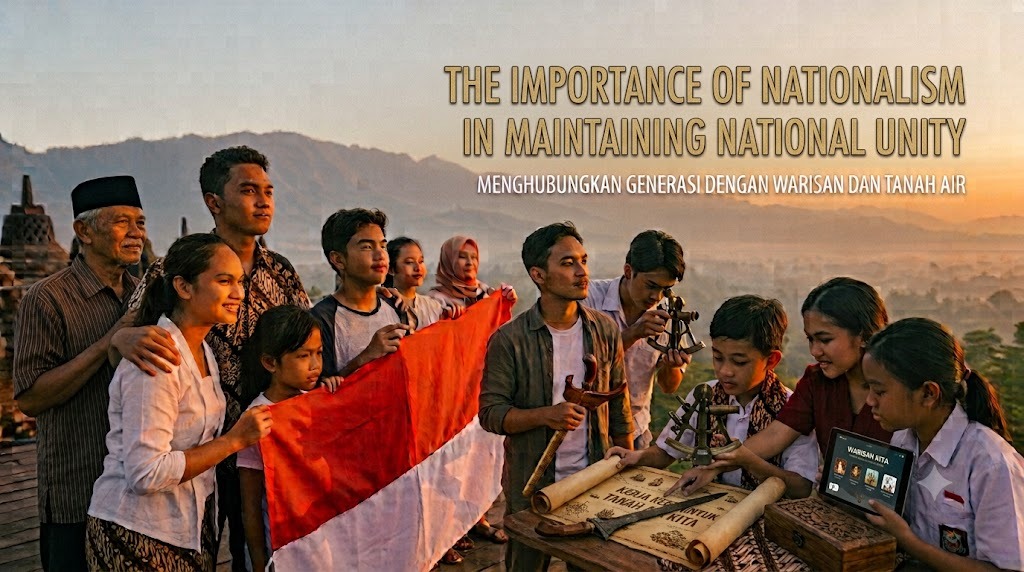
Nationalism is an important value in maintaining national unity. It creates a sense of belonging, responsibility, and care for the country and its people. In a diverse country such as Indonesia, nationalism helps people understand that differences in ethnicity, religion, language, culture, and opinion do not have to cause division. Instead, these differences can become a source of strength when people are willing to respect and cooperate with one another.
National unity is essential for creating a peaceful and stable society. Without a strong sense of togetherness, social differences can easily lead to conflict and division. Nationalism encourages citizens to put shared interests, mutual respect, and cooperation into practice. Therefore, strengthening nationalism is an important part of maintaining the integrity and future of Indonesia.
UNDERSTANDING NATIONALISM AND NATIONAL UNITY
Nationalism is a feeling of love, loyalty, and responsibility toward one's country. It encourages people to care about national interests and contribute to the well-being of society. Nationalism can be expressed through everyday actions such as following laws, respecting others, protecting the environment, and participating in community activities. It is not limited to national ceremonies or the use of national symbols.
National unity refers to the ability of people from different backgrounds to live together as one nation. Indonesia's diversity makes unity especially important because citizens have different cultures, beliefs, languages, and traditions. A shared national identity can connect these differences. When citizens recognize their common identity as Indonesians, they can work together toward common goals.
THE ROLE OF NATIONALISM IN STRENGTHENING UNITY
Nationalism helps create a shared sense of identity among citizens. When people feel that they belong to the same nation, they are more likely to care about one another and protect common interests. A strong sense of national identity can reduce social divisions and encourage solidarity. It can also motivate people to cooperate when facing challenges that affect society.
Nationalism can strengthen relationships between different communities. People may have different opinions or traditions, but they can still work together when they share respect for their country. Tolerance, cooperation, and mutual respect are important values that support this process. These values help citizens manage differences without allowing them to weaken national unity.
NATIONALISM IN A DIVERSE INDONESIAN SOCIETY
Indonesia is a country with extraordinary diversity. Its population includes many ethnic groups, religions, regional languages, traditions, and cultural practices. This diversity is a valuable national asset, but it also requires a strong commitment to unity. Bhinneka Tunggal Ika, which means Unity in Diversity, reflects the principle that differences can exist within one united nation.
Nationalism encourages citizens to appreciate this diversity. People can maintain their own cultural identities while respecting the identities of others. Tolerance and respect for differences can reduce discrimination and social tension. When citizens see diversity as a strength, they are more likely to cooperate and maintain peaceful relationships.
THE IMPORTANCE OF TOLERANCE
Tolerance is one of the most important values for maintaining national unity. It means respecting the beliefs, opinions, traditions, and rights of others even when they are different from our own. Tolerance does not mean that everyone must have the same opinion. Instead, it allows people to live together peacefully while accepting differences.
Tolerance can be practiced in families, schools, workplaces, communities, and digital spaces. People can listen to different perspectives, avoid discrimination, and communicate politely when disagreements occur. Respectful communication can prevent differences from developing into serious conflicts. A tolerant society provides a safer and more inclusive environment for everyone.
PRESERVING INDONESIAN CULTURAL HERITAGE
Culture is an important part of national identity. Indonesia has a rich cultural heritage that includes traditional dances, music, clothing, languages, food, crafts, and local customs. Preserving these traditions can strengthen people's connection with their national identity. Cultural heritage should be protected so that future generations can continue to understand and appreciate it.
Young people can contribute by learning about local traditions and participating in cultural activities. They can also use digital platforms to introduce Indonesian culture through videos, articles, photographs, podcasts, and other creative content. Modern technology can support cultural preservation by making traditional knowledge easier to access. This can help Indonesian culture remain relevant in modern society.
EDUCATION AS A FOUNDATION FOR NATIONALISM
Education plays an important role in building nationalism and national unity. Schools can teach students about Indonesian history, Pancasila, citizenship, cultural diversity, and social responsibility. Education can also develop important character traits such as discipline, cooperation, empathy, and critical thinking. These qualities help students understand their responsibilities as members of society.
Nationalism should not only be taught through theory. Students can practice it through group projects, community service, student organizations, cultural activities, and environmental programs. Practical experiences help students understand the importance of cooperation and responsibility. In this way, education can transform national values into habits that students use in everyday life.
THE ROLE OF YOUNG PEOPLE IN MAINTAINING UNITY
Young people have an important role in maintaining national unity because they are active users of technology and social media. They can spread positive messages, promote Indonesian culture, and encourage respectful communication online. Young people can become agents of unity by rejecting hate speech, misinformation, discrimination, and online provocation. Their behavior can influence their peers and wider communities.
Young people can also contribute through education, entrepreneurship, volunteering, sports, arts, and community organizations. These activities allow them to develop skills while working with people from different backgrounds. Cooperation and social participation can strengthen their sense of responsibility toward the nation. A generation that values unity can become an important foundation for Indonesia's future.
USING DIGITAL MEDIA TO SUPPORT NATIONAL UNITY
Digital media has a major influence on modern society. Social media allows people to communicate across regions and share information quickly. When used responsibly, it can promote Indonesian culture, national achievements, educational information, and positive social campaigns. Digital platforms can therefore become useful tools for strengthening national unity.
However, digital media can also create division when users spread false information, hate speech, or provocative content. Citizens need digital literacy and critical thinking to evaluate information before sharing it. Checking reliable sources and avoiding harmful content can reduce misunderstandings and conflict. Responsible digital behavior is therefore an important form of modern nationalism.
GOTONG ROYONG AND SOCIAL RESPONSIBILITY
Gotong royong is an important Indonesian value that reflects cooperation and mutual assistance. It teaches people to work together for the benefit of the community. Gotong royong can be practiced through neighborhood activities, environmental programs, disaster assistance, charity work, and other social activities. These actions can strengthen relationships between citizens.
Social responsibility also encourages people to care about problems affecting their communities. People can contribute according to their abilities without waiting for someone else to act first. Small acts of cooperation can create stronger social connections and a greater sense of solidarity. When gotong royong becomes a common habit, national unity becomes stronger.
CHALLENGES TO NATIONAL UNITY IN THE MODERN ERA
Modern society faces several challenges that can affect national unity. Globalization, misinformation, social polarization, discrimination, and excessive individualism can create misunderstandings and divisions. Social media can sometimes make these problems more visible because information and opinions spread rapidly. Without responsible communication, small disagreements can become larger conflicts.
The solution is not to reject modernization or global interaction. Citizens should learn to use modern technology while maintaining national values, cultural identity, tolerance, and social responsibility. Critical thinking can help people distinguish useful information from harmful content. Cooperation among families, schools, communities, and institutions can also help strengthen national resilience.
CONCLUSION
Nationalism plays an important role in maintaining national unity because it creates a shared sense of identity, responsibility, and belonging. In Indonesia, nationalism can help people appreciate diversity while remaining united as one nation. It can be strengthened through tolerance, education, cultural preservation, responsible technology use, and gotong royong.
Maintaining national unity is a responsibility shared by every citizen. Young people, families, schools, communities, and institutions all have roles in strengthening national values. When nationalism is practiced through positive and inclusive actions, diversity can become a source of strength rather than division. A strong spirit of nationalism can help Indonesia remain united, peaceful, and resilient for future generations.
About the Author
Gusti Ayu Tita P
Author — STEKOM University
An active author focused on academic issues, educational technology, and human resource development in the campus environment.















