
The Importance Of Sea Transportation For The National Economy
Gusti Ayu Tita P
11 Agustus 2026
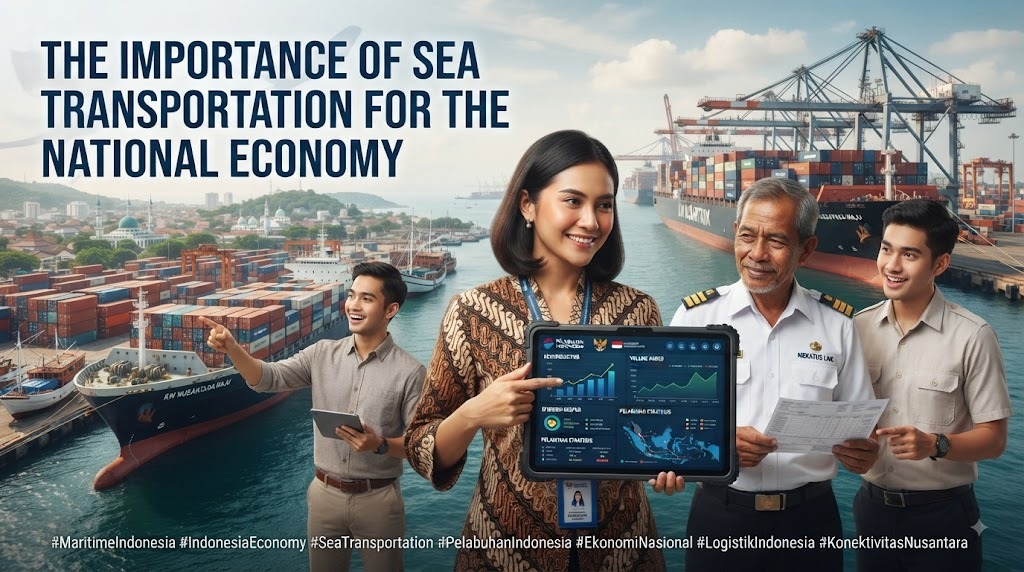
Sea transportation has an important role in supporting the national economy, especially for countries with extensive maritime areas such as Indonesia. As an archipelagic country, Indonesia depends on sea routes to connect islands, communities, industries, and markets. Ships can transport large quantities of goods over long distances, making maritime transportation an efficient part of the national logistics system. Sea transportation supports the movement of raw materials, food, energy resources, manufactured products, and other essential goods. Its development can therefore influence trade, business activity, and economic growth.
The importance of sea transportation extends beyond moving goods from one location to another. It connects domestic markets with international trade routes and supports export and import activities. Ports, shipping companies, logistics providers, and supporting industries create a broad maritime economic ecosystem. Efficient maritime transportation can reduce distribution barriers and improve access to markets. For this reason, maritime connectivity is closely related to national economic development.
SUPPORTING DOMESTIC TRADE
Sea transportation helps connect different regions and islands within Indonesia. Many areas depend on goods supplied from other islands because production and resources are not distributed evenly. Ships can carry large amounts of products between major ports and smaller destinations. This supports the movement of food, construction materials, fuel, machinery, and consumer products. Domestic maritime trade therefore helps maintain the flow of goods throughout the country.
Reliable shipping services can also help businesses plan their supply chains more effectively. Regular schedules make it easier for companies to manage inventories and delivery times. When maritime connections are efficient, products can reach markets with fewer delays. Better distribution can also support more stable supply conditions in remote and island regions. This makes sea transportation an important part of Indonesia's domestic economy.
SUPPORTING INTERNATIONAL TRADE
Sea transportation is essential for Indonesia's international trade activities. A large proportion of internationally traded goods are transported by ships because vessels can carry high volumes of cargo. Indonesian exports such as agricultural products, fisheries, minerals, energy resources, and manufactured goods depend on maritime routes to reach overseas markets. Imported raw materials, machinery, and consumer products also enter Indonesia through ports. International maritime trade therefore has a direct connection with national economic activity.
Efficient shipping services can help Indonesian businesses reach international customers more competitively. Delays and high transportation costs can increase product prices and reduce competitiveness. Modern ports and effective cargo handling can improve the movement of export and import goods. Digital systems can also simplify documentation and improve cargo tracking. Strong maritime infrastructure can therefore support Indonesia's participation in global trade.
REDUCING LOGISTICS COSTS
Transportation costs influence the final price of goods and the competitiveness of businesses. Sea transportation can be an efficient option for moving large quantities of cargo over long distances. Large vessels can carry substantial loads, which can lower the transportation cost per unit when capacity is used effectively. However, fuel consumption, port charges, waiting times, and route efficiency also affect overall costs. Logistics efficiency is therefore important for maximizing the economic benefits of sea transportation.
Reducing logistics costs can benefit both businesses and consumers. Companies can allocate more resources to production, innovation, and market expansion when distribution costs are controlled. Lower logistics costs may also help products become more affordable in different regions. Efficient port operations and reliable shipping schedules can reduce unnecessary delays. These improvements can strengthen the overall competitiveness of the national economy.
SUPPORTING INDUSTRIAL DEVELOPMENT
Industries require reliable transportation to obtain raw materials and distribute finished products. Sea transportation connects industrial areas with suppliers, production centers, and domestic or international markets. Ships are suitable for transporting large quantities of raw materials such as minerals, agricultural products, energy resources, and industrial components. Reliable maritime services can help companies maintain stable production schedules. Industrial development can therefore benefit significantly from strong maritime connectivity.
Ports located near industrial centers can support faster movement of materials and finished goods. Efficient connections between ports, warehouses, factories, and land transportation can reduce supply chain delays. Industrial companies can also expand their markets when transportation networks are reliable. This creates opportunities for investment and business development. A strong maritime transportation system can consequently support broader industrial growth.
THE ROLE OF PORTS IN ECONOMIC DEVELOPMENT
Ports are essential infrastructure for sea transportation and national trade. They provide facilities for loading, unloading, storing, inspecting, and distributing cargo. Efficient ports can reduce ship waiting times and improve the movement of goods. Port efficiency directly affects logistics performance and business costs. Modern ports can therefore contribute significantly to national economic competitiveness.
Digitalization is increasingly important for improving port operations. Electronic documentation, cargo tracking, automated equipment, and integrated information systems can make port activities faster and more transparent. Good connections between ports and road or rail networks are also necessary. Without efficient land connections, improvements at ports may not fully benefit the supply chain. Integrated port development is therefore essential for maximizing economic benefits.
TECHNOLOGY AND MARITIME EFFICIENCY
Technology is transforming modern sea transportation. Ships can use digital navigation systems, sensors, satellite communication, and data analysis to improve their operations. These technologies can help reduce fuel consumption, improve route planning, and monitor equipment performance. Ports can also use digital systems to manage vessels and cargo more effectively. Maritime technology can therefore increase efficiency across the transportation network.
Artificial intelligence and predictive maintenance can provide additional benefits. Data analysis can help identify potential equipment problems before they cause major disruptions. Digital platforms can also improve communication between shipping companies, ports, logistics providers, and customers. However, technological development requires investment, skilled workers, and strong cybersecurity. When implemented properly, technology can improve both productivity and reliability.
ENVIRONMENTAL SUSTAINABILITY
Economic development must also consider the environmental impact of maritime transportation. Ships can produce greenhouse gas emissions and other pollutants, particularly when using conventional fuels. The maritime industry is therefore exploring cleaner fuels, energy-efficient engines, and alternative propulsion systems. Sustainable shipping can help reduce environmental impacts while maintaining transportation services.
Electric and hybrid technologies may be suitable for certain short-distance routes, while alternative fuels are being developed for larger vessels. Energy-efficient ship designs can also reduce fuel consumption. Ports can support sustainability by improving waste management and providing infrastructure for cleaner technologies. The transition to greener maritime transportation requires investment and long-term planning. Sustainable development can help ensure that economic benefits continue without creating unnecessary environmental damage.
CHALLENGES IN DEVELOPING SEA TRANSPORTATION
Despite its importance, sea transportation faces several challenges. Infrastructure quality and port capacity can differ between regions. Some areas still experience limited connectivity, long waiting times, or high logistics costs. Weather conditions can also affect shipping schedules and operational safety. These challenges can reduce the efficiency of maritime distribution.
Another challenge is the need for investment in modern technology and human resources. Digital transformation requires reliable communication networks and skilled personnel. Cybersecurity risks must also be addressed as maritime operations become more connected. Government policies, private investment, and cooperation between stakeholders are necessary to overcome these challenges. Effective maritime planning can help transform these difficulties into opportunities for improvement.
STRATEGIES FOR STRENGTHENING MARITIME TRANSPORTATION
Strengthening sea transportation requires improvements in infrastructure, technology, human resources, and regulations. Ports should be developed according to regional economic needs and expected cargo volumes. Shipping networks should also be integrated with roads, railways, warehouses, and distribution centers. Digital platforms can improve information sharing and reduce administrative delays. Integrated maritime development can create a more efficient national transportation system.
Workforce development should be another priority. Maritime employees need training in safety, technology, logistics, and environmental management. Businesses can use data to evaluate performance and identify areas for improvement. Government policies can encourage investment and innovation while maintaining safety and environmental standards. Cooperation among government agencies, companies, ports, and local communities is essential for long-term success.
THE FUTURE OF SEA TRANSPORTATION
The future of sea transportation will be influenced by technology, sustainability, and growing demand for efficient logistics. Smart ships, automated port systems, real-time tracking, and artificial intelligence may become increasingly common. Cleaner fuels and energy-efficient vessels can reduce environmental impacts. Future maritime transportation is expected to become more connected, efficient, and environmentally responsible.
Indonesia has significant potential to strengthen its maritime economy because of its geographical position and extensive sea routes. Continued investment in ports, shipping services, logistics infrastructure, and workforce development will be important. Stronger maritime connectivity can improve domestic distribution and international trade at the same time. If these developments are managed effectively, sea transportation can become an even stronger driver of national economic growth.
CONCLUSION
Sea transportation is a vital component of the national economy, particularly for an archipelagic country such as Indonesia. It supports domestic trade, international commerce, industrial development, regional economies, tourism, employment, and the distribution of essential goods. Efficient maritime networks can reduce logistics costs and improve access to markets. Ports and shipping services also connect Indonesia with the global economy.
The future development of sea transportation requires modern infrastructure, efficient ports, advanced technology, skilled workers, strong safety systems, and sustainable practices. Cooperation between the government, private sector, and local communities is essential to achieve these goals. With continuous improvements, maritime transportation can strengthen national connectivity and economic competitiveness. A strong maritime sector can help Indonesia build a more resilient, inclusive, and sustainable national economy.
About the Author
Gusti Ayu Tita P
Author — STEKOM University
An active author focused on academic issues, educational technology, and human resource development in the campus environment.















