The Importance Of Understanding Each Other To Reduce Family Conflict
Gusti Ayu Tita P
8 September 2026
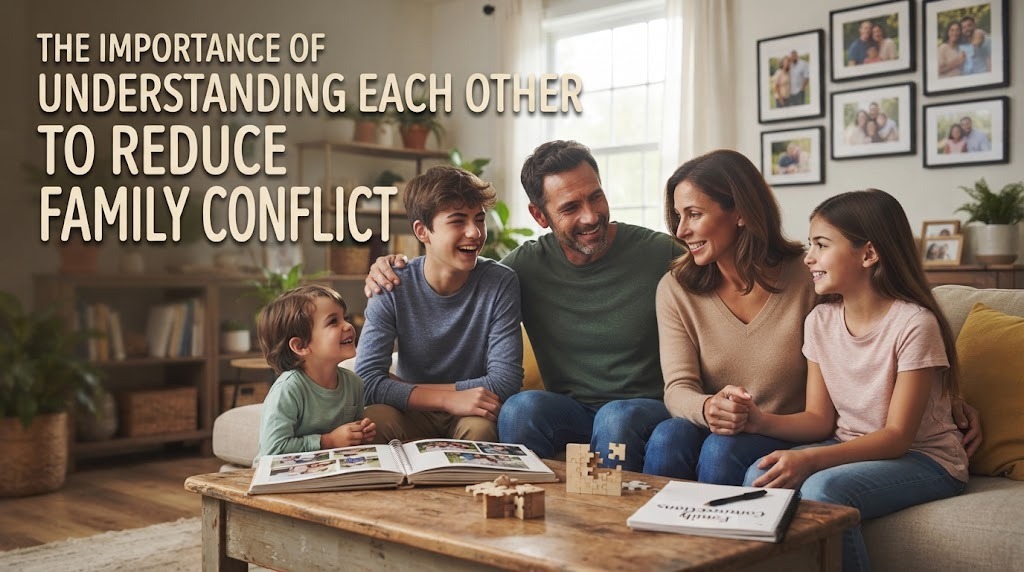
Family relationships can become difficult when members have different opinions, personalities, needs, and expectations. These differences are normal, but they can lead to family conflict when people do not communicate properly. Understanding each other helps family members recognize different feelings and perspectives without immediately judging them. It also creates a stronger sense of trust and emotional safety at home. By developing mutual understanding, families can manage disagreements more calmly and maintain healthier relationships.
UNDERSTANDING DIFFERENT PERSONALITIES IN THE FAMILY
Every family member has a different personality and way of responding to situations. Some people are comfortable talking openly, while others need more time to express their feelings. These differences can sometimes cause misunderstandings when one person expects everyone to behave in the same way. Accepting personality differences can prevent unnecessary arguments and disappointment. When family members understand these differences, they can adjust their communication and respond with greater patience.
LISTENING TO EACH OTHER WITH EMPATHY
Listening is an important part of understanding someone else's feelings and perspective. Family members should give each other enough time to speak without immediately interrupting or judging. Empathetic listening means paying attention not only to the words being spoken but also to the emotions behind them. Asking questions can also help clarify what someone really means instead of making assumptions. When people feel heard, they are more likely to communicate honestly and peacefully.
RESPECTING DIFFERENT OPINIONS
Different opinions are natural, even among people who are very close. Parents and children may have different views about education, friendships, careers, responsibilities, or daily activities. Problems often appear when someone believes that their opinion is the only one that matters. Respecting different opinions does not mean agreeing with everything another person says. It means allowing others to express their thoughts while discussing disagreements in a respectful way.
RECOGNIZING EACH OTHER'S EMOTIONS
Emotions can strongly influence how people communicate during a conflict. Someone who feels ignored, disappointed, or stressed may react more strongly than usual. Family members should learn to recognize these emotions instead of focusing only on the person's reaction. Emotional awareness can help people understand why a family member behaves differently in a particular situation. This understanding can make it easier to respond with patience instead of immediately becoming defensive.
AVOIDING ASSUMPTIONS AND MISUNDERSTANDINGS
Many family conflicts begin with assumptions about what another person thinks or intends. Someone may interpret silence as anger or a short response as disrespect without knowing the real reason. Asking for clarification is usually better than creating conclusions based on limited information. Clear communication can prevent small misunderstandings from becoming larger arguments. Family members should feel comfortable asking questions and explaining their intentions honestly.
SHOWING EMPATHY DURING DISAGREEMENTS
Empathy allows people to consider a situation from another person's point of view. During disagreements, family members can ask themselves how the situation might feel if they were in the other person's position. This does not mean ignoring their own feelings or accepting every behavior. Instead, empathy helps reduce judgment and emotional reactions. When family members show understanding, disagreements can become more constructive and less hostile.
BUILDING TRUST THROUGH OPEN COMMUNICATION
Trust grows when family members feel that they can communicate without being constantly judged or ignored. Open communication gives everyone an opportunity to discuss concerns before they become serious problems. Family members should try to be honest while choosing words that remain respectful and considerate. Keeping promises and following through with agreed actions can also strengthen trust. A strong foundation of trust makes it easier to handle future disagreements.
MAKING TIME FOR QUALITY FAMILY INTERACTION
Understanding each other requires more than talking only when a problem occurs. Spending quality time together can help family members learn about each other's interests, experiences, and feelings. Simple activities such as eating together, taking a walk, or having a casual conversation can strengthen emotional connections. Regular positive interactions can make communication feel more natural when difficult issues arise. A closer relationship can therefore reduce the emotional distance that often contributes to family conflict.
LEARNING TO COMPROMISE
Understanding each other does not always result in complete agreement. Some family problems require compromise, especially when different needs or preferences cannot all be satisfied. Each person can explain what matters most to them and consider which solutions are acceptable for everyone. A fair compromise should not force one person to always give up their needs. Learning to find a middle ground can help families solve problems while maintaining mutual respect.
CONCLUSION
Understanding each other is an important way to reduce family conflict because it encourages empathy, patience, respect, and better communication. Family members can strengthen their relationships by listening carefully, respecting different opinions, recognizing emotions, and avoiding assumptions. Spending quality time together can also create stronger emotional connections and improve trust. When disagreements happen, compromise and open communication can help families find solutions without creating unnecessary tension. By making mutual understanding a daily habit, families can create a more peaceful, supportive, and harmonious home environment.
About the Author
Gusti Ayu Tita P
Author — STEKOM University
An active author focused on academic issues, educational technology, and human resource development in the campus environment.