
The Influence Of Entertainment Content On Young Generations
Gusti Ayu Tita P
7 Agustus 2026
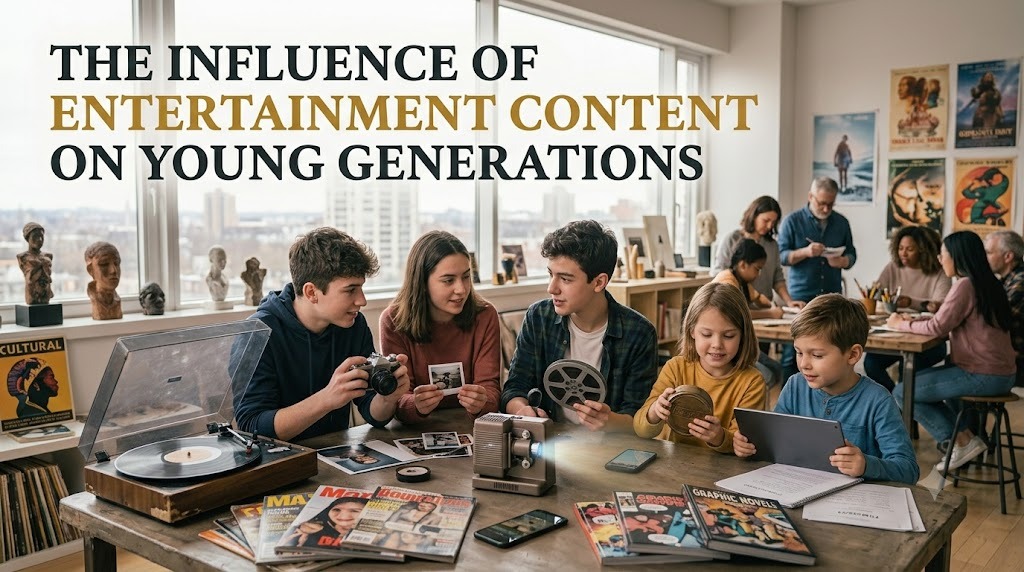
Entertainment content has become an important part of everyday life for many young people. Smartphones and social media make it easy to access movies, music, short videos, games, podcasts, and other forms of entertainment. Digital entertainment can influence how young people spend their free time, communicate, discover trends, and express themselves. The influence can be positive or negative depending on the type of content and how frequently it is consumed.
The development of digital platforms has also changed how young audiences interact with entertainment. They are no longer only viewers but can also comment, share, create, and participate in online communities. This active participation makes entertainment a significant part of modern youth culture. Understanding its influence can help young people develop healthier and more responsible digital habits.
ENTERTAINMENT AS A SOURCE OF RELAXATION
Entertainment can help young people relax after completing school, work, or other responsibilities. Watching a funny video, listening to music, or playing a game can provide a temporary break from daily activities. Appropriate entertainment can support relaxation and improve mood. It can also provide an opportunity to enjoy hobbies and personal interests.
However, entertainment should not become the only way to deal with stress. Spending excessive time on digital platforms may interfere with sleep, physical activity, and important responsibilities. Balance is important when using entertainment as a form of relaxation. Young people can combine digital entertainment with exercise, hobbies, outdoor activities, and social interaction.
ENTERTAINMENT INFLUENCES SOCIAL TRENDS
Entertainment content often plays a role in shaping trends among young audiences. Popular songs, fashion styles, challenges, memes, movies, and online personalities can quickly become widely recognized. Social media can accelerate the spread of entertainment trends among young people. A trend that begins with a small group can sometimes reach a large audience within a short period.
Young people may adopt trends as a way to participate in online communities. Following trends can create a sense of connection with others who share similar interests. Trends can strengthen social interaction when they are followed responsibly. However, young audiences should not feel pressured to follow every popular trend.
ENTERTAINMENT SUPPORTS CREATIVE EXPRESSION
Digital entertainment can encourage young people to explore their creativity. Many platforms allow users to create videos, music, illustrations, photographs, stories, and other forms of digital content. Young creators can use entertainment platforms to express ideas and develop creative skills. Some may even discover interests that later become educational or professional opportunities.
Creating content also teaches practical skills. Young people can learn about video editing, storytelling, communication, graphic design, music production, and digital marketing. Creative activities can build confidence and encourage experimentation. However, creators should understand copyright, privacy, and responsible online behavior when publishing their work.
ENTERTAINMENT AFFECTS COMMUNICATION HABITS
Digital entertainment has changed how young people communicate with one another. Discussions about movies, music, games, influencers, and viral videos can become common topics among friends. Shared entertainment interests can create opportunities for social interaction. Online communities can also connect young people with others who have similar hobbies.
At the same time, excessive digital communication may reduce opportunities for direct interaction. Online conversations can sometimes replace face-to-face communication if digital use becomes excessive. Healthy communication requires a balance between online and offline relationships. Young people can enjoy digital communities while continuing to maintain meaningful real-world connections.
ENTERTAINMENT CAN PROVIDE NEW KNOWLEDGE
Not all entertainment content is created purely for amusement. Documentaries, historical dramas, educational videos, podcasts, and informative storytelling can introduce young audiences to new subjects. Entertainment can make certain topics easier and more enjoyable to explore. It can encourage curiosity and motivate viewers to learn more.
However, entertaining content is not always accurate. Some videos or posts may simplify information or present opinions as facts. Young people should evaluate information critically, especially when content discusses science, history, health, or other important topics. Checking reliable sources can help distinguish entertainment from trustworthy information.
NEGATIVE EFFECTS OF EXCESSIVE CONSUMPTION
Although entertainment can be beneficial, excessive consumption may create problems. Spending too much time watching videos, playing games, or scrolling through social media can reduce time for sleep, study, exercise, and family interaction. Uncontrolled screen time can interfere with daily routines and responsibilities. The impact depends on individual habits and the amount of time spent consuming content.
Young people may also experience pressure from unrealistic lifestyles presented online. Carefully edited images and videos can create expectations that do not reflect everyday reality. Critical thinking can help young audiences understand that digital content does not always represent real life accurately. Taking regular breaks and maintaining offline activities can support healthier habits.
ENTERTAINMENT SHAPES DIGITAL IDENTITY
Young people often use entertainment content as part of their online identity. The creators they follow, music they listen to, games they play, and communities they join can influence how they present themselves online. Digital entertainment can become part of personal identity and self-expression. It can help young people explore their interests and discover communities where they feel comfortable.
However, online identity should be managed carefully. Personal information, opinions, photos, and comments can remain accessible for a long time. Young people should think carefully before sharing content publicly. Building a positive digital identity requires awareness, responsibility, and respect for others.
ENTERTAINMENT CREATES CAREER OPPORTUNITIES
The growth of digital entertainment has created new career possibilities for young people. Content creation, video editing, social media management, animation, digital marketing, music production, and game development are examples of fields connected to the industry. Entertainment platforms can become spaces where young people develop professional skills.
Success in these fields usually requires more than simply gaining followers. Creativity, communication, consistency, technical knowledge, and professional behavior are important. Developing practical skills can turn entertainment interests into valuable career experience. Young people should also understand that online popularity can change quickly and should not be the only measure of success.
HOW YOUNG PEOPLE CAN CONSUME ENTERTAINMENT RESPONSIBLY
Responsible entertainment consumption begins with understanding personal limits. Young people can create schedules that include enough time for sleep, education, exercise, family, and other activities. Setting healthy boundaries can prevent entertainment from interfering with important responsibilities. Choosing content carefully can also improve the quality of digital experiences.
It is equally important to think critically about what is being watched or shared. Young people should consider whether content is trustworthy, appropriate, respectful, and beneficial. Responsible digital habits allow entertainment to remain enjoyable without becoming harmful. Parents, teachers, and communities can also support young people by promoting digital literacy and healthy media habits.
CONCLUSION
Entertainment content has a significant influence on young generations in the digital era. It can provide relaxation, encourage creativity, support social interaction, introduce new knowledge, shape trends, and create opportunities to develop professional skills. At the same time, excessive consumption and uncritical exposure to digital content can create challenges.
The key is not to avoid entertainment but to use it wisely. Balanced consumption, critical thinking, digital literacy, and responsible online behavior can help young people gain the positive benefits of entertainment while reducing potential risks. With healthy habits, digital entertainment can become a useful part of modern youth life rather than a distraction from important goals.
About the Author
Gusti Ayu Tita P
Author — STEKOM University
An active author focused on academic issues, educational technology, and human resource development in the campus environment.















