The Influence Of Social Media On Nationalism Among Young People
Gusti Ayu Tita P
4 Agustus 2026
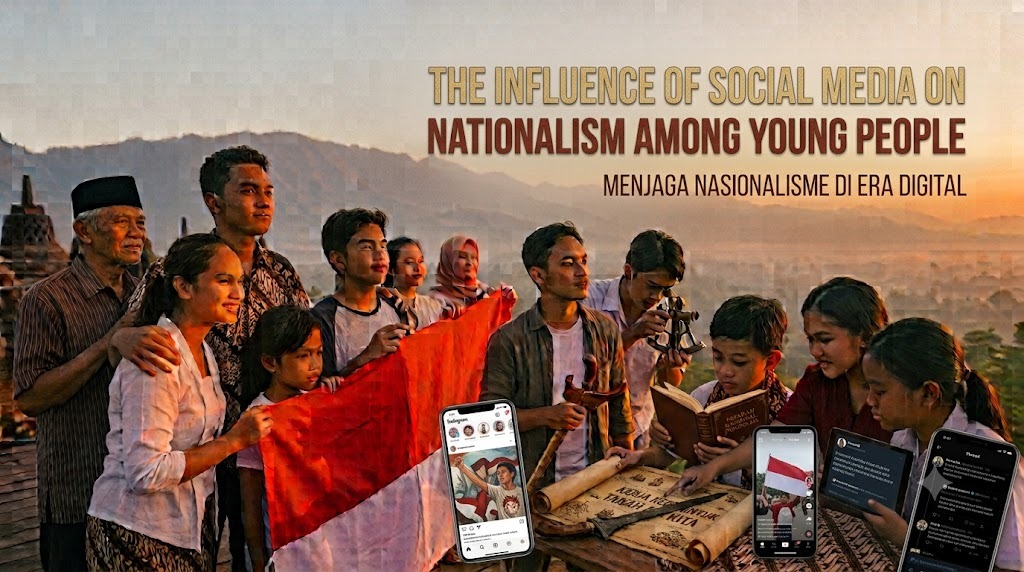
Social media has become an important part of young people's daily lives. Platforms such as social networking sites, video-sharing services, and messaging applications allow young people to communicate and access information quickly. These platforms can influence how young people understand their country, culture, community, and national identity. As a result, social media can have both positive and negative influences on nationalism.
Young people can use social media to learn about history, promote local culture, support Indonesian products, and share national achievements. At the same time, misinformation, hate speech, excessive foreign cultural influence, and online polarization can create challenges for national unity. The impact of social media depends greatly on how responsibly users consume and share information. Therefore, digital literacy is important for developing healthy nationalism among young people.
UNDERSTANDING NATIONALISM AMONG YOUNG PEOPLE
Nationalism is a sense of love, belonging, responsibility, and concern for one's country. Among young people, nationalism can be expressed through appreciation for national culture, participation in society, respect for diversity, and efforts to contribute to national development. It does not mean rejecting foreign cultures or considering other countries inferior. Instead, healthy nationalism allows young people to maintain their national identity while remaining open to positive global influences.
Young people experience nationalism differently from previous generations because digital technology has become part of their everyday lives. They can discover information about their country through social media rather than relying only on traditional sources. Digital experiences can influence how young people understand national identity and their role in society. This makes social media an important environment for developing modern nationalism.
SOCIAL MEDIA AS A TOOL FOR PROMOTING NATIONALISM
Social media provides young people with opportunities to share positive information about their country. They can post content about Indonesian culture, traditional arts, historical sites, local food, national achievements, and regional traditions. Creative content can make national culture more attractive to younger audiences. It can also introduce Indonesian culture to people from other countries.
Social media allows cultural content to reach a much wider audience than traditional communication methods. A short video about a local tradition, for example, can attract viewers from different regions. Digital creativity can therefore support cultural preservation and strengthen national pride. Young people can become active contributors to promoting Indonesia's identity through responsible online content.
PROMOTING INDONESIAN CULTURE THROUGH DIGITAL CONTENT
Indonesia has a rich cultural heritage that includes many languages, traditional dances, music, clothing, crafts, foods, and customs. Social media allows young people to document and share these forms of culture. They can create videos, photographs, articles, podcasts, and illustrations that introduce local traditions. Digital content can help cultural heritage remain visible and relevant in modern society.
Young creators should present cultural information accurately and respectfully. They need to avoid spreading stereotypes or misleading information about traditions and communities. Responsible cultural content can increase appreciation for diversity while encouraging young people to become more interested in their own heritage. In this way, social media can become a useful tool for cultural education.
SUPPORTING NATIONAL ACHIEVEMENTS
Social media can also increase awareness of Indonesian achievements. Young people can share information about Indonesian athletes, researchers, entrepreneurs, artists, students, and innovators. Positive stories about national achievements can encourage pride and motivation. They can also show that Indonesia has individuals and communities capable of making valuable contributions.
However, national pride should remain realistic and constructive. Celebrating achievements does not mean ignoring problems or claiming that everything in the country is perfect. Healthy nationalism allows people to appreciate achievements while recognizing areas that still need improvement. Social media can encourage constructive pride when content is based on accurate information.
SUPPORTING LOCAL PRODUCTS THROUGH SOCIAL MEDIA
Social media has become an important platform for promoting local products and small businesses. Young people can discover local brands and share recommendations with their followers. They can also support Indonesian entrepreneurs by purchasing products and creating positive reviews. These actions can help local businesses reach larger markets.
Promoting local products is a practical way to connect nationalism with economic participation. Supporting domestic businesses can contribute to employment and local economic activity. Young consumers can help strengthen the domestic economy through responsible purchasing decisions. Social media makes this form of participation easier because promotional content can reach large audiences at relatively low cost.
THE NEGATIVE INFLUENCE OF MISINFORMATION
One of the major challenges of social media is the rapid spread of misinformation. False or misleading information can influence people's opinions and create unnecessary fear or conflict. When misinformation concerns sensitive social, political, religious, or cultural issues, it can threaten social harmony. Young people need to be careful before believing or sharing information.
Digital literacy can help reduce this problem. Young users should check the source, date, evidence, and context of information before sharing it. They should also compare important claims with reliable sources. Responsible information sharing can protect both individuals and society from unnecessary conflict.
SOCIAL MEDIA AND SOCIAL POLARIZATION
Social media can sometimes create social polarization when users interact mainly with people who share similar opinions. Algorithms and user preferences may repeatedly expose individuals to content that supports their existing views. As a result, people may become less willing to listen to different perspectives. This can make disagreements more intense and weaken social relationships.
Young people can reduce polarization by practicing respectful communication. They can learn to distinguish between disagreement and personal attacks. Listening to different perspectives and discussing issues respectfully can strengthen tolerance and national unity. Social media should be used to build understanding rather than deepen divisions.
THE INFLUENCE OF GLOBAL CULTURE
Social media gives young people easy access to international entertainment, fashion, music, lifestyles, and ideas. Exposure to global culture can provide opportunities to learn and develop creativity. However, excessive imitation of foreign trends may sometimes reduce interest in local traditions. Global cultural exposure should be balanced with appreciation for Indonesian culture.
Young people do not need to reject international culture to maintain nationalism. They can enjoy global content while continuing to learn about their own history and traditions. Global awareness and national identity can exist together. The important thing is for young people to choose positive influences without losing their connection to their cultural roots.
DEVELOPING DIGITAL LITERACY AMONG YOUNG PEOPLE
Digital literacy is essential for helping young people use social media responsibly. It includes the ability to find, evaluate, understand, create, and share digital information appropriately. Young people who have strong digital literacy are better prepared to recognize unreliable information and harmful content. They can also communicate more effectively in online environments.
Schools, families, and communities can help improve digital literacy. Students can learn how algorithms work, how to verify information, and how to communicate respectfully online. Critical thinking should become an important part of digital citizenship. These skills can help young people use social media as a positive tool for nationalism and social participation.
THE ROLE OF YOUNG PEOPLE IN STRENGTHENING NATIONALISM
Young people are not only consumers of social media content but can also become digital creators and positive influencers. They can produce educational content about Indonesian history, culture, local communities, environmental issues, and national achievements. Their creativity can encourage other young people to become more interested in their country. This makes youth participation important in developing modern nationalism.
Young people can also use social media to organize positive activities. They can promote volunteer programs, environmental campaigns, cultural events, fundraising activities, and educational projects. Digital participation becomes more meaningful when it leads to positive actions in real life. Through these activities, young people can connect online communication with social responsibility.
USING SOCIAL MEDIA RESPONSIBLY
Responsible social media use requires users to think before posting, commenting, or sharing information. Young people should avoid hate speech, discrimination, cyberbullying, and content designed to provoke unnecessary conflict. They should also respect other people's privacy and opinions. Responsible online behavior is an important part of modern nationalism.
Social media can become a space for constructive discussion when users communicate with empathy and respect. Positive content can encourage people to appreciate diversity and cooperate across communities. Every user has a role in creating a healthier digital environment. When young people use social media responsibly, they can contribute to stronger national unity.
CONCLUSION
Social media has a significant influence on nationalism among young people. It can strengthen national identity by promoting Indonesian culture, supporting local products, sharing national achievements, and encouraging social participation. However, social media can also create challenges through misinformation, polarization, hate speech, and excessive cultural imitation.
The key is responsible and critical use of digital platforms. Young people can strengthen nationalism by developing digital literacy, respecting diversity, preserving culture, and creating positive content. When social media is used wisely, it can become more than a communication tool. It can become a powerful platform for building national pride, social responsibility, and unity among the younger generation.
About the Author
Gusti Ayu Tita P
Author — STEKOM University
An active author focused on academic issues, educational technology, and human resource development in the campus environment.