The Journey of Indonesian History from Kingdoms to Independence
Gusti Ayu Tita P
5 Agustus 2026
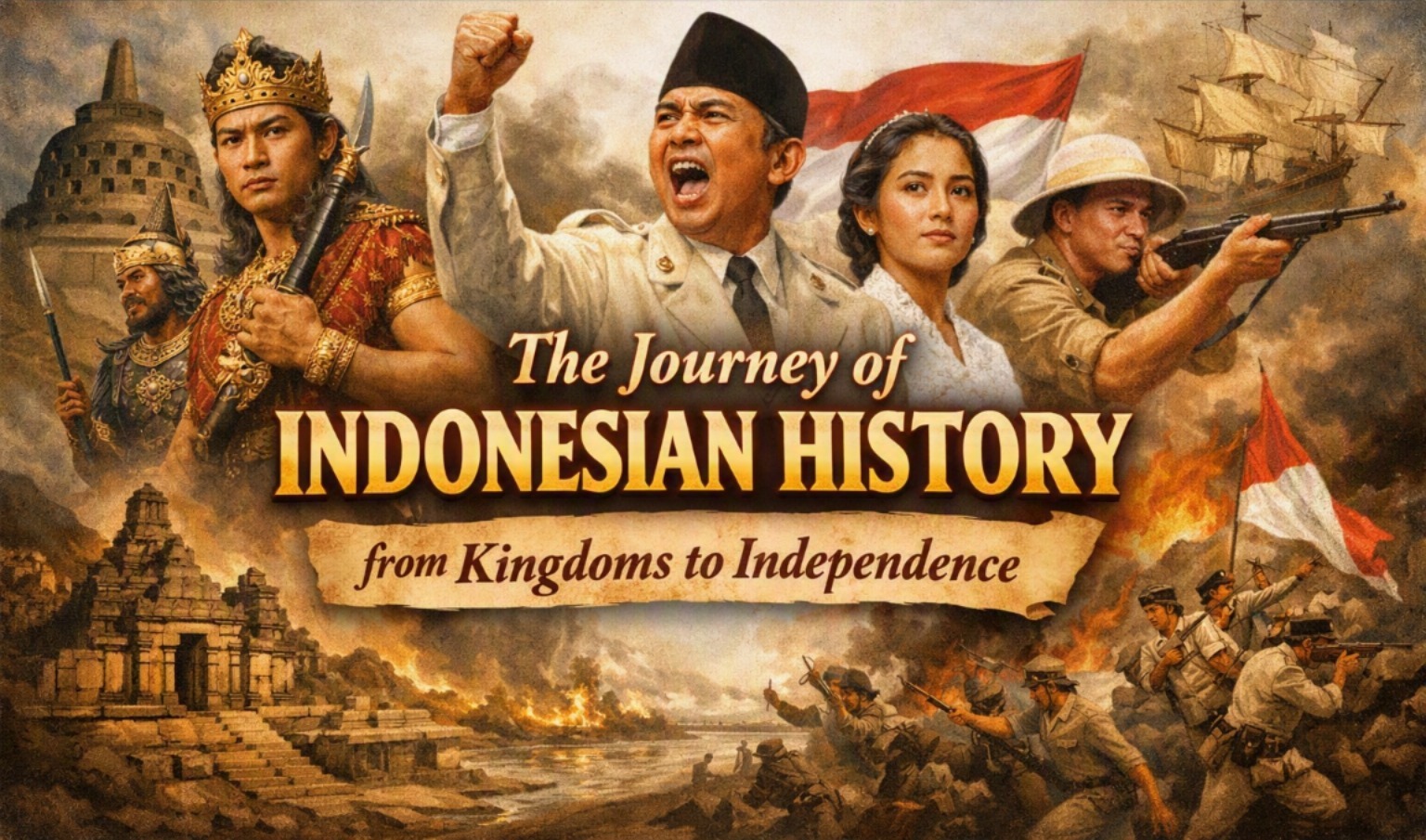
Indonesia has a long and remarkable history that has shaped its identity as one of the world's largest archipelagic nations. The journey of Indonesian history began with the rise of powerful Hindu-Buddhist kingdoms, continued through the spread of Islam, experienced centuries of colonial rule, and finally reached the achievement of independence in 1945. Every historical period contributed important values, traditions, and lessons that continue to influence modern Indonesia.
Understanding the journey of Indonesian history helps people appreciate the nation's cultural diversity, national unity, and the struggles of previous generations. It also explains how historical events formed the country's political, social, and economic foundations. Learning about this history encourages citizens to preserve their national heritage while preparing for a better future.
EARLY KINGDOMS THAT SHAPED INDONESIAN CIVILIZATION
The history of Indonesia began with the emergence of influential kingdoms that developed trade, culture, education, and religion. Among the earliest were the Kingdom of Kutai, Tarumanagara, and Srivijaya, which became important centers of regional influence. Srivijaya, located in Sumatra, was especially famous as a maritime empire that controlled important trade routes across Southeast Asia. It also became a respected center for Buddhist learning, attracting scholars from different regions.
Later, the Majapahit Kingdom rose as one of the greatest empires in Indonesian history. Under strong leadership, Majapahit expanded its influence across much of the archipelago and promoted cooperation among many regions. The famous idea of unity in diversity developed during this period and continues to inspire Indonesia today. These kingdoms left valuable cultural heritage through temples, inscriptions, literature, and traditions that are still preserved.
THE ARRIVAL OF ISLAM AND CULTURAL TRANSFORMATION
Beginning in the 13th century, Islam spread gradually throughout the Indonesian archipelago, mainly through merchants, scholars, and peaceful cultural exchanges. Coastal kingdoms such as Samudera Pasai, Demak, and Aceh became important centers for Islamic learning and commerce. Unlike military expansion seen in some regions of the world, Islam in Indonesia generally developed through education, trade, and community relationships.
The spread of Islam enriched Indonesian culture rather than replacing existing traditions completely. Local customs blended with Islamic teachings, creating unique cultural expressions that can still be found today. This period strengthened social networks, expanded international trade, and introduced new educational institutions. The combination of different cultural influences became one of Indonesia's greatest strengths.
THE COLONIAL ERA AND THE STRUGGLE AGAINST FOREIGN RULE
European powers arrived in Indonesia seeking valuable spices and trading opportunities. The Dutch East India Company (VOC) gradually established economic and political control over many regions before the Dutch colonial government expanded its authority across the archipelago. Colonial policies often benefited foreign interests while placing heavy burdens on local communities through taxation and forced labor.
Despite these challenges, many Indonesian heroes and local kingdoms resisted colonial domination. Figures such as Prince Diponegoro, Cut Nyak Dhien, Pattimura, and many others became symbols of courage and determination. Their struggles inspired future generations to continue fighting for freedom. The colonial period also encouraged the growth of national awareness, which later became the foundation of the independence movement.
THE RISE OF NATIONALISM AND THE ROAD TO INDEPENDENCE
During the early twentieth century, education, journalism, and youth organizations encouraged the development of Indonesian nationalism. Organizations such as Budi Utomo, Sarekat Islam, and other national movements promoted unity among people from different ethnic and regional backgrounds. The historic Youth Pledge of 1928 declared one homeland, one nation, and one language, strengthening the dream of independence.
The challenges of the Japanese occupation during World War II also changed political conditions in Indonesia. Although the occupation brought hardship, it created opportunities for Indonesian leaders to organize and prepare for self-government. National leaders continued to strengthen cooperation and mobilize public support for independence. Their efforts paved the way for the birth of a new nation.
INDONESIA DECLARES ITS INDEPENDENCE
On August 17, 1945, Soekarno and Mohammad Hatta proclaimed the independence of Indonesia after years of struggle. The proclamation marked the beginning of a new chapter in Indonesian history and represented the hopes of millions of people for freedom and self-determination. However, independence did not immediately end the struggle because the new nation still had to defend its sovereignty against returning colonial forces.
Through diplomacy, military resistance, and strong national unity, Indonesia eventually gained international recognition as an independent country. The adoption of the 1945 Constitution provided the legal foundation for governing the nation. Independence became a symbol of perseverance, sacrifice, and cooperation among people from different backgrounds. Today, this historic achievement continues to inspire national pride.
CONCLUSION
Studying Indonesian history allows people to understand how the country developed into a diverse and united nation. Historical knowledge helps citizens appreciate the sacrifices made by previous generations while encouraging respect for cultural heritage. It also teaches valuable lessons about leadership, cooperation, and resilience during difficult times.
Indonesian history remains relevant because it strengthens national identity and encourages responsible citizenship. By learning about kingdoms, colonial experiences, and the struggle for independence, younger generations can better understand the values behind Indonesia's development. Preserving historical knowledge ensures that important lessons will continue to guide future generations. The journey of Indonesian history is not only a story of the past but also a source of inspiration for building a stronger future.
About the Author
Gusti Ayu Tita P
Author — STEKOM University
An active author focused on academic issues, educational technology, and human resource development in the campus environment.