
The Main Causes of Inflation and How to Overcome Them
Gusti Ayu Tita P
19 Agustus 2026
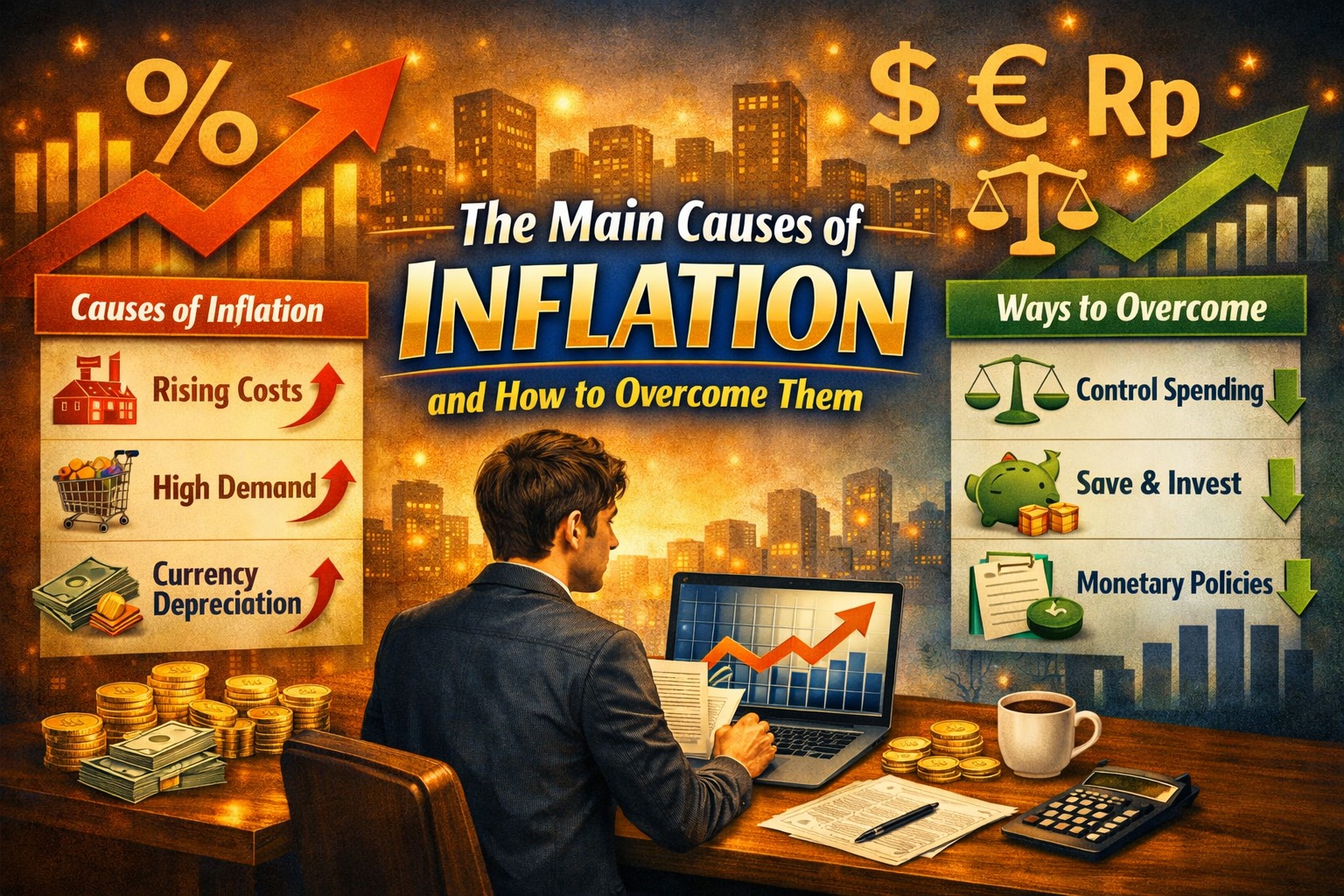
Inflation is a common economic phenomenon that affects individuals, businesses, and governments. It occurs when the general price of goods and services rises over time, reducing the purchasing power of money. While moderate inflation is often considered a sign of economic growth, excessive inflation can create financial difficulties and economic instability. Understanding the main causes of inflation and the ways to overcome it can help people make better financial decisions and prepare for economic changes.
UNDERSTANDING WHAT INFLATION IS
Inflation refers to a continuous increase in the average price level of goods and services within an economy. When inflation occurs, consumers need more money to purchase the same products they previously bought at lower prices. This means the value of money decreases over time, affecting household budgets and business operations.
A moderate level of inflation can encourage spending and investment, which supports economic growth. However, when inflation rises too quickly, it can lead to uncertainty, reduced savings value, and lower purchasing power. Therefore, maintaining stable inflation is one of the primary goals of economic policymakers.
DEMAND-PULL INFLATION
One of the most common causes of inflation is Demand-Pull Inflation. This happens when consumer demand for goods and services increases faster than the economy's ability to produce them. As more people compete to buy limited products, businesses often raise prices to balance supply and demand.
Several factors can trigger this situation, including rising incomes, increased consumer confidence, and government spending programs. While strong demand can stimulate economic growth, excessive demand may push prices upward and create inflationary pressure across various sectors.
COST-PUSH INFLATION
Another major cause is Cost-Push Inflation, which occurs when production costs increase. Businesses facing higher expenses for raw materials, labor, transportation, or energy often transfer these costs to consumers through higher prices.
For example, a significant increase in oil prices can raise transportation and manufacturing costs. As businesses attempt to maintain profitability, product prices rise, contributing to inflation throughout the economy. This type of inflation can be challenging because it may occur even when consumer demand remains stable.
EXCESSIVE MONEY SUPPLY
Inflation can also result from an excessive increase in the money supply. When too much money circulates in the economy without a corresponding increase in goods and services, consumers have more purchasing power, which can drive prices upward.
Central banks play a crucial role in managing money supply through monetary policies. If money creation grows too rapidly, inflation can accelerate. Maintaining a balance between money supply and economic output is essential for price stability and sustainable growth.
SUPPLY CHAIN DISRUPTIONS
Modern economies depend heavily on efficient supply chains. When disruptions occur due to natural disasters, geopolitical tensions, pandemics, or transportation issues, the availability of goods may decrease significantly.
A shortage of products often leads to higher prices because demand remains strong while supply becomes limited. Recent global events have demonstrated how vulnerable supply chains can contribute to inflation in industries ranging from food production to electronics manufacturing.
HOW GOVERNMENTS AND CENTRAL BANKS CONTROL INFLATION
Governments and central banks use several strategies to manage inflation. One of the most effective methods is adjusting interest rates. Higher interest rates can reduce borrowing and spending, helping to slow excessive demand in the economy.
Fiscal policies also play an important role. Governments may reduce unnecessary spending or adjust taxation policies to prevent excessive economic overheating. These measures help maintain a balance between economic growth and price stability.
PRACTICAL WAYS INDIVIDUALS CAN DEAL WITH INFLATION
Individuals can take proactive steps to protect themselves from the effects of inflation. Creating a realistic budget, reducing unnecessary expenses, and maintaining an emergency fund are important financial habits during inflationary periods.
Investing in assets that may retain value over time, improving professional skills, and seeking additional income sources can also help offset rising living costs. Financial planning and disciplined spending remain essential tools for maintaining long-term financial stability.
CONCLUSION
Inflation is influenced by various factors, including Demand-Pull Inflation, Cost-Push Inflation, excessive money supply, and supply chain disruptions. While some inflation is a natural part of economic growth, uncontrolled inflation can create serious challenges for consumers and businesses. Governments and central banks use monetary and fiscal policies to maintain price stability, while individuals can strengthen their financial resilience through smart budgeting and long-term planning. Understanding the causes of inflation and the available solutions helps everyone make more informed financial decisions in an ever-changing economy.
About the Author
Gusti Ayu Tita P
Author — STEKOM University
An active author focused on academic issues, educational technology, and human resource development in the campus environment.















