
The Main Duties Of A Ship Captain For Safe And Successful Voyages
Gusti Ayu Tita P
3 Agustus 2026
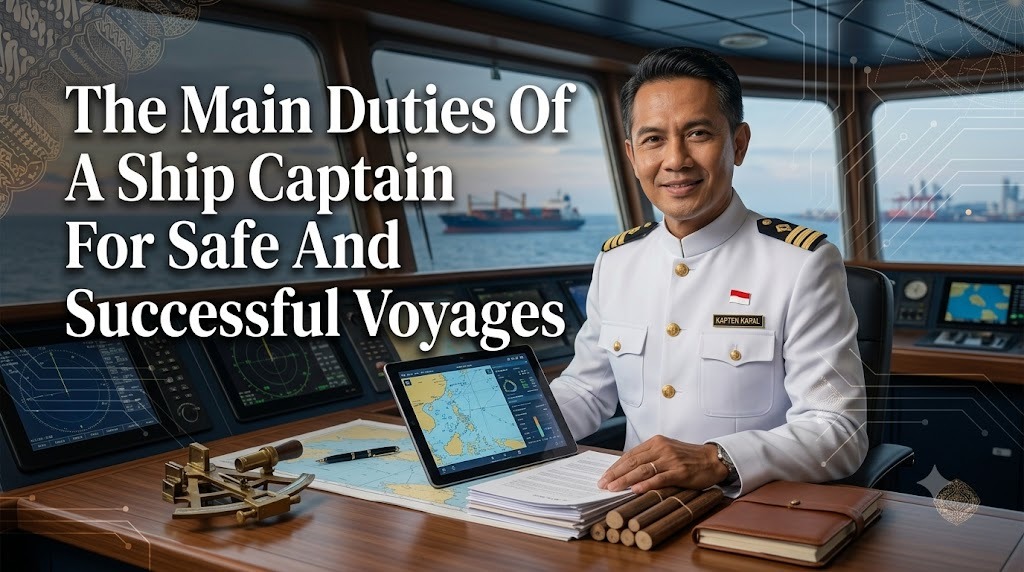
A ship captain has one of the most important responsibilities on board a vessel. The captain is responsible for the overall safety of the ship, crew, passengers, cargo, and voyage. This position requires strong leadership, maritime knowledge, decision-making skills, and the ability to respond to unexpected situations. A successful captain must ensure that the ship operates safely while following applicable maritime laws and procedures.
The captain's responsibilities begin before the ship leaves port and continue until the voyage is completed. Careful planning, effective communication, proper supervision, and quick decision-making are essential throughout the journey. By performing these duties properly, a captain can help ensure a safe, efficient, and successful voyage.
PLANNING THE VOYAGE
One of the main duties of a captain is to develop a safe voyage plan before the ship departs. The plan considers the intended route, weather conditions, navigational hazards, traffic, ports, fuel requirements, and other relevant factors. The captain works with navigation officers to ensure that the planned route is appropriate for the vessel and its operational conditions. Proper preparation can reduce risks and help the crew respond to potential problems.
The voyage plan should also be reviewed when circumstances change. Weather conditions, navigation warnings, port restrictions, or other unexpected factors may require adjustments to the original plan. A captain must therefore remain flexible and alert throughout the voyage. Good planning provides the foundation for safe navigation and efficient operations.
ENSURING SAFE NAVIGATION
The captain has overall responsibility for the ship's safe navigation. Although navigation duties are shared with qualified officers, the captain must supervise the bridge team and ensure that proper procedures are followed. The captain needs to understand the vessel's position, route, surrounding traffic, weather, and navigational risks. Effective bridge management is essential, particularly in busy waterways or difficult conditions.
A captain must also ensure that the crew uses appropriate navigational equipment correctly. Modern vessels may use systems such as radar, electronic charts, GPS, and automatic identification systems. However, technology should always be supported by professional judgment and proper lookout practices. A captain must ensure that the crew does not rely on a single source of information when making important navigational decisions.
LEADING AND SUPERVISING THE CREW
A ship captain is also the primary leader of the crew. The captain must ensure that crew members understand their duties, follow safety procedures, and work together effectively. Clear communication is particularly important because ships often operate in challenging environments where mistakes can have serious consequences. A strong captain creates a professional working environment based on discipline, cooperation, and respect.
The captain also supervises the implementation of onboard procedures and emergency responsibilities. Crew members should know their roles during situations such as fires, collisions, flooding, or abandon-ship emergencies. Regular training and drills help ensure that the crew can respond effectively. Good leadership can significantly improve the ship's ability to handle unexpected situations.
MAINTAINING SHIP SAFETY
Maintaining ship safety is a continuous responsibility. The captain must ensure that safety procedures are followed and that potential hazards are identified and addressed. This includes monitoring the condition of important equipment, ensuring proper safety practices, and supporting regular inspections. Safety should remain a priority during both routine operations and emergencies.
The captain also works with other departments to identify operational risks. Crew members should be encouraged to report hazards and unsafe conditions without fear of inappropriate consequences. A strong safety culture helps prevent accidents by addressing problems before they become serious. Prevention is generally more effective than responding to an avoidable incident after it occurs.
MONITORING WEATHER AND SEA CONDITIONS
Weather can have a major impact on the safety and efficiency of a voyage. Captains must monitor weather forecasts, sea conditions, wind, visibility, and storm systems throughout the journey. Reliable weather information helps the captain determine whether the planned route remains suitable. When conditions become dangerous, the captain may need to alter the route or adjust the ship's speed.
Good weather monitoring requires continuous attention rather than a single check before departure. Conditions can change quickly, especially in areas affected by severe storms or strong currents. The captain must evaluate available information and make timely decisions. Risk assessment and preparedness are essential when navigating difficult weather conditions.
MANAGING CARGO AND SHIP OPERATIONS
For cargo vessels, the captain has an important role in ensuring that cargo operations are conducted safely. Cargo must be properly loaded, secured, and distributed according to the vessel's requirements. Improper cargo handling can affect the ship's stability and create significant safety risks. The captain therefore needs to coordinate with relevant officers and shore-based personnel.
The captain also monitors the overall operation of the vessel during loading and unloading activities. Appropriate procedures must be followed to protect the crew, ship, cargo, and environment. Effective coordination can reduce delays and operational risks. Proper cargo management contributes to both safety and voyage efficiency.
RESPONDING TO EMERGENCIES
A captain must be prepared to make critical decisions during maritime emergencies. Emergencies may include fires, collisions, grounding, flooding, medical incidents, equipment failures, or severe weather. The captain must quickly assess the situation and determine the safest available response. Clear communication and calm leadership are especially important under pressure.
Emergency procedures should be practiced through regular drills. The captain needs to ensure that crew members understand emergency signals, muster arrangements, equipment, and assigned responsibilities. During a real emergency, the captain coordinates the crew and communicates with relevant authorities or rescue services when necessary. Effective emergency management can save lives, property, and the marine environment.
FOLLOWING MARITIME LAWS AND REGULATIONS
A ship captain must ensure that the vessel operates in accordance with international and national maritime regulations. These rules cover areas such as navigation safety, pollution prevention, crew qualifications, vessel operations, and emergency preparedness. International frameworks such as the International Maritime Organization's conventions provide important standards for maritime safety and environmental protection. Compliance is therefore an essential part of professional ship management.
The captain must also ensure that required records and operational procedures are properly maintained. Non-compliance can result in safety risks, legal consequences, delays, or financial losses. Understanding applicable regulations helps the captain make responsible decisions. Legal compliance and safety should always work together during a voyage.
PROTECTING THE MARINE ENVIRONMENT
Modern ship operations place significant importance on marine environmental protection. Captains must ensure that the crew follows procedures designed to prevent pollution and properly manage waste and other potentially harmful materials. Oil, chemicals, sewage, garbage, and other substances must be handled according to applicable requirements.
Environmental responsibility also requires careful operational planning. The captain should ensure that crew members understand relevant environmental procedures and the consequences of improper disposal. Preventing pollution protects marine ecosystems and supports responsible maritime operations. A professional captain therefore considers both operational safety and environmental sustainability.
COMMUNICATING WITH AUTHORITIES AND SHORE TEAMS
Effective communication is essential for successful ship operations. Captains regularly communicate with port authorities, vessel operators, agents, maritime authorities, and shore-based teams. Clear information exchange helps coordinate port arrivals, departures, cargo operations, navigation issues, and emergencies. Communication must be accurate and timely, especially when safety is involved.
The captain also needs to communicate effectively with the crew. Instructions should be clear enough to prevent misunderstandings, particularly during complex operations. Good communication promotes teamwork and allows problems to be identified earlier. Strong communication skills are therefore an essential part of successful ship command.
CONCLUSION
The main duties of a ship captain involve much more than controlling the vessel. A captain must plan voyages, supervise navigation, lead the crew, maintain safety, monitor weather, manage operations, respond to emergencies, follow maritime regulations, and protect the environment. These responsibilities require leadership, technical knowledge, discipline, communication, and sound decision-making.
A successful voyage depends on preparation and the captain's ability to respond appropriately when conditions change. By maintaining a strong safety culture, following maritime regulations, and leading the crew effectively, a captain can help protect people, cargo, the vessel, and the marine environment. These responsibilities make the ship captain a central figure in achieving safe and successful maritime operations.
About the Author
Gusti Ayu Tita P
Author — STEKOM University
An active author focused on academic issues, educational technology, and human resource development in the campus environment.















