The Main Factors That Influence Annual Homecoming Traffic Congestion
Gusti Ayu Tita P
10 Agustus 2026
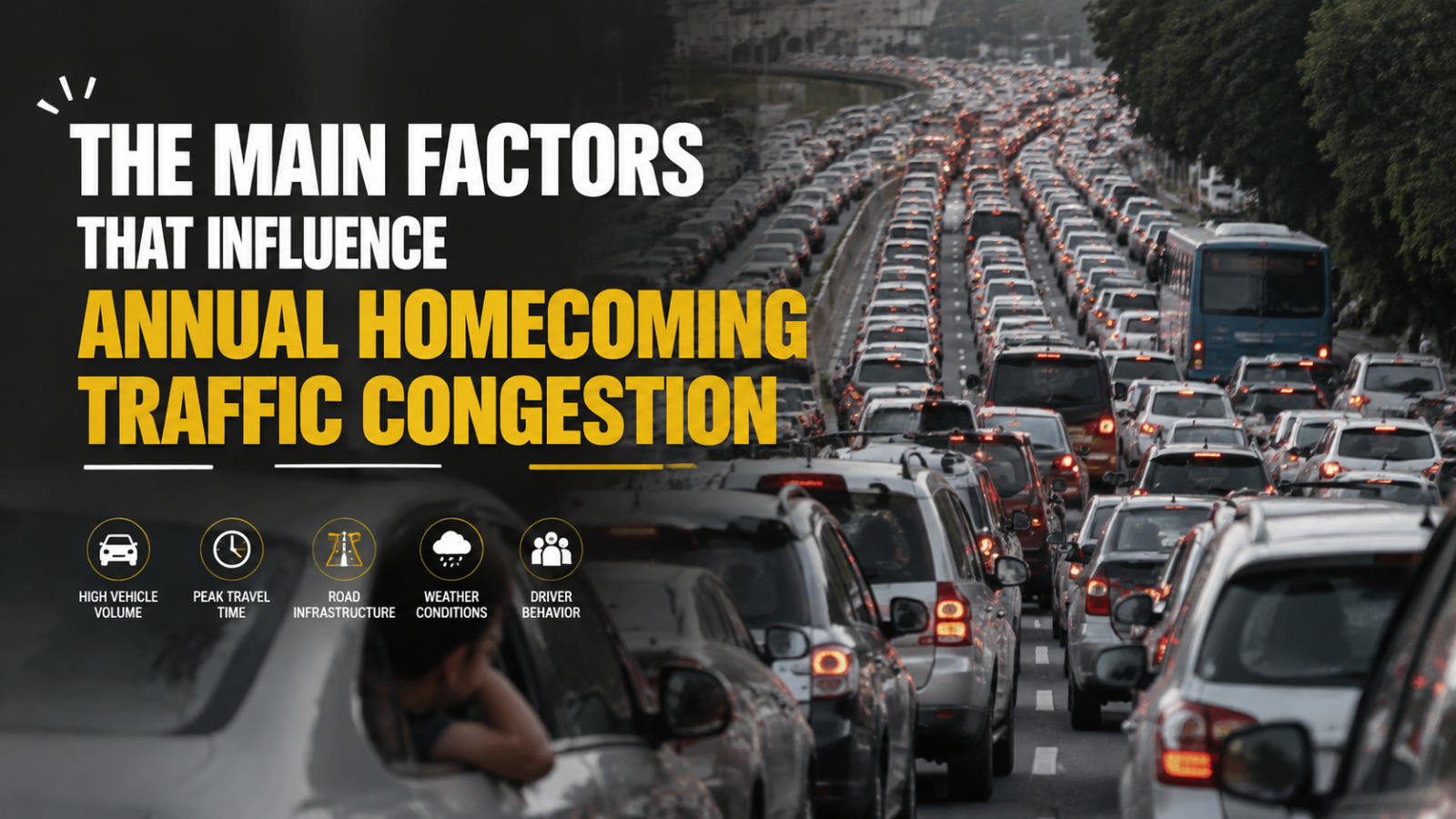
Traffic Congestion during the homecoming season occurs when the number of vehicles using a road becomes greater than the available road capacity. In Indonesia, this situation can become more serious because millions of people travel within a similar period. Major highways, toll roads, local roads, terminals, and other transportation facilities can experience unusually high demand. As more vehicles enter the same routes, travel speeds decrease and queues become longer. Understanding the causes of congestion can help travelers make better decisions.
Homecoming congestion is not caused by one factor alone. Several conditions can happen at the same time and make traffic worse. High Travel Volume, limited infrastructure, accidents, vehicle breakdowns, weather, and poor departure planning can all contribute to delays. Therefore, both travelers and authorities need to understand these factors before and during the homecoming period.
HIGH TRAVEL VOLUME
The first major factor is the sharp increase in Travel Volume. Many people leave cities and return to their hometowns before major holidays. Workers, students, families, and other travelers may choose similar departure dates because they want to arrive before celebrations begin. This creates a sudden increase in the number of vehicles on major routes.
The problem becomes more serious when travelers leave at similar times. Roads that normally operate comfortably can quickly become crowded. Toll gates, intersections, bridges, and entrance points to major cities may experience long queues. Better travel distribution through different departure times can help reduce pressure on busy roads.
LIMITED ROAD CAPACITY
Another important factor is limited Road Capacity. Every road has a maximum number of vehicles that it can accommodate efficiently. When traffic volume exceeds that capacity, vehicles begin to move more slowly and queues develop.
Some roads also have physical limitations. Narrow lanes, construction zones, sharp curves, bridges, intersections, and railway crossings can reduce traffic flow. Even a small reduction in road capacity can create significant delays when travel demand is already extremely high.
DEPARTURE TIME AND TRAVEL PATTERNS
The time when people begin their journeys has a major influence on congestion. Many travelers prefer to leave after work, after school, or shortly before a holiday begins. As a result, traffic can become concentrated during certain periods.
Flexible Travel Planning can help reduce this problem. Travelers who have the option may choose less crowded departure periods. However, the best departure time depends on the route, weather, transportation method, and personal safety conditions. Avoiding congestion should never encourage drivers to travel while tired.
VEHICLE BREAKDOWNS
Vehicle breakdowns can create unexpected bottlenecks during busy travel periods. A car, bus, or truck that stops in an active lane can reduce the amount of road space available to other vehicles. This can quickly create a queue behind the damaged vehicle.
Regular vehicle maintenance can reduce this risk. Drivers should inspect tires, brakes, engine fluids, lights, batteries, and other important components before starting a long journey. Vehicle Preparation is especially important when traveling long distances during a period of heavy traffic.
TRAFFIC ACCIDENTS
Accidents are another major cause of congestion. Even a relatively small accident can slow traffic when emergency teams, police officers, or recovery vehicles need to access the affected area. In more serious incidents, one or more lanes may need to be closed.
Accidents can also create secondary congestion because drivers slow down to observe the incident. This behavior can reduce traffic flow even when the accident itself is located on another lane. Following speed limits, maintaining a safe distance, and avoiding dangerous driving are important parts of Traffic Safety.
WEATHER AND ROAD CONDITIONS
Weather conditions can also influence homecoming traffic. Heavy rain may reduce visibility and make roads slippery. Strong weather conditions can encourage drivers to reduce speed, which is appropriate for safety but may also lower overall traffic flow.
Flooding, landslides, damaged roads, or other environmental conditions can create additional problems. Travelers should check reliable weather and transportation information before departure. If conditions become unsafe, delaying the journey or choosing a safer route may be better than continuing without preparation.
TRAFFIC MANAGEMENT POLICIES
Authorities may introduce temporary Traffic Management measures during periods of extreme congestion. These measures can include traffic diversions, one-way arrangements, controlled vehicle flows, or other operational strategies. Their purpose is to distribute traffic and prevent certain roads from becoming severely overloaded.
The effectiveness of these measures depends on conditions in the field and cooperation from road users. Travelers should follow official instructions and pay attention to signs and traffic personnel. Ignoring temporary traffic arrangements can create additional confusion and increase congestion.
THE ROLE OF TRAVELERS IN REDUCING CONGESTION
Travelers can also contribute to smoother traffic conditions. Checking traffic updates before departure helps people choose appropriate routes and times. Maintaining vehicles properly can reduce the risk of breakdowns. Drivers should also avoid stopping in unsafe locations or using road shoulders unnecessarily.
Using public transportation can be another practical choice, particularly for travelers going to destinations served by reliable bus or rail services. Sharing transportation can reduce the number of individual vehicles on the road. Responsible decisions by travelers can support wider Traffic Management efforts.
CONCLUSION
Annual Traffic Congestion during the homecoming season is influenced by several interconnected factors. High Travel Volume, limited Road Capacity, concentrated departure times, vehicle breakdowns, accidents, weather conditions, and traffic management challenges can all contribute to delays.
Understanding these factors allows travelers to prepare more effectively. Checking travel information, maintaining vehicles, choosing suitable departure times, following traffic regulations, and considering public transportation can help reduce unnecessary problems. With responsible behavior and effective Traffic Management, the annual homecoming journey can become safer and more efficient.
About the Author
Gusti Ayu Tita P
Author — STEKOM University
An active author focused on academic issues, educational technology, and human resource development in the campus environment.