The Meaning of Bhinneka Tunggal Ika in Indonesian Society
Gusti Ayu Tita P
4 Agustus 2026
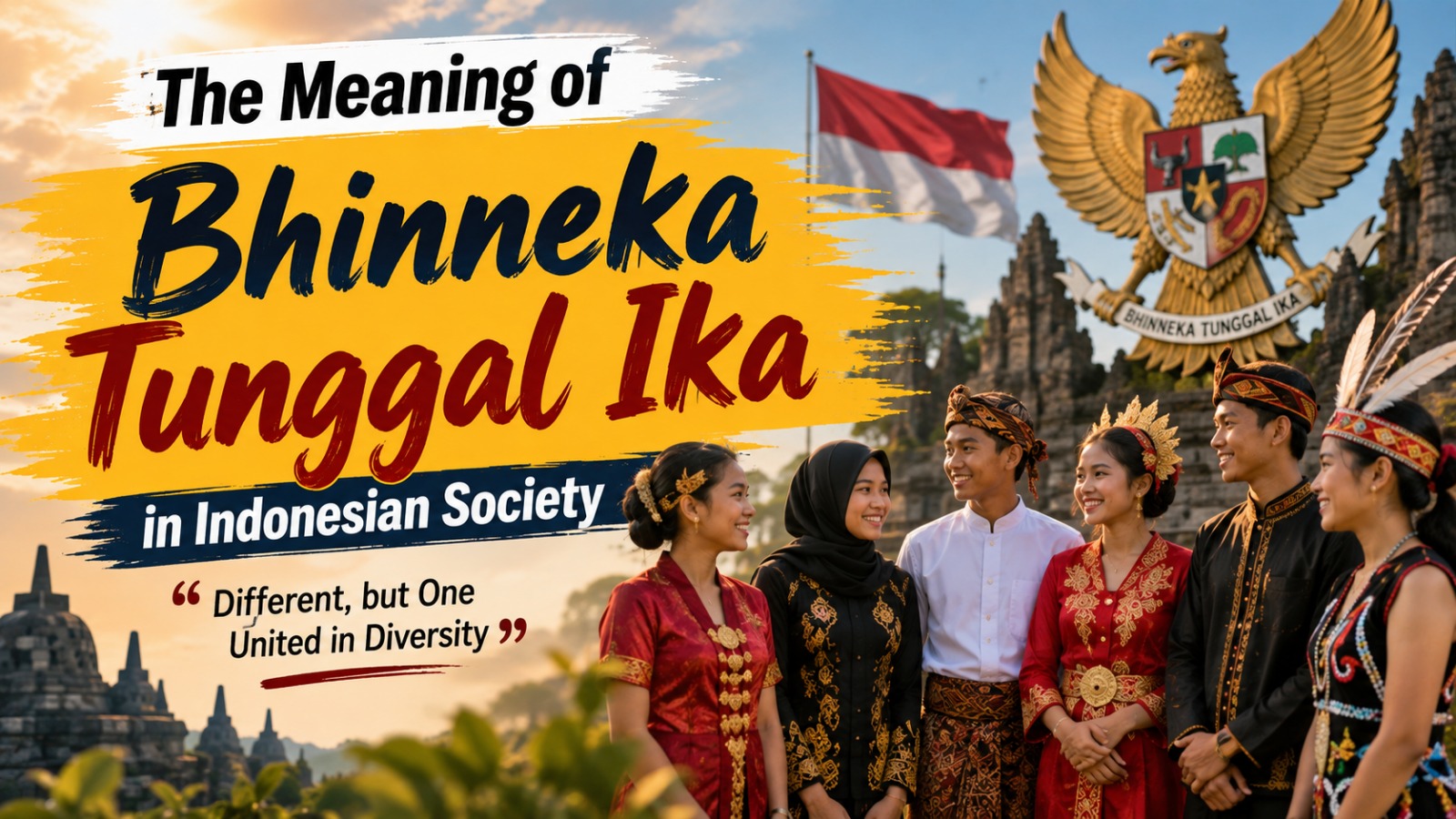
Indonesia is known as a diverse country with many ethnic groups, religions, languages, traditions, and cultural identities. This diversity is one of the country's greatest strengths, but it also requires a strong commitment to unity. One important principle that reflects this commitment is Bhinneka Tunggal Ika. The phrase teaches Indonesian society to respect differences while maintaining a shared national identity. Understanding its meaning is important for building a peaceful and harmonious society.
Bhinneka Tunggal Ika is commonly translated as Unity in Diversity or Different Yet One. The phrase expresses the idea that people can have different identities and beliefs while remaining united as one nation. This principle is especially relevant in Indonesia because diversity is present in almost every aspect of social life. It encourages people to avoid discrimination and respect the rights of others. Therefore, Bhinneka Tunggal Ika is more than a national motto because it also represents an important social value.
THE ORIGIN AND MEANING OF BHINNEKA TUNGGAL IKA
The phrase Bhinneka Tunggal Ika comes from the Old Javanese language and is associated with the Kakawin Sutasoma, a work attributed to Mpu Tantular during the Majapahit era. The phrase expresses the idea that different beliefs can exist together without destroying unity. In the historical context of the text, it was connected to the coexistence of different religious traditions. Over time, the meaning became closely associated with the broader principle of unity within Indonesian diversity. This historical background helps explain why the phrase remains meaningful in modern Indonesia.
Bhinneka Tunggal Ika was later adopted as the national motto of Indonesia and appears on the national emblem, Garuda Pancasila. Its position on the emblem reflects the importance of unity in the life of the Indonesian nation. The motto reminds citizens that differences in identity should not prevent cooperation. Instead, diversity can become a source of strength when people respect one another. This principle supports the broader national goal of maintaining unity within a diverse society.
BHINNEKA TUNGGAL IKA AND INDONESIAN DIVERSITY
Indonesian society consists of numerous ethnic groups, local languages, cultural traditions, and religious communities. Each region has its own characteristics that contribute to the country's cultural richness. Bhinneka Tunggal Ika provides a framework for appreciating these differences without treating one identity as more important than another. It encourages citizens to recognize diversity as part of Indonesia's national character. This approach can strengthen social relationships across different communities.
Diversity can create positive opportunities when people are willing to learn from one another. Cultural differences can introduce new perspectives, traditions, knowledge, and ways of life. However, diversity can also create tension when people refuse to respect differences or spread prejudice. Bhinneka Tunggal Ika encourages Indonesian society to respond to these challenges through tolerance and mutual respect. In this way, diversity can become a foundation for cooperation rather than a reason for division.
THE ROLE OF TOLERANCE IN INDONESIAN SOCIETY
Tolerance is one of the most important values connected to Bhinneka Tunggal Ika. It means respecting the rights and beliefs of others even when they are different from our own. In a diverse society, tolerance helps people live together peacefully without forcing everyone to have the same identity or opinions. It can also reduce misunderstandings and prevent unnecessary social conflicts. For this reason, tolerance is essential for maintaining unity in Indonesia.
Tolerance can be practiced through simple actions in everyday life. People can respect different religious practices, appreciate cultural traditions, and listen to opinions that differ from their own. In schools and universities, students can build friendships without judging others based on their background. In workplaces and communities, people can cooperate fairly despite having different identities. These everyday behaviors help turn the values of Bhinneka Tunggal Ika into practical social habits.
BHINNEKA TUNGGAL IKA IN EDUCATION
Education has an important role in introducing the values of Bhinneka Tunggal Ika to younger generations. Schools and universities can encourage students to understand Indonesia's cultural and social diversity. Learning about different traditions can help students develop broader perspectives and reduce prejudice. Educational environments can also encourage collaboration among students from different backgrounds. Through these experiences, students can learn that differences do not prevent people from achieving common goals.
Teachers and educational institutions can strengthen these values through classroom discussions, cultural activities, group projects, and community programs. Students can learn to communicate respectfully even when they disagree with one another. They can also develop teamwork skills by working with people who have different perspectives. These experiences are useful not only for education but also for future professional and social life. Therefore, education can become an important foundation for maintaining national unity.
BHINNEKA TUNGGAL IKA IN THE DIGITAL ERA
Digital technology has made communication between people much faster and easier. Social media allows Indonesians from different regions and backgrounds to interact and share information. This creates opportunities to introduce local cultures and promote positive messages about diversity. Young people can use digital platforms to showcase traditional arts, regional languages, local food, and cultural events. When used responsibly, technology can help strengthen appreciation for Indonesia's diversity.
However, the digital environment also presents challenges for national unity. Hoaxes, hate speech, misinformation, and provocative content can spread quickly through social media. Such content may create misunderstandings and increase tension between different groups. Therefore, digital literacy is important for applying Bhinneka Tunggal Ika in online spaces. Users should verify information, avoid discriminatory comments, and communicate respectfully when discussing different opinions.
THE ROLE OF YOUNG PEOPLE IN MAINTAINING UNITY
Young people have an important role in maintaining the spirit of Bhinneka Tunggal Ika because they will shape the future of Indonesian society. They can begin by respecting differences among friends, classmates, coworkers, and community members. Young people can also participate in cultural activities and learn about traditions from different parts of Indonesia. Such experiences can strengthen their appreciation of the country's diversity. A generation that understands diversity is better prepared to build inclusive relationships.
Young people can also use technology to promote unity and positive social values. They can create educational content, introduce Indonesian cultures, and share messages that encourage mutual respect. At the same time, they should avoid spreading misinformation, hate speech, or content that attacks particular groups. Responsible digital behavior can help create a healthier online environment. Through these actions, young people can become active contributors to maintaining Indonesian unity.
APPLYING BHINNEKA TUNGGAL IKA IN DAILY LIFE
Bhinneka Tunggal Ika becomes meaningful when it is practiced through everyday behavior. People can apply it by treating others fairly regardless of ethnicity, religion, culture, or social background. They can also work together on community activities and support one another when facing shared challenges. Respectful communication is another simple way to maintain healthy relationships across differences. These actions demonstrate that unity does not require everyone to be identical.
Applying Bhinneka Tunggal Ika also means placing shared interests above unnecessary divisions. When disagreements occur, people can seek solutions through discussion, cooperation, and mutual understanding. Communities can organize activities that bring people from different backgrounds together. Schools, universities, workplaces, and local communities can all contribute to creating inclusive environments. Consistent everyday actions can make the principle of unity in diversity stronger in Indonesian society.
WHY BHINNEKA TUNGGAL IKA REMAINS IMPORTANT
Bhinneka Tunggal Ika remains important because Indonesia continues to experience social, cultural, and technological changes. New challenges can emerge as people interact more frequently across different backgrounds and through digital platforms. The principle provides a useful reminder that differences should not weaken national solidarity. It encourages citizens to maintain respect while participating actively in society. This makes Bhinneka Tunggal Ika relevant not only historically but also in contemporary Indonesia.
The strength of Indonesia depends partly on its ability to manage diversity constructively. A society that values tolerance and cooperation can benefit from different perspectives and cultural experiences. Conversely, discrimination and intolerance can weaken social trust and create division. By applying Bhinneka Tunggal Ika consistently, Indonesians can preserve unity while respecting the country's rich diversity. This principle can therefore remain an important foundation for a peaceful and inclusive future.
CONCLUSION
Bhinneka Tunggal Ika represents the principle of unity within Indonesia's remarkable diversity. It teaches people that differences in ethnicity, religion, culture, language, and perspectives do not have to become barriers to cooperation. Instead, diversity can become a strength when supported by tolerance, mutual respect, and a shared commitment to national unity. The principle can be applied in education, communities, workplaces, and digital spaces.
Maintaining Bhinneka Tunggal Ika is a shared responsibility that involves every generation. Young people, in particular, can help preserve its values by respecting differences, using technology responsibly, and promoting positive interaction. When these principles become part of everyday behavior, Indonesia can continue to maintain unity while celebrating its diversity. Bhinneka Tunggal Ika therefore remains an essential value for building a harmonious and inclusive Indonesian society.
About the Author
Gusti Ayu Tita P
Author — STEKOM University
An active author focused on academic issues, educational technology, and human resource development in the campus environment.