The Ministry Of Culture And The Challenges Of Cultural Preservation In The Digital Era
Gusti Ayu Tita P
30 Juli 2026
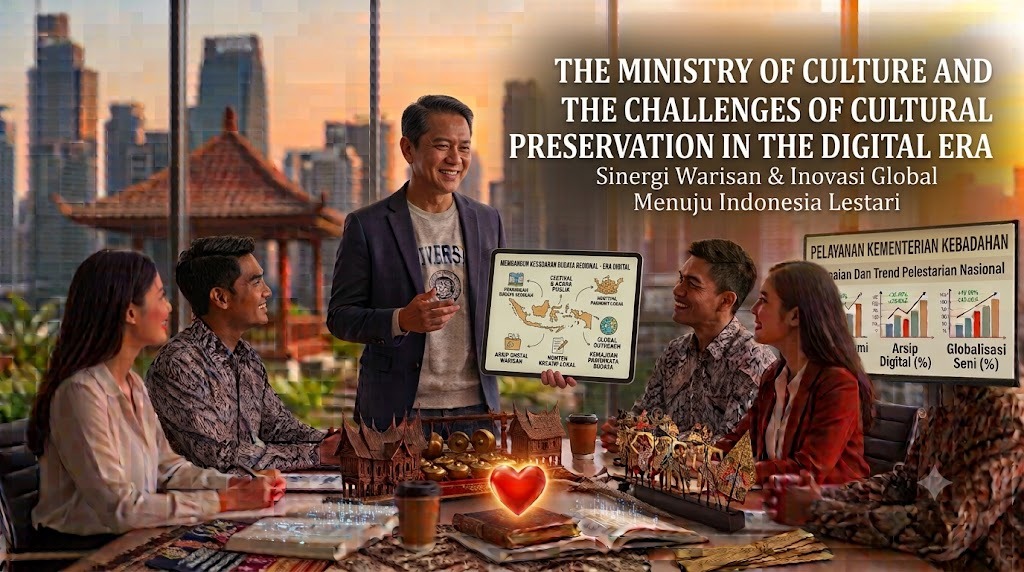
Indonesia has an extraordinary variety of cultural heritage, including traditional arts, local languages, customs, rituals, crafts, historical sites, and traditional knowledge. These cultural elements reflect the identity and history of communities across the country. The rapid growth of digital technology has created new opportunities to preserve and introduce this heritage. At the same time, the digital era creates challenges that require careful attention from the government and society.
The Ministry of Culture has an important responsibility in protecting and advancing Indonesian culture. Based on Presidential Regulation Number 190 of 2024, the Ministry carries out government affairs in the cultural sector, including functions related to protection, development, utilization, guidance, promotion, cultural diplomacy, and cooperation. These responsibilities are increasingly important as cultural activities become connected with digital technology. The challenge is to use technology effectively while maintaining cultural accuracy, context, and community rights.
THE IMPORTANCE OF CULTURAL PRESERVATION IN THE DIGITAL ERA
Cultural preservation is important because traditions contain historical knowledge, social values, and national identity. Without proper preservation, some cultural practices may become less familiar to younger generations. Digital technology can help record and share these traditions with wider audiences. However, digital preservation should complement real cultural practices rather than replace the communities that maintain them.
The digital era also changes how people learn about culture. Many people now discover information through social media, websites, videos, and other online platforms. This creates opportunities to introduce Indonesian heritage to people across different regions and countries. Digital access can make cultural knowledge more visible, but the information must remain accurate and responsible.
DIGITALIZATION AS A CULTURAL PRESERVATION TOOL
Digitalization provides several useful tools for preserving cultural heritage. Traditional performances, oral histories, crafts, rituals, and cultural knowledge can be documented through photographs, videos, audio recordings, and digital archives. These materials can help preserve information that might otherwise be difficult to access in the future. Digital documentation can also support education and cultural research.
The Ministry of Culture can use digital systems to manage cultural information and support broader access to cultural resources. Digital records can help researchers, educators, cultural practitioners, and communities understand cultural heritage more easily. However, not every cultural practice should automatically be published without considering its context. Cultural documentation should respect community consent, intellectual property, privacy, and other relevant rights.
THE CHALLENGE OF CULTURAL MISINFORMATION
One of the major challenges of the digital era is the rapid spread of inaccurate information. Cultural content can be shared widely without proper research or verification. Incorrect explanations about traditions, historical events, symbols, or cultural practices can create misunderstanding. Cultural misinformation can weaken public understanding of heritage.
The Ministry of Culture and cultural institutions can help address this problem by providing reliable information and encouraging responsible cultural communication. Educational materials should be based on credible research and information from relevant cultural communities. Content creators also have a responsibility to verify information before publishing it. Improving digital literacy can help users distinguish reliable cultural information from misleading content.
PROTECTING CULTURAL OWNERSHIP AND INTELLECTUAL PROPERTY
Digital platforms make it easy for cultural content to be copied, modified, and redistributed. Traditional designs, music, photographs, stories, and other cultural expressions may be used without proper acknowledgment. This creates concerns about cultural ownership and intellectual property. Communities should have opportunities to protect and manage cultural expressions connected to their traditions.
Preservation programs therefore need to consider legal and ethical protection. Digital publication should not automatically mean that cultural materials are free for unrestricted commercial use. Communities and cultural practitioners should be involved in decisions about how their cultural expressions are recorded and shared. Respecting cultural rights is an important part of responsible digital preservation.
KEEPING CULTURAL CONTEXT IN DIGITAL CONTENT
A cultural tradition can lose part of its meaning when it is presented without context. A short video or social media post may show a dance, ceremony, or traditional object without explaining its history or purpose. Audiences may then misunderstand the cultural meaning behind the content. Cultural context is essential for responsible digital communication.
Digital content should provide clear explanations whenever appropriate. Information about the origin, function, community, and significance of a cultural practice can help audiences understand it more accurately. Cultural practitioners and local communities can contribute important knowledge when content is created. This approach can make digital cultural content both engaging and educational.
ENCOURAGING YOUNG PEOPLE TO PRESERVE CULTURE
Young people are among the most active users of digital technology. Their creativity can provide new ways to introduce traditional culture through videos, photography, podcasts, animation, digital design, and social media. Youth participation can connect cultural heritage with modern communication. This can make traditional culture more familiar and interesting to younger audiences.
Young people should also have opportunities to learn directly from cultural practitioners. Digital creativity should be supported by an understanding of the history and values behind the traditions being presented. Schools, cultural communities, and government programs can provide opportunities for this learning process. Combining traditional knowledge with digital skills can create a stronger generation of cultural contributors.
STRENGTHENING CULTURAL EDUCATION THROUGH TECHNOLOGY
Technology can make cultural education more interactive and accessible. Students can explore digital archives, watch documentaries, visit virtual exhibitions, and access educational materials about Indonesian heritage. Digital cultural education can expand learning beyond the classroom. It can also allow students to discover traditions from regions they may never have visited.
However, digital resources should be carefully selected. Teachers and students need reliable sources to avoid learning from inaccurate or misleading cultural information. Cultural education should also encourage direct interaction with cultural communities whenever possible. Combining digital learning with real cultural experiences can create a deeper understanding of heritage.
SUPPORTING CULTURAL PRACTITIONERS IN THE DIGITAL ERA
Artists and cultural practitioners need support to adapt to technological changes. Digital platforms can help them promote performances, sell cultural products, document their work, and reach new audiences. At the same time, not every practitioner has equal access to technology or digital skills. Digital inequality can become a barrier to cultural participation.
The Ministry of Culture can support practitioners through training, funding, digital literacy programs, cultural spaces, and networking opportunities. These programs can help practitioners understand digital promotion and responsible content creation. Support should also reach communities in different regions rather than focusing only on major cultural centers. A more inclusive digital ecosystem can strengthen cultural preservation.
PRESERVING LOCAL LANGUAGES IN THE DIGITAL ERA
Local languages are an important part of Indonesia's cultural identity. However, some local languages face challenges because younger generations may use them less frequently in everyday communication. Digital technology can provide new ways to document and promote local languages. Digital language preservation can include online dictionaries, recordings, educational videos, digital archives, and learning applications.
The use of local languages in digital content can also make them more visible to younger audiences. Schools and communities can encourage young people to create content using local languages. Documentation should include accurate information and, where appropriate, involve native speakers and cultural experts. Technology can therefore become a useful tool for maintaining linguistic diversity.
DEVELOPING DIGITAL CULTURAL ARCHIVES
Digital archives can help store cultural information in an organized and accessible form. They may contain photographs, manuscripts, recordings, videos, research materials, and documentation of cultural activities. Digital archives can protect cultural knowledge from being forgotten or physically damaged. They can also provide resources for education and research.
Developing a reliable archive requires careful data management. Information should be properly described, organized, backed up, and updated when necessary. Access rules should also consider sensitive cultural information and community rights. A well-managed digital archive can become a valuable long-term resource for Indonesian cultural preservation.
PROMOTING INDONESIAN CULTURE THROUGH DIGITAL MEDIA
Digital media provides Indonesia with opportunities to introduce its culture to national and international audiences. Social media campaigns, documentaries, online exhibitions, podcasts, websites, and creative videos can present cultural heritage in accessible formats. Digital promotion can increase the visibility of Indonesian culture. It can also create opportunities for artists and cultural communities to reach new audiences.
Promotion should focus on accurate and respectful representation. Cultural content should not be changed simply to attract attention if the changes distort its meaning. Collaboration with cultural practitioners can improve the quality and authenticity of digital campaigns. Responsible promotion can strengthen cultural appreciation while supporting the people who maintain the traditions.
STRENGTHENING CULTURAL DIPLOMACY ONLINE
Digital platforms have expanded the possibilities for cultural diplomacy. Indonesian cultural performances, exhibitions, films, music, and educational programs can be introduced to international audiences through online channels. This can create opportunities for cultural exchange without always requiring physical travel. Digital diplomacy can therefore complement traditional international cultural programs.
The Ministry of Culture can work with cultural institutions, artists, communities, and international partners to develop meaningful digital cultural programs. International audiences can learn about Indonesian traditions through well-prepared digital content. Such activities can strengthen Indonesia's cultural presence while encouraging mutual understanding. Cultural diplomacy should continue to respect the communities and traditions represented.
BUILDING COLLABORATION BETWEEN GOVERNMENT AND COMMUNITIES
Digital cultural preservation requires cooperation between different stakeholders. The Ministry of Culture, local governments, cultural communities, artists, researchers, schools, universities, technology professionals, and the public can contribute in different ways. Collaboration can make digital preservation more inclusive and effective. It can also combine cultural knowledge with technological expertise.
Local communities should remain central to the process because they understand their own traditions. Technology professionals can provide digital tools, while researchers can help verify information and develop documentation methods. Educational institutions can support learning and research programs. Through cooperation, digital technology can serve cultural preservation rather than simply turning culture into online content.
BALANCING TRADITION AND MODERN TECHNOLOGY
The digital era does not mean that traditional culture must remain unchanged. Culture can adapt to new technologies while maintaining its essential values and identity. The challenge is finding a balance between tradition and innovation. Too little adaptation may make cultural content difficult to reach modern audiences, while excessive modification can weaken its original meaning.
The Ministry of Culture and cultural communities can encourage innovation that remains respectful of cultural heritage. New forms of presentation can be developed without removing important historical and cultural information. Young creators can work with experienced practitioners to develop responsible digital content. This balance can help Indonesian culture remain alive and relevant.
BUILDING A SUSTAINABLE DIGITAL CULTURAL FUTURE
Long-term digital cultural preservation requires more than creating online content. It needs sustainable policies, reliable technology, skilled human resources, accurate data, community participation, and continuous funding. Digital projects should be maintained and updated rather than abandoned after their initial launch. Sustainable planning can ensure that cultural information remains accessible for future generations.
The government also needs to evaluate digital cultural programs regularly. Feedback from communities, cultural practitioners, educators, researchers, and audiences can help improve future initiatives. Technology will continue to change, so preservation strategies must also remain adaptable. A sustainable digital approach can ensure that technology becomes a long-term partner in cultural preservation.
CONCLUSION
The Ministry of Culture faces both opportunities and challenges in preserving Indonesian culture in the digital era. Digital technology can support documentation, education, promotion, research, and cultural diplomacy. At the same time, misinformation, unequal digital access, intellectual property concerns, loss of context, and cultural commodification require careful attention.
Successful cultural preservation depends on cooperation between the government, cultural communities, artists, educators, researchers, young people, and technology professionals. Digital tools should be used to strengthen cultural knowledge rather than replace the communities that maintain it. By combining reliable information, community participation, responsible innovation, and sustainable digital strategies, Indonesia can protect its cultural heritage while making it accessible to future generations.
About the Author
Gusti Ayu Tita P
Author — STEKOM University
An active author focused on academic issues, educational technology, and human resource development in the campus environment.