The Ministry Of Culture Efforts To Preserve Traditions In The Modern Era
Gusti Ayu Tita P
30 Juli 2026
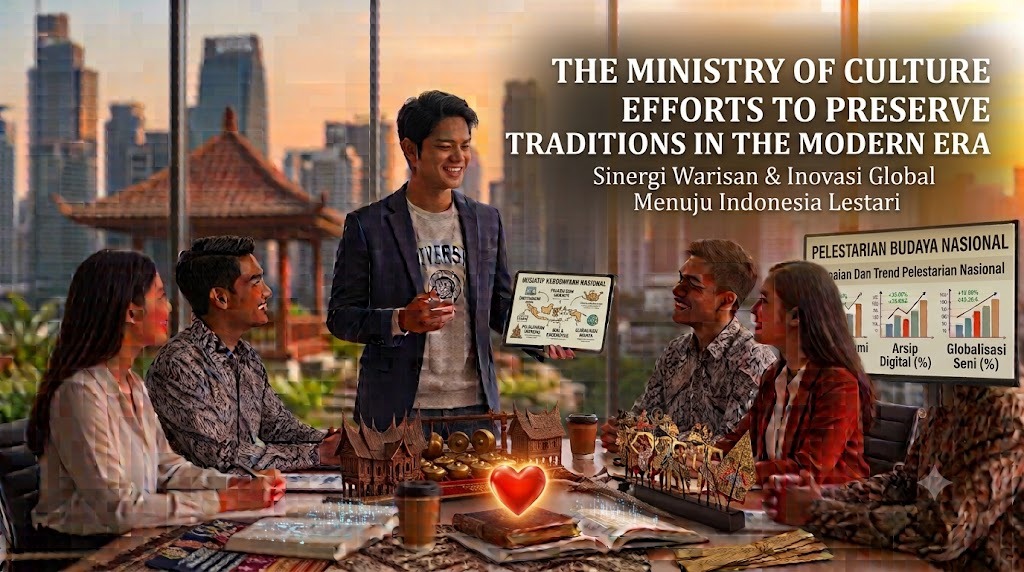
Indonesia is home to a wide variety of traditional cultures and local traditions. Traditional dances, music, rituals, crafts, languages, clothing, ceremonies, and local knowledge are important parts of the country's cultural identity. These traditions have been passed down through generations and continue to reflect the values and history of Indonesian communities. However, modernization, globalization, changing lifestyles, and technological development can create challenges for their continuity.
The Ministry of Culture has an important role in ensuring that Indonesian traditions remain protected and relevant in modern society. Under Presidential Regulation Number 190 of 2024, the Ministry of Culture is responsible for government affairs in the cultural sector and carries functions related to protection, development, utilization, guidance, cultural diplomacy, promotion, and cooperation. These responsibilities provide a foundation for maintaining traditions while allowing them to develop according to changing circumstances.
THE IMPORTANCE OF PRESERVING INDONESIAN TRADITIONS
Traditional culture is an important part of Indonesia's national identity. Every region has traditions that reflect its history, environment, beliefs, social relationships, and local knowledge. Preserving these traditions allows younger generations to understand where their communities come from. It also strengthens appreciation for Indonesia's cultural diversity.
Traditions should not only be treated as historical objects. Many traditions remain meaningful when they continue to be practiced and understood by the communities that own them. Living traditions can adapt to social changes while maintaining their essential cultural values. This balance allows traditions to remain relevant without losing their identity.
DOCUMENTING TRADITIONS FOR FUTURE GENERATIONS
One important effort in cultural preservation is documenting traditional practices. Documentation can include photographs, videos, audio recordings, written descriptions, interviews, and digital archives. These materials can preserve information about traditions that may become less common over time. Documentation also provides valuable resources for researchers, educators, communities, and future generations.
Digital documentation makes cultural information easier to organize and access. However, documentation should be carried out carefully and with respect for cultural ownership. Information should be accurate and presented in its proper context. Community participation is important because local people often have the most detailed knowledge about their own traditions.
STRENGTHENING CULTURAL DATA
Reliable cultural data helps the government understand the condition of traditions across Indonesia. Information about cultural practices, heritage, communities, and cultural activities can support better planning. The Ministry of Culture has developed cultural data initiatives to support the recording and management of cultural information. Accurate cultural data can become an important foundation for cultural policies.
Good data can also help identify traditions that require greater attention. Policymakers can use information to design preservation, development, education, and promotion programs. Cultural data can support research and make it easier to evaluate the impact of government programs. At the same time, data management must consider privacy, cultural rights, intellectual property, and community interests.
SUPPORTING CULTURAL PRACTITIONERS
Traditions cannot survive without people who practice and pass them on. Artists, cultural practitioners, elders, teachers, and local communities play an essential role in maintaining traditional knowledge. They teach skills, perform traditional arts, organize ceremonies, and introduce cultural values to younger generations. Supporting these people is therefore an important part of cultural preservation.
The government can provide support through funding, training, cultural programs, public spaces, promotion, and networking opportunities. Such assistance can help practitioners continue their activities and develop new ideas. It can also encourage younger people to become involved in cultural communities. Strong cultural practitioners create a stronger foundation for the survival of traditional culture.
DEVELOPING CULTURAL EDUCATION
Education is one of the most effective ways to introduce traditions to younger generations. Schools can teach students about local arts, traditional ceremonies, regional languages, crafts, history, and cultural values. Learning can take place through classroom activities as well as workshops, cultural performances, museum visits, and community projects. Cultural education can build pride and awareness among young people.
Modern teaching methods can make cultural education more interesting. Students can use videos, digital archives, interactive materials, and creative projects to explore traditional culture. However, educational content should be based on reliable information and presented with proper cultural context. Combining traditional knowledge with modern learning methods can make cultural education more relevant.
USING DIGITAL TECHNOLOGY TO PRESERVE TRADITIONS
Technology provides new opportunities for preserving and promoting traditions. Cultural content can be shared through websites, social media, online exhibitions, digital archives, podcasts, and video platforms. This makes traditional culture accessible to people who may live far from its place of origin. Digitalization can help traditions reach new generations.
Technology can also help cultural practitioners promote their work and connect with wider audiences. Young content creators can produce documentaries, educational videos, photographs, animations, and other creative materials about local traditions. However, digital content should respect cultural authenticity and avoid misleading representations. Responsible digitalization can strengthen cultural preservation while adapting to modern communication habits.
INVOLVING YOUNG PEOPLE IN TRADITIONAL CULTURE
Young people are essential to the future of Indonesian traditions. They can become cultural creators, artists, researchers, educators, entrepreneurs, and digital content producers. Their familiarity with modern technology allows them to introduce traditional culture through new forms of communication. Youth participation can therefore connect traditional knowledge with contemporary society.
Young people should also have opportunities to learn directly from cultural practitioners. Workshops, cultural communities, school programs, competitions, and artistic activities can provide practical experiences. When traditional knowledge is combined with modern creativity, young people can develop new ways to present cultural traditions. This helps ensure that preservation becomes an active process rather than simply remembering the past.
DEVELOPING TRADITIONS THROUGH INNOVATION
Preserving traditions does not mean preventing them from developing. Culture can adapt to changing circumstances while maintaining its essential meaning. Cultural innovation can involve new forms of presentation, creative design, digital media, modern performances, or collaborations with other artistic fields. Innovation can make traditional culture more attractive to contemporary audiences.
However, innovation should not remove the identity of the tradition itself. Artists and creators need to understand the historical and cultural background of the traditions they adapt. Collaboration with cultural communities can help ensure that changes remain respectful. This approach allows traditions to remain dynamic while preserving their cultural foundations.
PROVIDING SPACE FOR CULTURAL ACTIVITIES
Cultural traditions need places where people can practice, perform, teach, and share them. Cultural spaces can include community centers, public spaces, museums, cultural institutions, schools, and performance venues. These places provide opportunities for communities to meet and continue their cultural activities. Without adequate spaces, some cultural practices may become increasingly difficult to maintain.
The Ministry of Culture and other stakeholders can support the use and development of cultural spaces. These spaces can also become places for exhibitions, workshops, discussions, performances, and cultural festivals. Bringing cultural activities closer to the public can increase appreciation for traditional heritage. It can also encourage interaction between different generations.
PROMOTING INDONESIAN TRADITIONS
Promotion is important because traditions need audiences to remain visible and appreciated. Cultural festivals, exhibitions, performances, documentaries, publications, and digital campaigns can introduce Indonesian traditions to wider communities. Cultural promotion can also help local traditions become known beyond their regions of origin. This can create opportunities for cultural practitioners and communities.
Digital platforms provide additional opportunities for promotion. A traditional dance performance or local craft can be introduced to international audiences through carefully prepared digital content. The Ministry of Culture also has functions related to cultural promotion and diplomacy. Effective promotion should maintain accuracy and respect the communities that preserve the traditions.
STRENGTHENING CULTURAL DIPLOMACY
Indonesian traditions can contribute to cultural diplomacy. Traditional arts, music, crafts, cuisine, festivals, and cultural performances can introduce Indonesia to people from other countries. Cultural exchanges allow societies to learn about each other's values and traditions. They can also strengthen mutual understanding and international relationships.
International cultural activities can create opportunities for Indonesian artists and communities to build networks. Exhibitions, festivals, performances, and cultural exchange programs can provide platforms for Indonesian traditions. When cultural diplomacy is carried out responsibly, it can strengthen Indonesia's cultural presence internationally. At the same time, traditions should continue to be connected to their communities of origin.
DEVELOPING A CULTURAL ECONOMY
Traditional culture can contribute to local economic opportunities when managed responsibly. Crafts, fashion, culinary traditions, performing arts, creative products, and cultural tourism can generate income for communities. A sustainable cultural economy can help practitioners continue their activities while improving their livelihoods. Economic development can therefore support cultural preservation when cultural values remain protected.
Training in entrepreneurship, marketing, product development, and digital promotion can help cultural practitioners manage their activities more effectively. Wider markets can also create new opportunities for traditional products. However, commercialization should not exploit cultural traditions or ignore community rights. A responsible cultural economy should create benefits for both culture and the communities that maintain it.
WORKING WITH LOCAL COMMUNITIES
Local communities are central to the preservation of Indonesian traditions. They possess knowledge about rituals, arts, languages, crafts, and customs that may not be fully documented elsewhere. Government programs become more effective when communities are actively involved in planning and implementation. Community-based preservation can ensure that cultural policies reflect local realities.
Collaboration can include local governments, schools, universities, cultural organizations, artists, researchers, and community leaders. Each group can contribute different skills and resources. Local communities can provide cultural knowledge, while institutions can support research, funding, technology, and promotion. Working together can create a stronger and more sustainable preservation system.
FACING THE CHALLENGES OF MODERNIZATION
Modernization creates several challenges for traditional culture. Changes in lifestyles, limited cultural regeneration, reduced interest in traditional practices, and competition from global popular culture can affect cultural continuity. Some traditions may become less frequently practiced if younger generations do not receive opportunities to learn them. Cultural regeneration is therefore essential for long-term preservation.
Technology also creates challenges because inaccurate information can spread quickly online. Traditional practices may be presented without context or used without proper acknowledgment. Cultural preservation therefore needs strong attention to accuracy, cultural rights, copyright, and community participation. These challenges require continuous cooperation between the government, cultural practitioners, and society.
BUILDING A SUSTAINABLE CULTURAL FUTURE
The future of Indonesian traditions depends on combining preservation, education, technology, innovation, and community participation. Traditional culture should be protected while being given opportunities to grow in appropriate ways. Long-term policies can provide support for practitioners, cultural education, documentation, cultural spaces, and digital development. This approach can make cultural preservation more sustainable.
The Ministry of Culture cannot achieve these goals alone. Government institutions, communities, artists, educators, researchers, young people, and the wider public all have important roles. When these groups work together, traditional culture can remain active and relevant. A sustainable cultural future is one where traditions are respected, practiced, understood, and allowed to develop responsibly.
CONCLUSION
The Ministry of Culture plays an important role in preserving Indonesian traditions in the modern era. Its efforts can include cultural protection, documentation, data development, education, support for cultural practitioners, digitalization, cultural promotion, diplomacy, and community collaboration. These strategies help ensure that traditional culture remains connected to modern society without losing its essential identity.
Preserving traditions is not only a government responsibility. Communities, young people, artists, educators, researchers, and society must also participate in maintaining cultural heritage. By combining traditional knowledge with responsible innovation and modern technology, Indonesia can keep its traditions alive for future generations. A strong cultural identity can help Indonesia face global change while remaining proud of its diverse heritage.
About the Author
Gusti Ayu Tita P
Author — STEKOM University
An active author focused on academic issues, educational technology, and human resource development in the campus environment.