The Ministry of Industry's Programs for Developing Excellent Industrial Human Resources
Gusti Ayu Tita P
30 Juli 2026
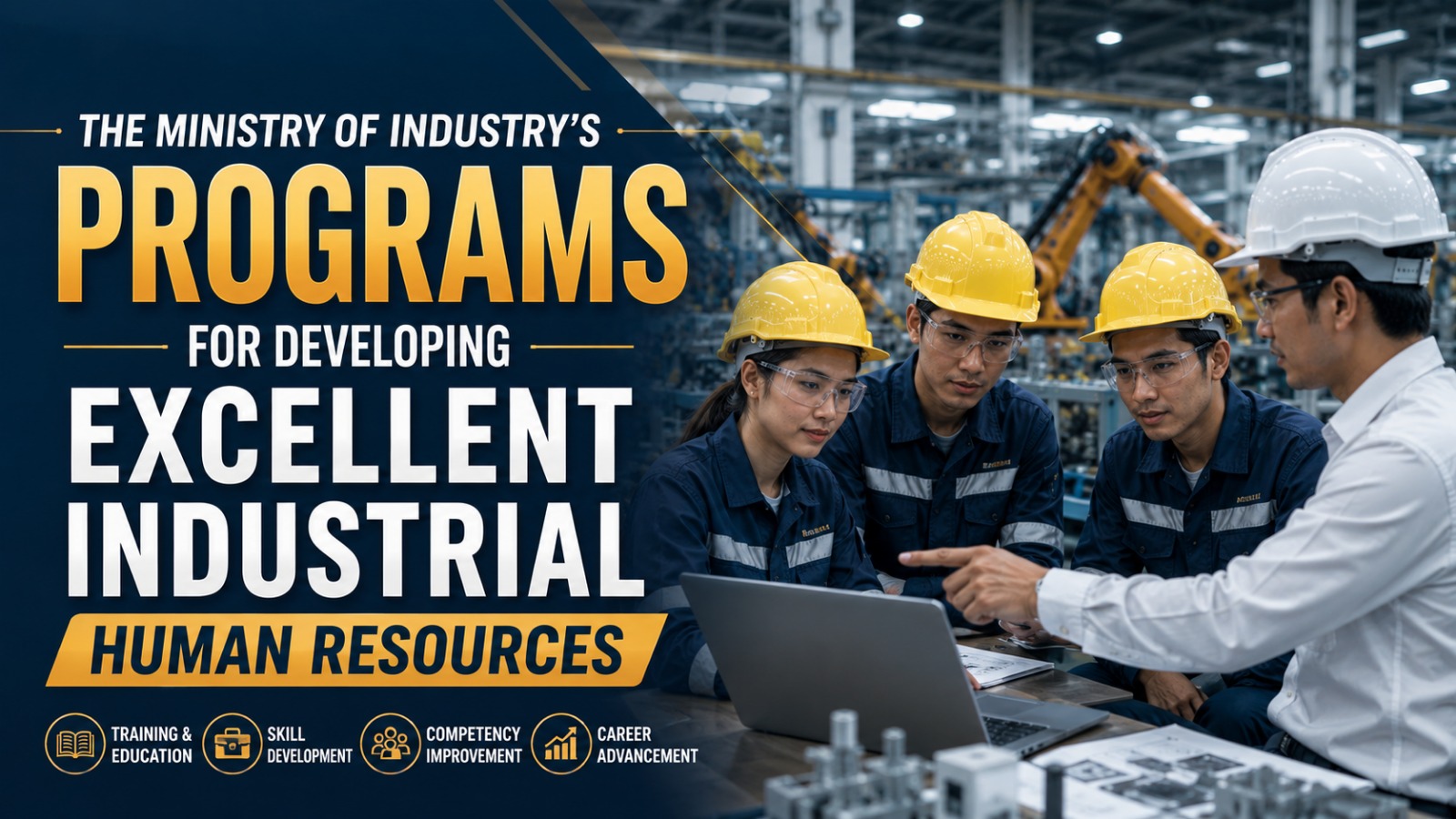
The development of excellent industrial human resources is one of the most important factors in strengthening Indonesia’s industrial sector. In the era of rapid technological change, industries need workers who have strong skills, creativity, and the ability to adapt to modern production systems. The Ministry of Industry plays an important role in preparing competent workers who can support national industrial growth.
Industrial development is not only focused on machines, technology, and production capacity but also depends on the quality of human resources behind it. Skilled workers are needed to operate advanced technology, create innovations, and improve industrial productivity.
Through various education and training programs, the Ministry of Industry continues to improve workforce quality. These efforts aim to create a professional workforce that is ready to compete in both national and international industrial environments.
THE IMPORTANCE OF INDUSTRIAL HUMAN RESOURCES DEVELOPMENT
Industrial human resources are the main foundation for creating a strong and competitive industrial sector. Without qualified workers, technological development and industrial investment cannot achieve maximum results.
The Ministry of Industry understands that industries require employees with specific skills that match current market needs. Therefore, workforce development becomes a priority to ensure industries have competent and productive workers.
Quality human resources can help companies improve efficiency, develop innovations, and maintain product quality. This condition will strengthen Indonesia’s position in global industrial competition.
THE ROLE OF THE MINISTRY OF INDUSTRY IN WORKFORCE DEVELOPMENT
The Ministry of Industry has a strategic role in creating programs that improve the competence of industrial workers. These programs are designed based on the needs of various industrial sectors, including manufacturing, technology, and creative industries.
The ministry collaborates with educational institutions, vocational schools, training centers, and industrial companies to provide relevant learning opportunities. This cooperation ensures that training programs are aligned with real industrial requirements.
Through these efforts, the Ministry of Industry helps reduce the gap between education and the workforce. Graduates and workers can gain practical skills that are useful for their professional development.
INDUSTRIAL EDUCATION AND VOCATIONAL TRAINING PROGRAMS
One of the main strategies for developing skilled workers is through industrial education and training programs. These programs provide technical knowledge, practical experience, and professional skills needed in modern industries.
The Ministry of Industry supports vocational education by encouraging learning systems that combine theory and direct industrial practice. This approach helps students understand real workplace situations before entering professional careers.
Training programs also focus on improving digital skills, machine operation, production management, and problem-solving abilities. These competencies are essential for supporting the growth of technology-based industries.
SUPPORTING YOUNG GENERATIONS FOR INDUSTRIAL CAREERS
Young generations have an important role in the future development of Indonesia’s industries. The Ministry of Industry encourages students and young professionals to prepare themselves with skills that match industrial developments.
Through various programs, young people can gain opportunities to learn about technology, innovation, and industrial processes. These experiences help them become more confident when entering the workforce.
The availability of skilled young workers will create more career opportunities in the industrial sector. It also supports the transformation of Indonesia into a more advanced and competitive industrial country.
DEVELOPING DIGITAL AND TECHNOLOGY SKILLS
The growth of Industry 4.0 has changed the skills required in the industrial world. Workers today need not only technical knowledge but also digital abilities to operate modern technologies.
The Ministry of Industry includes digital competency development in its human resource programs. Workers are encouraged to understand automation, data analysis, smart systems, and other technology-based processes.
By improving digital skills, industrial workers can adapt to technological changes more easily. This development helps companies increase productivity and maintain competitiveness in the global market.
COLLABORATION BETWEEN EDUCATION AND INDUSTRY
Strong cooperation between educational institutions and industries is essential for developing qualified workers. The Ministry of Industry encourages partnerships that connect learning programs with real industrial needs.
Through these collaborations, students can receive practical training, internships, and direct experience from industrial environments. Companies can also find potential workers who already understand workplace requirements.
This partnership creates a more effective workforce development system. It ensures that education produces graduates with relevant skills and better employment opportunities.
THE IMPACT OF QUALITY INDUSTRIAL HUMAN RESOURCES ON ECONOMIC GROWTH
The availability of skilled workers provides significant benefits for national economic development. Qualified industrial human resources can increase productivity, encourage innovation, and improve the competitiveness of Indonesian industries.
Companies with competent employees can produce higher-quality products and expand their market opportunities. This growth contributes to stronger industrial performance and economic stability.
Therefore, investment in human resource development is an important step toward creating a sustainable industrial future. Skilled workers become valuable assets for Indonesia’s long-term industrial progress.
CONCLUSION
The Ministry of Industry’s programs for developing excellent industrial human resources are essential for supporting Indonesia’s industrial growth. Through education, vocational training, digital skill development, and cooperation with industries, the ministry helps prepare workers who are ready to face future challenges.
Strong human resources will become the driving force behind innovation, productivity, and industrial competitiveness. With continuous development and collaboration, Indonesia can build a more advanced, professional, and sustainable industrial sector.
About the Author
Gusti Ayu Tita P
Author — STEKOM University
An active author focused on academic issues, educational technology, and human resource development in the campus environment.