
The Most Beautiful Temples in Indonesia You Should Visit
Gusti Ayu Tita P
4 September 2026
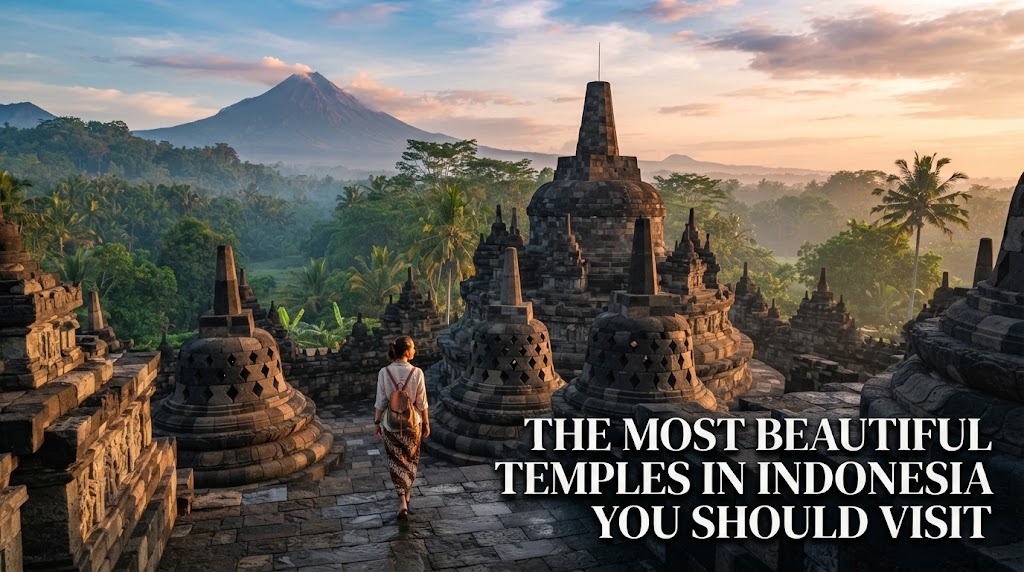
Indonesia is known for its rich cultural heritage, including numerous ancient temples that reflect the history, religion, architecture, and artistic traditions of the country. From massive Buddhist monuments to elegant Hindu temple complexes, each site offers a different experience for travelers.
Some Indonesian temples are also recognized internationally for their outstanding cultural value. Borobudur and Prambanan, for example, were both inscribed on the UNESCO World Heritage List in 1991.
BOROBUDUR TEMPLE
Borobudur Temple is one of Indonesia's most famous historical attractions. This Buddhist monument was built during the 8th and 9th centuries under the Syailendra Dynasty. Its structure consists of five square terraces, three circular platforms, and a large central stupa at the top. The walls and balustrades are decorated with thousands of square meters of detailed reliefs, while 72 openwork stupas surround the circular platforms.
Borobudur is particularly attractive for visitors interested in history, architecture, photography, and Buddhist culture. Its design represents different levels of Buddhist cosmology and creates a remarkable combination of temple, stupa, and mountain symbolism. The Borobudur Temple Compounds also include Mendut and Pawon temples, creating an important cultural landscape in Central Java.
PRAMBANAN TEMPLE
Prambanan Temple is one of the most impressive Hindu temple complexes in Indonesia. The complex was developed around the 9th and 10th centuries and is particularly associated with Shiva, Vishnu, and Brahma. The tallest main temple, dedicated to Shiva, reaches approximately 47 meters. Its walls feature intricate reliefs depicting episodes from the Ramayana.
Prambanan is also part of a larger archaeological area that includes Sewu, Bubrah, and Lumbung temples. The combination of Hindu and Buddhist monuments within the wider complex demonstrates the cultural and religious diversity of ancient Java. Its impressive architecture and detailed stone carvings make Prambanan an excellent destination for cultural tourism.
MENDUT TEMPLE
Mendut Temple is a Buddhist temple located near Borobudur. The temple is particularly notable for its large Buddha statue accompanied by two Bodhisattva figures. Its relatively compact structure makes it easy to explore while still offering important examples of ancient Buddhist art and architecture.
Mendut is also historically connected to Borobudur and Pawon. UNESCO identifies these three monuments as part of the Borobudur Temple Compounds and notes their relationship along an eastward axis. Visiting Mendut can therefore provide a broader understanding of the Buddhist heritage of Central Java.
PLAOSAN TEMPLE
Plaosan Temple is a beautiful temple complex located near Prambanan. The site is known for its combination of Buddhist architectural elements and its distinctive twin temple structures. Detailed reliefs, statues, and surrounding smaller temples give Plaosan a unique character.
One of the most interesting aspects of Plaosan is the evidence of cultural interaction between Hindu and Buddhist traditions in ancient Java. Its location near Prambanan makes it convenient to include in a historical tour of the region. The quieter atmosphere can also make it an appealing destination for visitors who want to explore ancient architecture at a more relaxed pace.
GEDONG SONGO TEMPLES
Gedong Songo Temple offers a different temple experience because the complex is situated in a mountainous environment. The temples are located around the slopes of Mount Ungaran, providing visitors with historical attractions alongside scenic natural surroundings. The cool mountain atmosphere makes the destination different from temples located in lowland areas.
The journey around the complex can also become part of the experience because several temple groups are spread across the landscape. Visitors can enjoy views of the surrounding hills while learning about the Hindu heritage of ancient Java. Gedong Songo is therefore suitable for travelers who want to combine cultural tourism with outdoor scenery.
DIENG TEMPLES
The Dieng Temple Complex is located in the highlands of Central Java and consists of several Hindu temples. These temples are among the important archaeological remains in the Dieng Plateau and have distinctive architectural characteristics. Their setting among mountains and cool highland landscapes adds to their visual appeal.
A visit to Dieng can also be combined with other natural and cultural attractions around the plateau. Travelers can explore the temples while enjoying the area's distinctive scenery and atmosphere. Because weather conditions in the highlands can change quickly, visitors should prepare appropriate clothing and check local conditions before traveling.
WHY VISIT TEMPLES IN INDONESIA
Visiting Indonesian temples offers more than the opportunity to see beautiful ancient buildings. These sites provide a direct way to learn about the development of Hinduism and Buddhism, ancient kingdoms, traditional art, and architectural techniques. Many temples also contain reliefs and sculptures that preserve stories and cultural values from centuries ago.
Temple tourism can also support cultural preservation when visitors follow local regulations and respect heritage sites. Borobudur and Prambanan, for example, are internationally recognized World Heritage properties with ongoing conservation needs. Responsible tourism helps ensure that these historic monuments can continue to be appreciated by future generations.
TIPS FOR VISITING INDONESIAN TEMPLES
Before visiting a temple, travelers should check the latest information about opening hours, entrance requirements, weather, transportation, and visitor regulations. Comfortable clothing and footwear are recommended because exploring large temple complexes often involves considerable walking. Visitors should also bring drinking water and sun protection when traveling during hot weather.
Respecting the heritage site is equally important. Avoid climbing on restricted structures, touching fragile carvings, leaving trash, or making marks on temple walls. Visitors should also respect religious activities when a temple remains an active place of worship. These simple actions help protect Indonesia's cultural heritage while making the travel experience more enjoyable.
CONCLUSION
The most beautiful temples in Indonesia offer a combination of impressive architecture, fascinating history, religious heritage, and beautiful surroundings. Borobudur and Prambanan are among the most internationally recognized examples, while Mendut, Plaosan, Gedong Songo, and the Dieng temples provide other unique experiences.
For travelers interested in culture and history, visiting these temples can be an educational and memorable journey. By learning about their history and respecting conservation rules, visitors can enjoy these remarkable monuments while contributing to their preservation.
About the Author
Gusti Ayu Tita P
Author — STEKOM University
An active author focused on academic issues, educational technology, and human resource development in the campus environment.















