
The Mystery of Reincarnation and Stories of Previous Lives
Gusti Ayu Tita P
9 September 2026
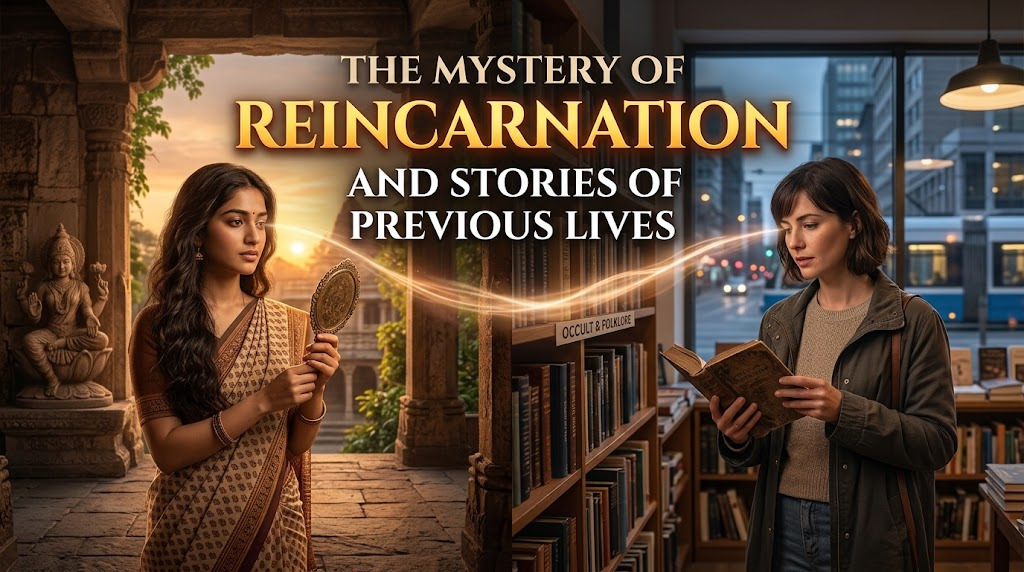
Reincarnation is one of the spiritual concepts that has attracted attention across different cultures and periods of history. The idea suggests that a person may experience another existence after death, creating a connection between one life and another. Stories about Previous Lives often make this concept even more intriguing because some people claim to remember details that they believe belong to another lifetime.
These stories can be found in religious traditions, folklore, personal accounts, and modern discussions. Some people consider them meaningful evidence of Reincarnation, while others believe they can be explained through memory, imagination, cultural influences, or other factors. Because of these different interpretations, stories about previous lives remain a subject of curiosity and debate.
WHAT ARE STORIES ABOUT PREVIOUS LIVES?
Stories about previous lives generally involve people who claim to remember events, places, people, or experiences from an existence before their current life. Some accounts describe children who provide unusual details about people or locations they have apparently never encountered. These stories are sometimes interpreted as possible examples of Past Life memories.
The details of these accounts can vary considerably. Some are based on personal memories, while others come from information provided by family members or communities. Although such stories can be fascinating, an unusual account does not automatically prove that reincarnation has occurred. Each story needs to be considered within its cultural and personal context.
WHY ARE REINCARNATION STORIES CONSIDERED MYSTERIOUS?
Reincarnation stories often attract attention because some accounts contain details that appear difficult to explain at first. A person may describe a location they have never knowingly visited or provide information about an unfamiliar historical setting. For believers, such details may be viewed as possible connections to a Previous Life.
However, there can be many explanations for unusual memories and experiences. Information may be encountered indirectly through conversations, books, media, or other sources and later be remembered without a clear awareness of where it came from. Human memory can also change over time. These possibilities make the subject more complicated than simply deciding whether a story is true or false.
STORIES OF CHILDREN AND PAST LIFE MEMORIES
Children are sometimes featured in stories about Past Lives because some claim to remember details from another existence at a young age. In certain accounts, children describe names, places, occupations, or events that they believe are connected to someone who lived previously. These stories have attracted interest from people studying claims related to Rebirth.
Such accounts should still be approached carefully. Children's statements can be influenced by questions from adults, conversations, imagination, and information encountered in their surroundings. The way a story is recorded and interpreted can also affect how it is later understood. For this reason, interesting childhood memories should not automatically be treated as scientific confirmation of reincarnation.
RELIGIOUS AND CULTURAL INTERPRETATIONS
Many reincarnation stories are understood through religious and cultural traditions. In Hinduism and Buddhism, ideas about Rebirth have long been connected with broader teachings about existence, karma, and spiritual liberation. Other cultures may have their own stories involving ancestors, spirits, or previous forms of existence.
Cultural background can strongly influence how people interpret unusual experiences. The same dream, memory, or feeling of familiarity may be described differently depending on a person's beliefs. This shows why Reincarnation stories should be understood not only as individual experiences but also as part of the traditions in which they appear.
HOW TO VIEW REINCARNATION STORIES CRITICALLY?
Being interested in reincarnation does not mean that every story should be accepted as factual. Critical Thinking can help people examine where information came from, whether alternative explanations exist, and how accurately an account was recorded. This approach allows people to remain curious without making conclusions too quickly.
It is also important to distinguish spiritual belief from scientific evidence. Reincarnation remains a subject of discussion and investigation, but personal stories alone do not establish it as a scientifically confirmed phenomenon. Respecting different beliefs while examining claims carefully provides a balanced way to understand the mystery surrounding Previous Lives.
CONCLUSION
The mystery of reincarnation is closely connected with stories about Previous Lives and claims of memories from another existence. These accounts can be fascinating because they raise questions about memory, identity, spirituality, and what may happen after death.
Different religions and cultures interpret such stories in different ways. While believers may see them as possible evidence of Reincarnation, other explanations can also be considered. Approaching these stories with curiosity and Critical Thinking allows people to explore the subject while recognizing the difference between personal experiences, cultural beliefs, and established evidence.
About the Author
Gusti Ayu Tita P
Author — STEKOM University
An active author focused on academic issues, educational technology, and human resource development in the campus environment.