The Position of the 1945 Constitution in Indonesias Legal System
Gusti Ayu Tita P
4 Agustus 2026
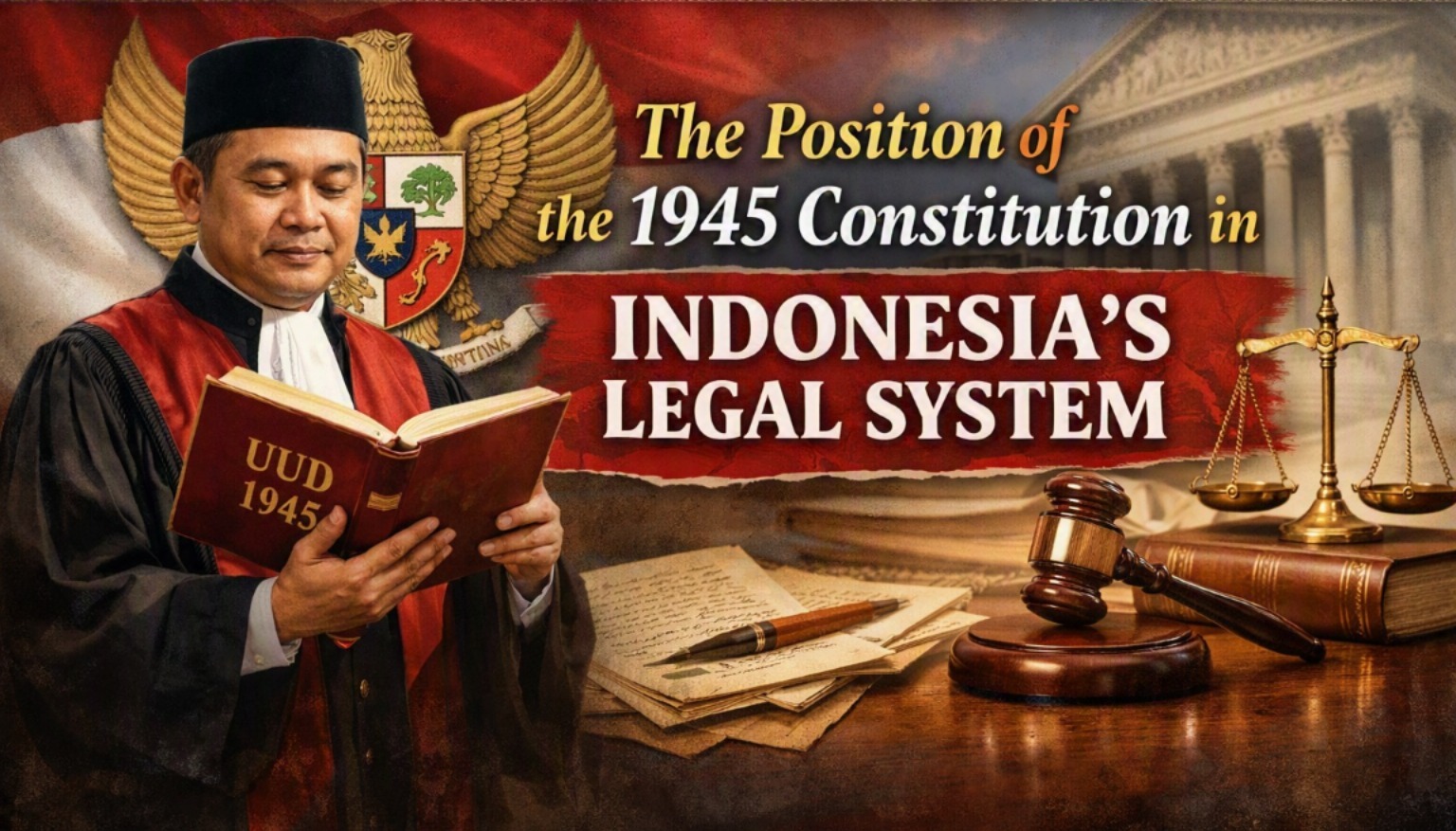
The 1945 Constitution is the highest legal foundation of the Republic of Indonesia. It serves as the main reference for the country's legal system, government structure, and the protection of citizens' rights. Every law, regulation, and public policy must comply with the principles established in the Constitution. Understanding the position of the 1945 Constitution helps people appreciate how Indonesia maintains justice, democracy, and the rule of law.
THE 1945 CONSTITUTION AS THE HIGHEST LAW
The 1945 Constitution occupies the highest position in Indonesia's legal hierarchy. It acts as the supreme legal document that guides the creation and implementation of all national laws. Every regulation, from national legislation to regional policies, must be consistent with its constitutional provisions. If a law conflicts with the Constitution, it can be challenged through the appropriate legal process. This principle ensures that the legal system remains fair and constitutional.
The Constitution also establishes the basic principles of the Indonesian state, including democracy, sovereignty, and social justice. It defines the identity of Indonesia as a state governed by law rather than by arbitrary power. Because of this position, the Constitution becomes the foundation for maintaining legal certainty and public trust. It also provides stability by ensuring that government actions remain within constitutional limits.
THE ROLE OF THE CONSTITUTION IN GOVERNMENT
The 1945 Constitution clearly outlines the structure of government and the responsibilities of state institutions. It explains the roles of the executive, legislative, and judicial branches while promoting a system of checks and balances. This arrangement prevents excessive concentration of power in any single institution. As a result, government decisions are expected to remain transparent and accountable.
The Constitution also regulates how public officials are elected, appointed, and held responsible for their actions. It provides legal procedures for decision-making and constitutional governance. By defining these processes, the Constitution supports political stability and effective public administration. It also strengthens confidence in democratic institutions across the country.
PROTECTING THE RIGHTS OF CITIZENS
One of the most important functions of the 1945 Constitution is protecting the fundamental rights of every Indonesian citizen. It guarantees important freedoms such as freedom of religion, freedom of expression, and equal treatment before the law. These constitutional protections ensure that every individual has legal recognition and equal opportunities. They also encourage respect for human dignity and justice.
The Constitution balances individual rights with civic responsibilities. Citizens are expected to respect the law, protect national unity, and contribute to society. This balance creates harmony between personal freedom and public interest. As a result, constitutional rights are accompanied by obligations that support national development.
THE CONSTITUTION AS A FOUNDATION FOR LEGAL DEVELOPMENT
The 1945 Constitution serves as the primary foundation for the development of Indonesia's legal system. New laws and legal reforms must reflect constitutional values and principles. This ensures that legal changes remain consistent with the country's long-term goals and democratic ideals. It also prevents the creation of regulations that contradict constitutional norms.
Constitutional amendments have strengthened legal protection, democratic governance, and institutional accountability. These changes allow the legal system to adapt to social and political developments while preserving constitutional values. The Constitution therefore remains relevant in responding to modern challenges. Its flexibility supports continuous legal improvement without weakening national principles.
CONCLUSION
The position of the 1945 Constitution is essential because it provides legal certainty, government legitimacy, and constitutional protection. Without a supreme constitution, the legal system could become inconsistent and vulnerable to abuse of power. The Constitution ensures that every state institution performs its duties according to clearly defined legal rules. This strengthens confidence in the justice system and democratic governance.
The Constitution also promotes national unity by providing common legal principles for all citizens and government institutions. It encourages accountability, transparency, and respect for human rights. As Indonesia continues to develop, the Constitution remains the foundation that guides legal reform and democratic progress. Its position at the top of the legal hierarchy guarantees the stability and integrity of the nation's legal system.
About the Author
Gusti Ayu Tita P
Author — STEKOM University
An active author focused on academic issues, educational technology, and human resource development in the campus environment.