
The Positive Impact of Teachers on Students’ Mental and Social Development
Gusti Ayu Tita P
25 Juli 2026
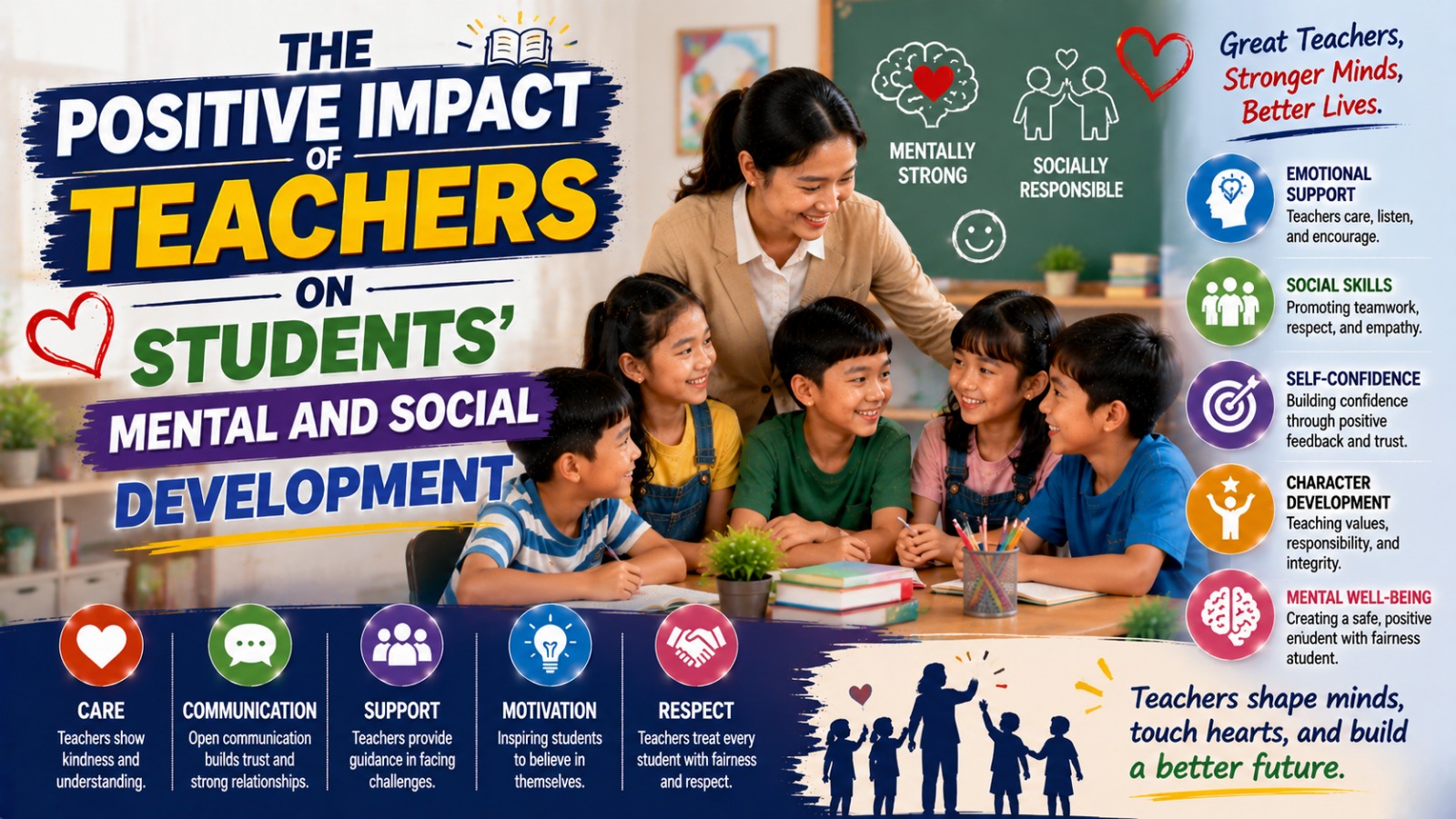
Teachers play an essential role in shaping students’ lives beyond academic achievement. In schools, teachers not only provide knowledge but also influence students’ emotional well-being, confidence, and social behavior. Positive interactions between teachers and students can significantly affect mental and social development, helping children grow into healthy, responsible, and confident individuals. In today’s fast-changing world, the role of teachers in supporting students’ mental and social growth has become more important than ever.
THE IMPORTANCE OF TEACHERS IN STUDENT DEVELOPMENT
Education is not limited to learning subjects such as mathematics, science, or language. Schools are also places where students develop emotional intelligence, communication skills, and social awareness.
Teachers become important figures in students’ daily lives because they guide, motivate, and support them throughout the learning process. Positive relationships with teachers can help students feel safe, valued, and motivated to participate actively in school activities.
When students receive encouragement and understanding from teachers, they are more likely to develop positive attitudes toward learning and personal growth.
HOW TEACHERS SUPPORT STUDENTS’ MENTAL HEALTH?
Mental health is an important part of a student’s overall well-being. Teachers who create supportive and positive classroom environments help students feel emotionally secure and comfortable expressing themselves.
Students often face academic pressure, social challenges, and emotional stress. Teachers who listen carefully and provide emotional support can help students manage these difficulties more effectively.
Simple actions such as offering encouragement, appreciating students’ efforts, and communicating kindly can improve students’ confidence and emotional stability.
BUILDING STUDENTS’ SELF-CONFIDENCE
Confidence plays a major role in helping students succeed academically and socially. Teachers can help build self-confidence by encouraging participation, recognizing achievements, and giving constructive feedback.
Students who feel appreciated are more willing to share ideas, ask questions, and try new experiences. Positive reinforcement from teachers also helps students overcome fear of failure and develop a growth mindset.
Confident students are more likely to become independent learners and active participants in their communities.
TEACHERS AND SOCIAL SKILL DEVELOPMENT
Schools are important environments for students to learn social interaction and communication. Teachers help students develop social skills such as teamwork, empathy, respect, and conflict resolution.
Group discussions, collaborative projects, and classroom activities encourage students to communicate effectively and cooperate with others. Teachers who promote inclusion and respect help create positive relationships among students.
Strong social skills are essential for building healthy friendships, professional relationships, and successful careers in the future.
THE ROLE OF TEACHERS IN CHARACTER EDUCATION
Character education is closely connected to mental and social development. Teachers help students understand the importance of honesty, discipline, responsibility, and kindness in everyday life.
By becoming positive role models, teachers inspire students to behave ethically and respectfully toward others. Character education also helps students develop emotional control and positive decision-making skills.
Students with strong character are more likely to contribute positively to society and maintain healthy relationships.
CHALLENGES FACED BY STUDENTS IN THE DIGITAL ERA
The digital era has created both opportunities and challenges for students. Social media, online communication, and digital distractions can affect students’ mental health and social behavior.
Teachers now have the responsibility to guide students in using technology wisely and maintaining healthy online interactions. Digital literacy and online ethics have become important parts of modern education.
Teachers who educate students about responsible technology use help protect them from negative online influences such as cyberbullying and misinformation.
CREATING A POSITIVE LEARNING ENVIRONMENT
A positive classroom environment supports both academic success and emotional well-being. Teachers who encourage open communication and mutual respect help students feel comfortable and motivated.
Students learn better when they feel emotionally supported and accepted. Friendly and inclusive classrooms also reduce stress and improve cooperation among students.
Positive learning environments help students become more engaged, creative, and socially responsible individuals.
TEACHERS ARE KEY TO STUDENTS’ FUTURE WELL-BEING
Teachers have a lasting influence on students’ mental and social development because they help shape emotional intelligence, confidence, and interpersonal skills. Their guidance and support contribute greatly to students’ overall well-being and future success.
By focusing on both education and emotional growth, teachers prepare students to face life’s challenges with confidence and responsibility. Positive teacher-student relationships create stronger, healthier, and more successful future generations.
With caring and dedicated teachers, students can grow into emotionally strong and socially responsible individuals who contribute positively to society.
About the Author
Gusti Ayu Tita P
Author — STEKOM University
An active author focused on academic issues, educational technology, and human resource development in the campus environment.















