
The Purpose of Village BLT in Supporting Community Economies
Gusti Ayu Tita P
9 September 2026
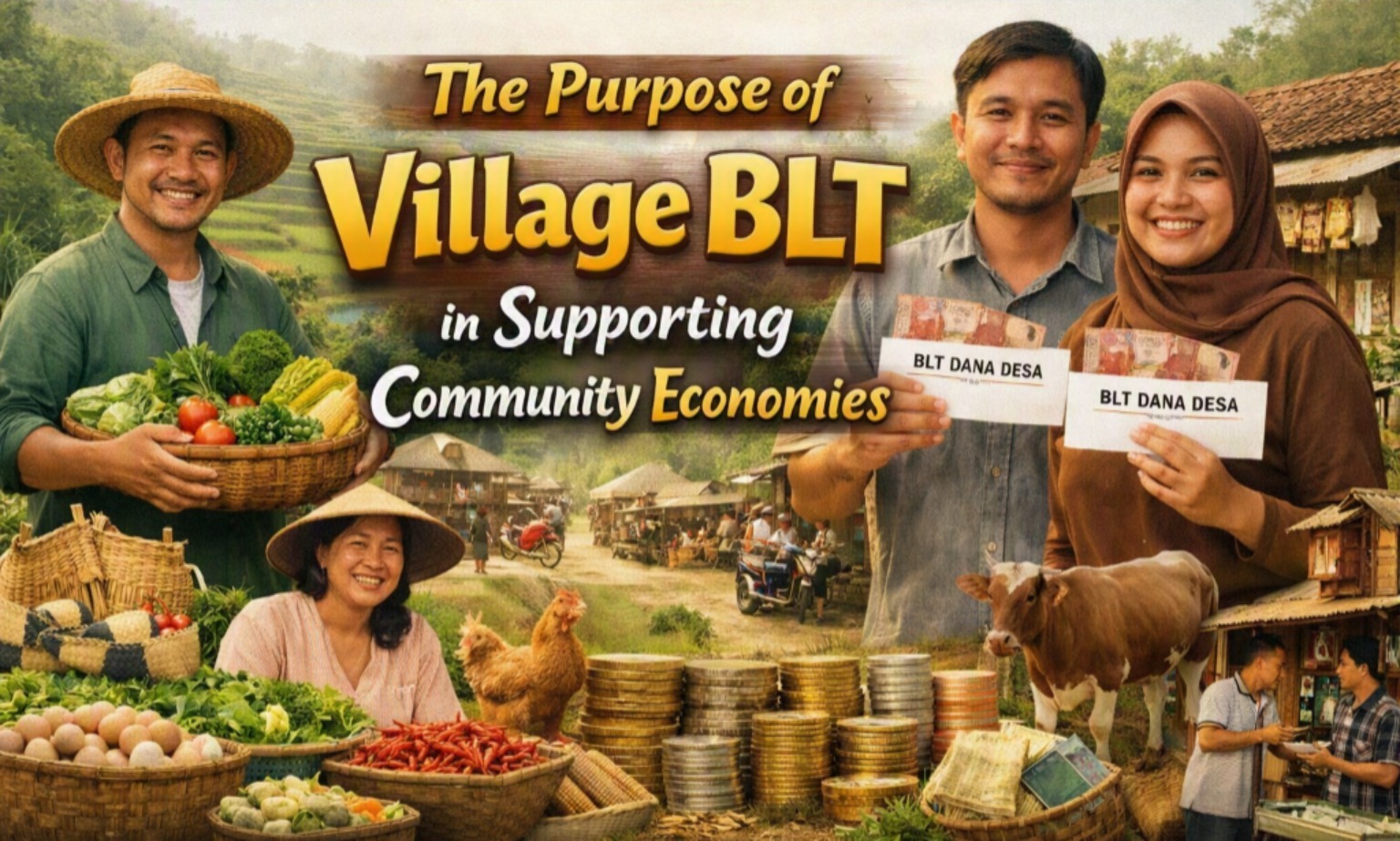
Village BLT, or Village Direct Cash Assistance, is an important social protection program designed to help vulnerable families in rural areas. In Indonesia, Village BLT is funded through the Village Fund and is directed toward handling extreme poverty. The program provides direct financial support so eligible families can meet essential needs and maintain basic economic stability. For 2026, the Ministry of Villages and Development of Disadvantaged Regions continues to include Village BLT as one of the main focuses of Village Fund use. (JDIH Kemendesa)
WHAT IS VILLAGE BLT?
Village BLT is a form of direct financial assistance provided to eligible families using part of the Village Fund. Its primary purpose is to reduce the economic pressure experienced by families facing serious financial difficulties. Rather than being used for general village development, this assistance is directed at families in vulnerable economic conditions. The 2026 policy places Village BLT within the focus of Village Fund use for extreme poverty reduction. (JDIH Kemendesa)
The implementation is carried out at the village level, with the list of beneficiary families discussed and agreed upon through a Village Deliberation and then established through a decision by the village head. Government data can be used as a reference when identifying potential beneficiaries. This mechanism is intended to make assistance more targeted and accountable. It also gives the village community a role in determining beneficiaries according to applicable rules. (JDIH Banyuwangi)
THE MAIN PURPOSE OF VILLAGE BLT
The main purpose of Village BLT is to provide immediate economic support to families affected by extreme poverty. Additional assistance can help households maintain access to food, daily necessities, transportation, and other essential expenses. By reducing short-term financial pressure, families may have more room to manage their limited household income. This makes Village BLT an important part of social protection at the village level.
Village BLT can also help prevent vulnerable households from falling into even more serious economic hardship. Families that experience a sudden loss of income may struggle to pay for basic needs without temporary assistance. For this reason, direct cash support can function as a buffer while households recover their financial capacity. However, the assistance should be understood as social protection, rather than a permanent source of household income.
HOW VILLAGE BLT SUPPORTS THE LOCAL ECONOMY?
The economic impact of Village BLT can begin at the household level. When beneficiaries receive financial assistance, they can use it to purchase basic necessities from local shops and markets. This spending can help maintain demand for goods and services within the village. As a result, money received by vulnerable households can circulate through the local economy.
The program can therefore provide indirect support to small village businesses and local traders. Increased purchasing activity may help shop owners, food sellers, farmers, and other local economic actors maintain their income. The effect depends on how the assistance is used and on the economic conditions of each village. Village BLT is most effective as part of a broader strategy that also strengthens employment, food security, and local businesses.
WHO CAN BE PRIORITIZED AS VILLAGE BLT BENEFICIARIES?
For 2026, the priority is extremely poor families who live in the relevant village and are identified using government data as a reference. Where government data is not available or does not adequately identify eligible families, village authorities can apply the criteria set by the regulation. These criteria include situations such as loss of livelihood, households with members who have chronic illness or disabilities, and certain highly vulnerable households. Single elderly households and poor households headed by women can also fall within the stated criteria. (Scribd)
The beneficiary selection process is important because Village BLT is not intended to be distributed automatically to every resident. The proposed beneficiaries must go through the village-level determination process according to applicable regulations. This helps reduce the risk of assistance being received by households that are not the intended target. Accurate data, community participation, and proper administration are therefore essential for targeted assistance.
VILLAGE BLT AND LONG TERM COMMUNITY WELFARE
Although Village BLT provides direct financial assistance, its broader contribution should be viewed alongside other Village Fund priorities. The 2026 Village Fund policy also focuses on areas such as food security, village economic institutions, health services, disaster resilience, labor-intensive infrastructure, digital infrastructure, and support for the implementation of Koperasi Desa Merah Putih. (Jati Tengah Selopuro) These programs can complement direct assistance by creating conditions that support longer-term economic development.
A strong village economy needs more than temporary cash support. Families also need opportunities to earn income, access basic services, develop productive activities, and participate in the local economy. Therefore, Village BLT can serve as an important short-term protection mechanism while other village programs address longer-term economic challenges. Combining social assistance and economic empowerment can help communities become more resilient and less dependent on emergency support.
WHY PROPER MANAGEMENT OF VILLAGE BLT MATTERS?
Proper management is essential to ensure that Village BLT reaches the people who genuinely need it. The government has identified the risk of mistargeted Village BLT distribution as an issue that needs to be addressed through better data and poverty-handling policies. (JDIH Kemendesa) Clear beneficiary criteria, transparent decision-making, and appropriate monitoring can help strengthen public trust.
Villages also need to communicate information clearly to residents so people understand the purpose and selection process of the program. Transparency can reduce misunderstandings and help communities participate in monitoring the use of Village Funds. When implementation is accountable, Village BLT can provide meaningful support without weakening the principle of responsible public fund management. Ultimately, the quality of implementation is just as important as the assistance itself.
CONCLUSION
Village BLT plays an important role in protecting vulnerable rural households from severe economic pressure. Its main focus in 2026 is supporting extreme poverty reduction through direct assistance funded by the Village Fund. The program can support household purchasing power while also contributing indirectly to economic activity in local markets. However, its impact will be stronger when it is accompanied by productive economic programs, employment opportunities, food security initiatives, and effective village development.
For this reason, Village BLT should not be viewed only as financial assistance. It is part of a broader effort to strengthen community welfare and economic resilience at the village level. With accurate beneficiary data, transparent decision-making, and proper monitoring, the program can better fulfill its purpose of supporting families while contributing to healthier local economies. The 2026 regulatory framework specifically places poverty reduction alongside other village development priorities, showing the importance of integrating social protection with sustainable village development. (JDIH Kemendesa)
About the Author
Gusti Ayu Tita P
Author — STEKOM University
An active author focused on academic issues, educational technology, and human resource development in the campus environment.