The Right Parenting Style to Build a Positive Character in an Only Child
Gusti Ayu Tita P
7 September 2026
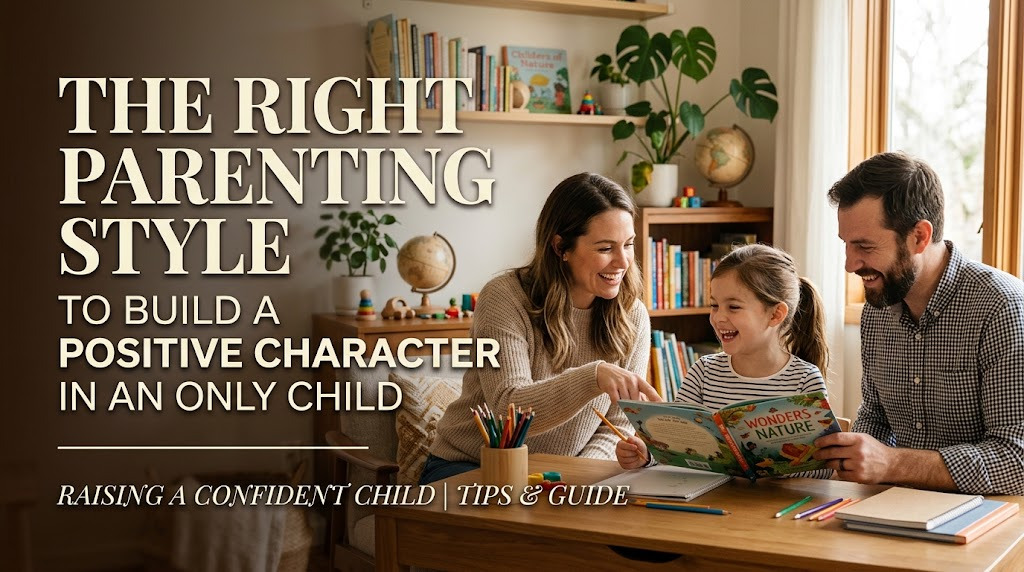
Raising an only child can be a unique experience for parents because all of their attention, hopes, and responsibilities may be focused on one child. Parents often want to provide the best education, emotional support, and opportunities for their child's future. However, giving too much attention or protection can sometimes make it harder for children to develop independence. Therefore, choosing the right parenting style for an only child is important for healthy character development.
A positive character does not develop simply because a child has siblings or does not have them. It is influenced by parenting, family relationships, education, social experiences, and the child's individual personality. With appropriate guidance, an only child can grow into a confident, responsible, caring, and independent person without feeling excessive pressure from parents.
UNDERSTANDING THE NEEDS OF AN ONLY CHILD
Every child has different emotional and developmental needs, including children who grow up without siblings. An only child may receive a great deal of attention from parents, which can be beneficial when that attention is balanced. Parents can use this opportunity to understand their child's interests, strengths, concerns, and learning needs.
However, parents should avoid assuming that an only child always needs to be protected or accompanied. Children also need opportunities to explore and experience situations independently. Providing a balance between parental support and personal freedom can help an only child develop confidence while still feeling emotionally secure.
APPLYING AUTHORITATIVE PARENTING
One effective approach is authoritative parenting, which combines warmth with clear expectations and reasonable boundaries. Parents provide emotional support while also establishing rules that children are expected to follow. This approach can help children understand that freedom comes with responsibility.
Parents should explain the reasons behind important rules instead of relying only on punishment. When children understand expectations, they are more likely to learn self-discipline and make thoughtful choices. This type of parenting can encourage responsibility, emotional maturity, independence, and respect for others.
TEACHING INDEPENDENCE FROM AN EARLY AGE
Parents should give an only child opportunities to do appropriate tasks without immediately offering assistance. Simple responsibilities such as organizing toys, preparing school supplies, choosing clothes, or completing homework can teach children to manage everyday activities. These small experiences can gradually build self-reliance and decision-making skills.
Parents should allow children to make reasonable mistakes as part of the learning process. Immediately solving every problem may unintentionally create dependence on adults. Instead, parents can ask questions and provide guidance so that children learn how to solve problems and make decisions independently.
AVOIDING EXCESSIVE PROTECTION AND PRESSURE
Because an only child is the sole focus of parental attention, some parents may become overly protective. They may try to prevent disappointment, failure, or difficult experiences. Although protection comes from good intentions, children also need opportunities to face manageable challenges and learn from them.
Parents should also avoid placing unrealistic expectations on an only child. Academic success, career choices, or personal achievements should not become measures of a child's worth. Healthy parenting allows children to develop their own interests while receiving encouragement rather than constant pressure.
DEVELOPING EMPATHY AND SOCIAL SKILLS
An only child does not have to learn social skills from siblings because there are many other opportunities to interact with people. Parents can encourage friendships, extracurricular activities, sports, and community involvement. These experiences can teach children how to share, cooperate, communicate, and understand different perspectives.
Parents can also teach empathy through everyday situations. Asking children how another person might feel can help them recognize emotions and consider other people's needs. Learning to respect others is essential for developing a positive and caring character, regardless of family size.
BUILDING OPEN COMMUNICATION AT HOME
Open communication helps an only child feel comfortable discussing emotions, problems, and personal experiences. Parents should listen without immediately judging or criticizing. When children feel heard, they may become more willing to talk about difficulties instead of hiding them.
Parents can create regular opportunities for meaningful conversations, such as talking during meals or before bedtime. They should also show that expressing sadness, disappointment, fear, or frustration is normal. Strong parent-child communication can help children develop emotional awareness and learn healthy ways to handle difficult situations.
CONCLUSION
The right parenting style for an only child is not about giving unlimited attention or controlling every aspect of their life. Instead, parents should create a healthy balance between love, boundaries, independence, responsibility, and social experiences. Children need to know that their parents support them while also allowing them to grow and make age-appropriate decisions.
With consistent and supportive parenting, an only child can develop a strong and positive character. Parents can encourage confidence, empathy, independence, responsibility, and emotional maturity by providing guidance without excessive protection or pressure. Ultimately, the goal of parenting is not to create a perfect child, but to help an only child become a capable, caring, and resilient individual.
About the Author
Gusti Ayu Tita P
Author — STEKOM University
An active author focused on academic issues, educational technology, and human resource development in the campus environment.