The Role of a Big Family in Supporting Children
Gusti Ayu Tita P
8 September 2026
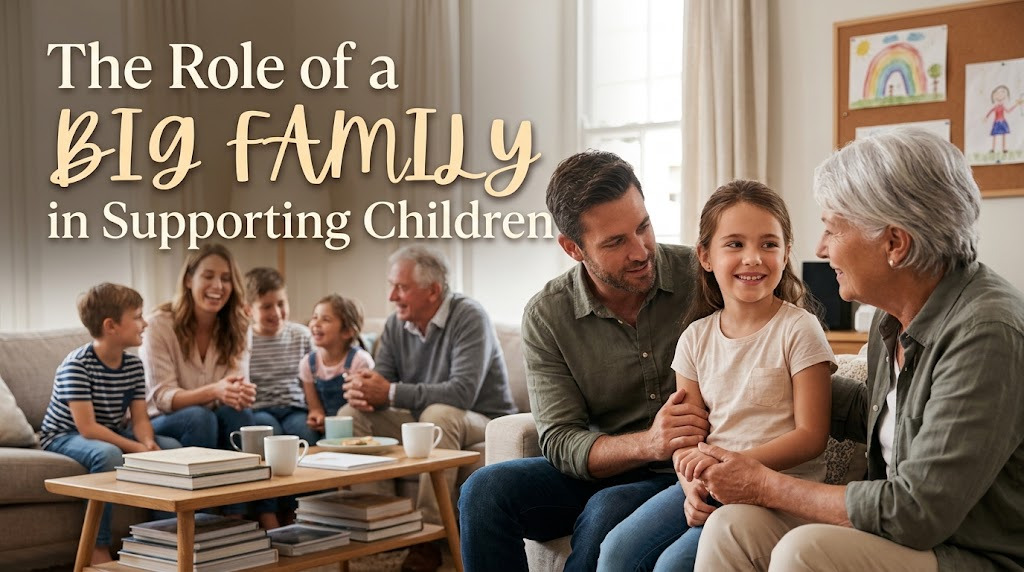
A big family can play an important role in supporting children as they grow and develop. Besides parents, children may interact with grandparents, siblings, uncles, aunts, and other relatives who can provide care and guidance. These relationships can give children more opportunities to learn from different people and experiences. A supportive family environment can also help children feel valued, cared for, and connected.
The role of a big family is not limited to providing practical help. Family members can also contribute to a child's emotional, social, and personal development. When relatives communicate positively and respect the child's needs, their presence can become a valuable part of the child's growing environment.
PROVIDING EMOTIONAL SUPPORT FOR CHILDREN
Children need a safe environment where they can express their feelings and experiences. Members of a big family can provide emotional support by listening, encouraging, and showing care when children face difficulties. Having trusted relatives to talk to can help children feel that they have people who care about their experiences. However, adults should still respect the child's comfort and personal boundaries.
Emotional support can also be important when children experience success. Family members can celebrate their achievements and encourage them to continue learning. Simple appreciation can help children develop confidence in their abilities. A positive family environment can therefore contribute to healthy emotional development.
HELPING CHILDREN GAIN EXPERIENCES AND KNOWLEDGE
A big family can introduce children to people with different backgrounds, ages, interests, and experiences. Interacting with relatives can give children opportunities to learn new perspectives and everyday skills. Grandparents, for example, may share stories about family history, while older siblings or cousins may introduce children to new activities. These experiences can contribute to a child's knowledge and development.
Children can also learn important social skills through regular family interactions. They may practice communicating, sharing, cooperating, and respecting different opinions. These lessons can be useful when children interact with friends, teachers, and other people outside the family. In this way, family relationships can become an important part of everyday learning.
CREATING A SAFE AND COMFORTABLE ENVIRONMENT
A supportive family should provide children with an environment where they feel safe and respected. Relatives can contribute by showing care, maintaining healthy communication, and responding appropriately to children's needs. When children feel comfortable around family members, they may become more willing to communicate about their experiences. This can help adults understand how to provide appropriate support.
However, having many relatives does not mean every family member should have the same level of involvement in a child's life. Parents and caregivers should establish appropriate boundaries and responsibilities. Respecting these boundaries helps ensure that support remains positive. A healthy environment combines family care with respect for the child's individuality.
HELPING PARENTS SUPPORT THEIR CHILDREN
A big family can sometimes provide practical support to parents who are caring for children. Relatives may help with everyday activities, share useful experiences, or provide assistance when parents need support. This can make family responsibilities easier to manage when the help is appropriate and agreed upon. Cooperation among adults can create a more supportive environment for children.
Family members can also share positive examples and experiences with parents. Different generations may have different perspectives on education, communication, and daily routines. Parents can consider these perspectives while still making decisions based on their child's needs. The goal should be to support parents rather than replace their primary role.
TEACHING POSITIVE VALUES AND HABITS
Family members can help children learn important family values through everyday examples. Values such as kindness, respect, responsibility, honesty, cooperation, and caring for others can be introduced through simple interactions. Children often learn by observing how adults treat one another. Consistent positive behavior can therefore reinforce lessons taught at home.
A big family can also help children understand the importance of cooperation. Sharing responsibilities, helping relatives, and participating in family activities can teach children how to contribute to a group. These experiences can support their social and personal development. When family members work together in a positive way, children can see practical examples of healthy relationships.
CONCLUSION
A big family can support children by providing emotional support, knowledge, experiences, care, practical assistance, and positive values. Relationships with relatives can give children more opportunities to communicate, learn, and develop social skills. At the same time, family support should respect the child's needs, personal boundaries, and the role of parents or caregivers. With healthy communication and cooperation, a big family can become a valuable and supportive environment for children's development.
About the Author
Gusti Ayu Tita P
Author — STEKOM University
An active author focused on academic issues, educational technology, and human resource development in the campus environment.