The Role of a Regent in Building a Prosperous and Developed Region
Gusti Ayu Tita P
12 Agustus 2026
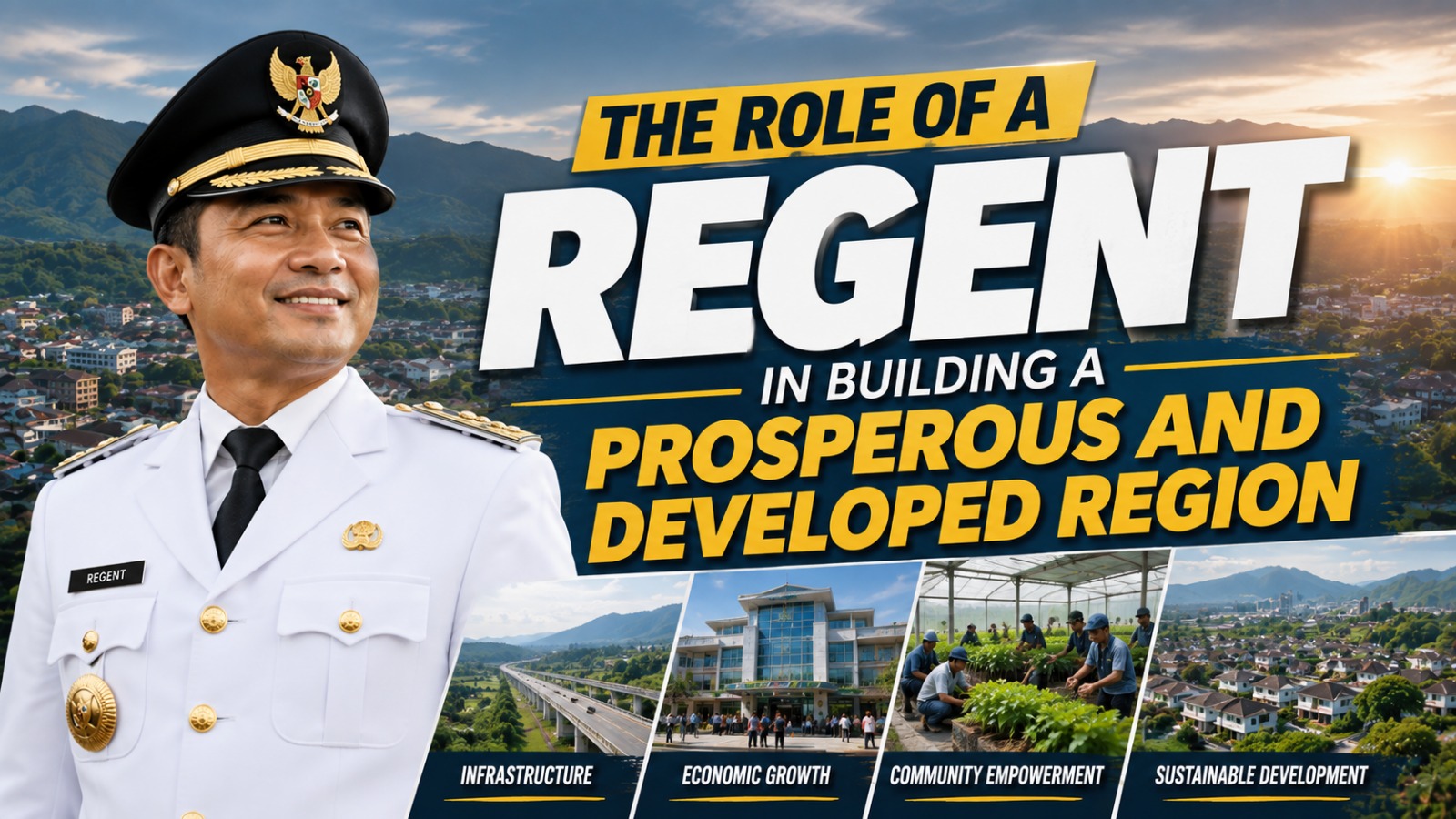
A regent has an important position in managing and developing a regency. As a regional leader, a regent is responsible for translating government policies into programs that can directly benefit local communities. The success of regional development depends not only on economic growth but also on improvements in education, healthcare, infrastructure, employment, and public services. A good regent must understand local conditions and create policies based on the actual needs of residents. Therefore, effective leadership is essential for building a prosperous and developed region.
UNDERSTANDING THE ROLE OF A REGENT
A regent leads the administration of a regency and works with the regional government apparatus to implement development programs. The regent has to coordinate different government agencies so that public programs can operate effectively. This leadership also involves setting regional priorities based on available resources and community needs. A regent must ensure that government policies are implemented fairly across different areas. Strong coordination can help prevent overlapping programs and improve the effectiveness of regional development.
The role of a regent is also closely connected with maintaining communication with the community. Residents need opportunities to express their concerns, suggestions, and expectations regarding government programs. By listening to citizens, a regent can better understand problems that may not appear in official reports. Community participation can also make development programs more relevant and sustainable. This approach helps create a government that is responsive to local needs.
SUPPORTING REGIONAL ECONOMIC GROWTH
Economic development is one of the important foundations for creating a prosperous region. A regent can support local economic growth by developing sectors that have strong potential, such as agriculture, tourism, trade, fisheries, manufacturing, and creative industries. Government policies can provide a more supportive environment for businesses and local entrepreneurs. Small and Medium Enterprises (SMEs) can receive assistance through training, business development programs, access to markets, and other appropriate support. A stronger local economy can create more income opportunities for residents.
A regent can also encourage investment while ensuring that economic activities remain responsible and beneficial to the community. Local investment can support the development of businesses, infrastructure, and employment. However, regional economic policies should consider environmental sustainability and the interests of local residents. Sustainable economic development can help regions grow without unnecessarily damaging natural resources. This balance is important for creating long-term prosperity.
IMPROVING EDUCATION AND HUMAN RESOURCES
Education plays a major role in determining the quality of human resources in a region. A regent can support better education by improving access to schools, strengthening educational facilities, and supporting programs that help students remain in school. Attention should also be given to teachers, because qualified and motivated educators are essential for effective learning. Regional governments can work with schools and other institutions to identify educational challenges. Better education can prepare young people to compete in a changing labor market.
Human resource development should not focus only on formal education. Vocational training, digital skills, entrepreneurship, and other practical abilities can also help residents improve their career opportunities. Human resource development is particularly important when regional industries and employment requirements are changing. By preparing residents with relevant skills, local governments can reduce the gap between education and employment. This can contribute to stronger economic growth and improved community welfare.
DEVELOPING QUALITY INFRASTRUCTURE
Infrastructure is another important factor in regional development. Roads, bridges, clean water systems, public facilities, transportation networks, and digital connectivity can influence economic and social activities. A regent needs to identify infrastructure gaps and prioritize projects based on urgency and public benefit. Good infrastructure can make it easier for residents to access schools, healthcare facilities, markets, and workplaces. It can also help businesses move goods and services more efficiently.
Infrastructure development should be planned carefully to ensure that public funds are used effectively. Projects should consider the needs of both urban and rural communities so that development does not become concentrated in only certain areas. Regional infrastructure development can reduce disparities between locations when it is carried out fairly. Proper maintenance is also important because infrastructure that is not maintained can quickly lose its usefulness. Therefore, development should include both construction and long-term management.
IMPROVING PUBLIC SERVICES
Citizens expect government services to be accessible, efficient, transparent, and fair. A regent can improve public services by evaluating existing procedures and reducing unnecessary administrative difficulties. Government employees should receive appropriate training so they can provide professional and respectful services. The use of technology can also simplify certain administrative processes and reduce waiting times. Public service improvement can increase public satisfaction and strengthen trust in local government.
Good public services should also be accessible to people with different social and economic conditions. Residents in remote areas may face greater difficulties in accessing government offices and facilities. Regional governments therefore need to consider accessibility when designing service systems. Complaint and feedback mechanisms can help officials identify problems and make improvements. A responsive service system shows that government institutions are focused on serving the community.
REDUCING POVERTY AND SOCIAL INEQUALITY
A prosperous region is not simply a region with economic growth. Development should also improve the living conditions of people who face poverty and limited access to opportunities. A regent can support poverty reduction through programs related to employment, education, healthcare, social assistance, and economic empowerment. These programs should be based on reliable data so that assistance reaches the people who need it most. Poverty reduction requires coordination between government agencies and other stakeholders.
Social inequality can also be addressed by expanding access to basic services and economic opportunities. Rural communities, vulnerable families, and other disadvantaged groups may need targeted support. Programs should focus not only on short-term assistance but also on helping people become more economically independent. Inclusive development allows more residents to participate in regional economic and social progress. This approach can create a stronger and more balanced community.
PROMOTING DIGITAL GOVERNMENT
Digital technology provides opportunities to make regional government more efficient and accessible. A regent can encourage the development of digital government services for administration, public information, complaints, and other appropriate services. Digital platforms can help residents access information without always needing to visit government offices. Technology can also support better data management and coordination between government institutions. Digital government can therefore become an important part of modern regional administration.
However, digital transformation should not leave behind residents who have limited internet access or digital skills. Local governments need to maintain alternative service channels while improving digital literacy. Data protection and information security should also receive serious attention. Digital systems must be managed responsibly to maintain public confidence. With proper planning, technology can support transparent and efficient government services.
BUILDING TRANSPARENT AND ACCOUNTABLE LEADERSHIP
A regent must demonstrate accountability in managing public resources and implementing government programs. Citizens have the right to receive clear information about policies, budgets, and development priorities within the framework of applicable laws and regulations. Transparency can help the public understand how government decisions are made. It can also create opportunities for public oversight and constructive feedback. Accountable leadership is essential for maintaining trust between the government and the community.
Transparency should be supported by effective internal controls and proper administrative procedures. Government programs should have measurable objectives so their progress can be evaluated. When problems occur, officials should be willing to identify their causes and take corrective action. Collaboration with oversight institutions and community stakeholders can strengthen accountability. These practices can help create a healthier and more trustworthy local government.
STRENGTHENING COMMUNITY PARTICIPATION
Regional development becomes more effective when residents are involved in the process. A regent can encourage community participation through consultations, public discussions, surveys, and other appropriate channels. Community members often have direct knowledge of local problems and potential solutions. Their input can help government officials design programs that are more practical and relevant. Community participation can also increase a sense of ownership toward development projects.
Participation should not be limited to meetings or formal consultations. Local governments can create opportunities for communities, businesses, educational institutions, and civil society organizations to contribute according to their abilities. Collaboration can provide additional knowledge, resources, and perspectives. A participatory approach can also reduce misunderstandings between government institutions and residents. As a result, development programs may receive stronger public support.
CREATING A SUSTAINABLE REGIONAL FUTURE
A prosperous region needs development policies that consider long-term consequences. A regent should balance economic, social, and environmental priorities when establishing regional development strategies. Natural resources should be managed responsibly so that future generations can continue to benefit from them. Environmental protection can also support sectors such as agriculture, tourism, and fisheries. Sustainable regional development helps ensure that economic progress does not create unnecessary long-term problems.
Long-term planning should also consider changes in technology, demographics, employment, and the environment. Regional governments need to remain adaptable as new challenges and opportunities emerge. Investment in education, infrastructure, digital systems, and local businesses can strengthen the region's ability to respond to change. Effective leadership requires both immediate action and strategic planning. Through a balanced approach, a regent can help build a region that is more resilient and competitive.
CONCLUSION
The role of a regent is closely connected with the overall development and welfare of the community. A regent can contribute to a prosperous and developed region by strengthening the local economy, improving education, developing infrastructure, expanding employment opportunities, and enhancing public services. Poverty reduction, digital transformation, environmental sustainability, and transparent governance are also important elements of effective regional leadership. These efforts require careful planning, coordination, responsible use of public resources, and meaningful community participation. Ultimately, successful regional development depends on leadership that understands local needs and consistently works toward inclusive, sustainable, and long-term community welfare.
About the Author
Gusti Ayu Tita P
Author — STEKOM University
An active author focused on academic issues, educational technology, and human resource development in the campus environment.