The Role of Bhinneka Tunggal Ika in Strengthening Tolerance in Indonesia
Gusti Ayu Tita P
4 Agustus 2026
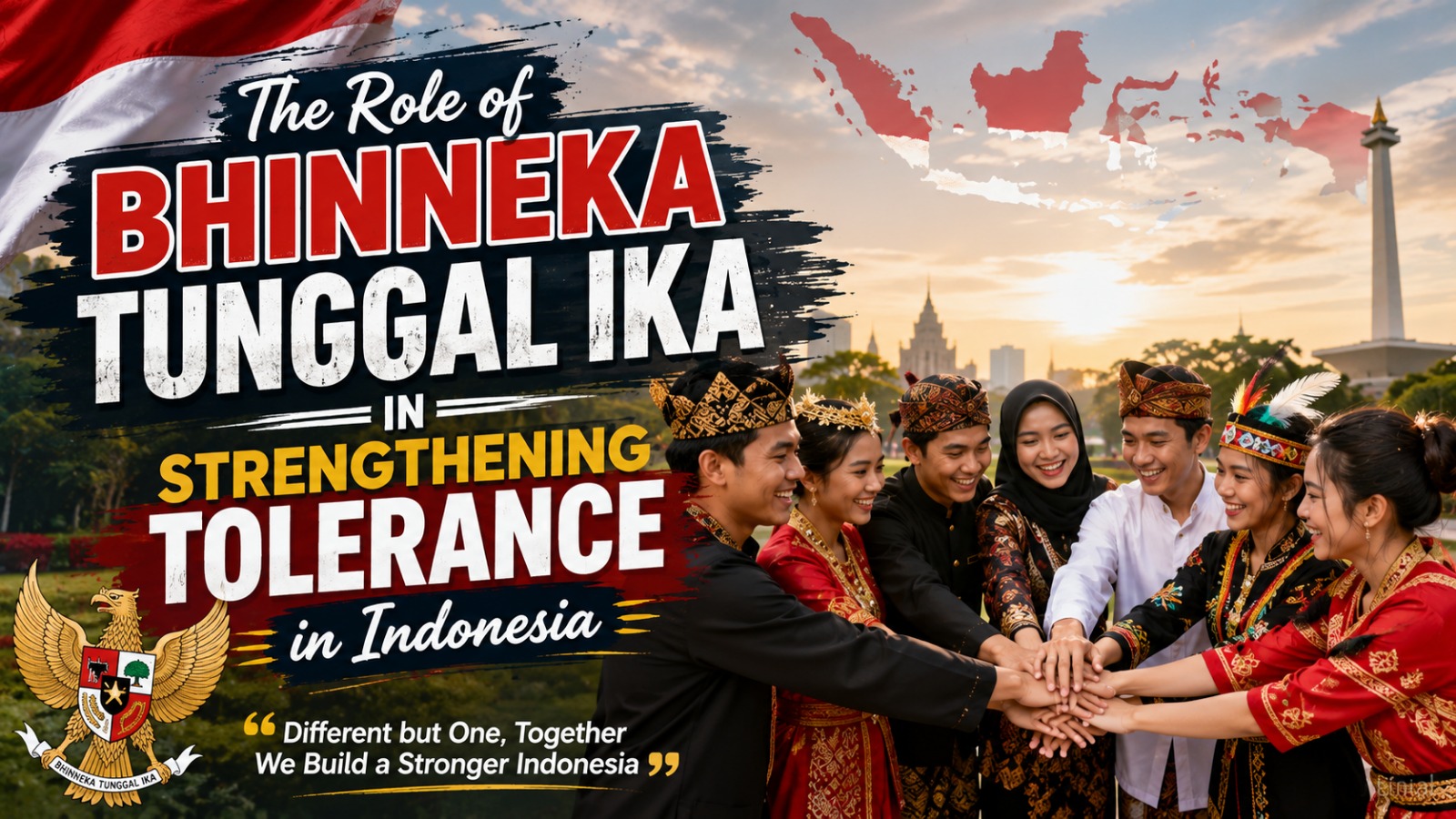
Indonesia is one of the world’s most diverse countries, with people from different ethnic groups, religions, languages, traditions, and cultural backgrounds. This diversity is an important national asset, but it also requires mutual respect to prevent differences from becoming sources of conflict. In this context, Bhinneka Tunggal Ika, which means “Unity in Diversity,” has an important role in strengthening tolerance and maintaining national unity.
Bhinneka Tunggal Ika is more than a national motto. It represents the idea that Indonesians can have different identities and beliefs while remaining united as one nation. Applying this value in everyday life can encourage people to respect differences, cooperate with others, and create a more peaceful and inclusive society.
UNDERSTANDING THE MEANING OF BHINNEKA TUNGGAL IKA
Bhinneka Tunggal Ika comes from the Old Javanese expression that is commonly understood as “Unity in Diversity.” The phrase is associated with the 14th-century Javanese literary work Kakawin Sutasoma by Mpu Tantular. It later became Indonesia’s national motto and is displayed on the national emblem, Garuda Pancasila. Its central message is that differences do not have to prevent people from living together as one nation.
The principle is highly relevant to Indonesia because the country has a wide range of ethnic, religious, linguistic, and cultural communities. Rather than eliminating these differences, Bhinneka Tunggal Ika encourages Indonesians to recognize and respect them. This approach creates a foundation for building relationships based on equality, mutual understanding, and shared national identity.
STRENGTHENING TOLERANCE AMONG INDONESIAN SOCIETY
Tolerance is one of the most important values that can be strengthened through Bhinneka Tunggal Ika. It teaches people to respect differences in beliefs, traditions, cultures, and opinions without forcing others to become the same. This attitude is especially important in communities where people from different backgrounds interact every day.
Tolerance does not mean agreeing with every belief or opinion. Instead, it means recognizing the rights of others to have differences while maintaining respectful communication. When tolerance becomes part of everyday behavior, people can work together more easily and reduce unnecessary tensions caused by misunderstandings.
PROMOTING RESPECT FOR RELIGIOUS DIVERSITY
Indonesia is home to communities with different religious beliefs. Bhinneka Tunggal Ika encourages citizens to respect this diversity and allow others to practice their faith according to their beliefs. Respect for religious diversity is essential for creating peaceful communities and protecting social harmony.
Young people can practice this value by respecting religious celebrations, avoiding offensive comments, and allowing others to worship without unnecessary interference. Schools, universities, workplaces, and communities can also create environments where religious differences are treated fairly. These simple practices can help strengthen trust between people from different religious backgrounds.
PRESERVING CULTURAL DIVERSITY
Cultural diversity is another important part of Indonesian identity. Each region has its own languages, traditional clothing, arts, food, customs, and ceremonies. Bhinneka Tunggal Ika reminds society that these differences are valuable parts of the country’s cultural heritage.
Respecting cultural diversity can begin with learning about traditions outside one’s own community. People can participate in cultural events, appreciate local arts, and avoid judging traditions simply because they are unfamiliar. By appreciating different cultures, Indonesians can build a stronger sense of shared identity while preserving their unique local heritage.
BUILDING SOCIAL UNITY THROUGH COOPERATION
Bhinneka Tunggal Ika can strengthen tolerance by encouraging people to focus on common goals. Differences in ethnicity, religion, or culture should not prevent communities from working together to solve shared problems. Cooperation in education, community activities, environmental programs, and social initiatives can create stronger relationships between people.
Working together also provides opportunities for people to understand one another directly. When individuals cooperate, they can discover common interests and values despite their different backgrounds. This experience can reduce stereotypes and create a stronger sense of social solidarity.
THE ROLE OF BHINNEKA TUNGGAL IKA IN THE DIGITAL ERA
Social media has made communication easier, but it has also created new challenges for tolerance. Misinformation, hate speech, discrimination, and provocative content can spread quickly through digital platforms. If users share such content without checking its accuracy, social divisions can become more serious.
The values of Bhinneka Tunggal Ika can guide Indonesians in becoming responsible digital citizens. People should verify information before sharing it, avoid insulting groups based on identity, and respect differences of opinion. Using digital platforms to promote cultural understanding and positive discussions can help strengthen tolerance in the online environment.
TEACHING TOLERANCE TO THE YOUNGER GENERATION
Education plays an important role in passing the values of Bhinneka Tunggal Ika to younger generations. Schools and universities can introduce diversity through lessons, discussions, cultural activities, collaborative projects, and community programs. Students can learn that differences are normal and that respectful cooperation is an important part of life in Indonesia.
Parents and teachers also provide important examples through their daily behavior. When young people see adults treating others fairly and respectfully, they are more likely to develop similar attitudes. Early education about tolerance can help build a generation that is more open-minded, responsible, and prepared to live in a diverse society.
BHINNEKA TUNGGAL IKA AS A FOUNDATION FOR A HARMONIOUS INDONESIA
The strength of Indonesia depends not only on its natural and cultural wealth but also on its ability to maintain unity. Bhinneka Tunggal Ika provides an important principle for balancing diversity with national solidarity. It reminds citizens that differences can coexist with a shared commitment to Indonesia.
A tolerant society does not require everyone to think or live in exactly the same way. Instead, it requires people to respect differences while recognizing common responsibilities as citizens. By applying Bhinneka Tunggal Ika consistently, Indonesians can build stronger social relationships and contribute to a more peaceful and inclusive future.
CONCLUSION
Bhinneka Tunggal Ika plays an important role in strengthening tolerance in Indonesia by promoting respect, cooperation, and unity amid diversity. Its principles encourage people to recognize differences in religion, ethnicity, culture, language, and opinions without allowing those differences to divide society. This value remains highly relevant as Indonesia continues to face social and digital challenges.
Strengthening tolerance requires action from everyone, including families, schools, communities, institutions, and young people. By respecting others, rejecting discrimination, communicating responsibly, and working together, Indonesians can turn diversity into a source of strength. Bhinneka Tunggal Ika can therefore remain an important foundation for maintaining Indonesia’s unity in the modern era.
About the Author
Gusti Ayu Tita P
Author — STEKOM University
An active author focused on academic issues, educational technology, and human resource development in the campus environment.