
The Role of Bus Terminals in Public Transportation
Gusti Ayu Tita P
10 Agustus 2026
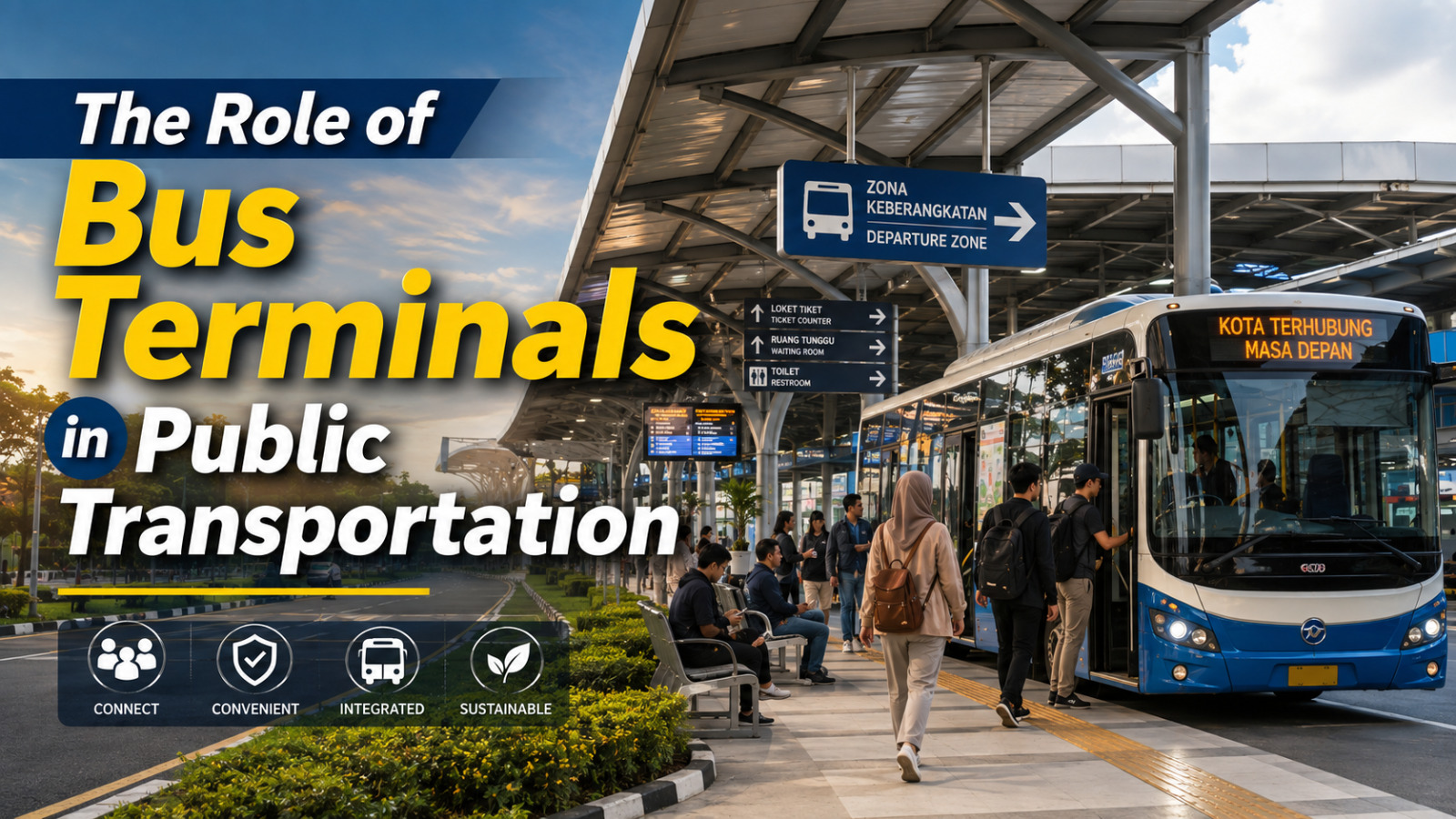
Bus terminals are an important part of a public transportation system. They provide organized spaces where buses can arrive, depart, and serve passengers. Without properly managed terminals, passenger movement and bus operations can become less organized. For this reason, terminals play an important role in creating a more efficient and accessible transportation network.
CENTERS FOR BUS ARRIVALS AND DEPARTURES
One of the main functions of a bus terminal is to manage bus arrivals and departures. Buses can pick up and drop off passengers in designated areas instead of stopping randomly along busy roads. This arrangement helps create a more organized environment for both passengers and vehicles.
Terminals also provide specific areas where buses can wait before starting their next trip. Staff can manage vehicle movements and departure schedules according to operational requirements. Proper management can reduce unnecessary conflicts between buses and help maintain smoother traffic within the terminal.
IMPROVING ACCESS TO TRANSPORTATION
Bus terminals make public transportation more accessible to communities. Passengers can find buses based on their destinations, routes, and available services. This gives people a clearer way to travel to different areas without depending entirely on private vehicles.
A terminal can also serve as a transfer point between different transportation services. Passengers may change buses or connect with other modes of transportation when available. Clear signs, organized platforms, and reliable information make these transfers easier and more convenient.
MANAGING BUS OPERATIONS
Another important role of a terminal is to support organized bus operations. Designated entrances, waiting areas, platforms, and exits help control how buses move through the facility. This arrangement allows operators and terminal staff to manage vehicles more systematically.
Effective management can also help reduce unnecessary congestion around the terminal. Staff may organize queues and control vehicle movements according to current conditions. A well-managed terminal therefore supports both passenger services and the overall operation of public transportation.
PROVIDING TRAVEL INFORMATION
Bus terminals are also important sources of travel information. Passengers can obtain details about destinations, departure times, platforms, ticketing services, and available routes. Accurate information helps passengers make better decisions and reduces the risk of missing the correct bus.
Modern terminals may use digital information systems to improve how information is delivered. Electronic boards and public announcements can display changes in schedules or departure locations. However, staff assistance remains important for passengers who need direct guidance.
SUPPORTING REGIONAL CONNECTIVITY
Bus terminals help strengthen regional connectivity by connecting different routes and destinations. Buses operating from terminals can link cities, towns, and surrounding communities. This connection allows people to travel for education, employment, business, family activities, and other purposes.
A terminal can also become an important part of an integrated transportation network. When bus services are connected with local transportation and other mobility options, passengers have more ways to reach their destinations. This makes public transportation more useful and supports greater mobility across different areas.
CONCLUSION
Bus terminals have several important roles in supporting public transportation. They organize bus arrivals and departures, improve transportation access, manage vehicle operations, provide travel information, and strengthen regional connectivity. Well-designed terminals can make public transportation easier and more convenient for passengers. With proper management, facilities, and reliable information, bus terminals can contribute to a safer, more organized, and more efficient transportation system.
About the Author
Gusti Ayu Tita P
Author — STEKOM University
An active author focused on academic issues, educational technology, and human resource development in the campus environment.















