The Role of Central Banks in Controlling Inflation
Gusti Ayu Tita P
28 Agustus 2026
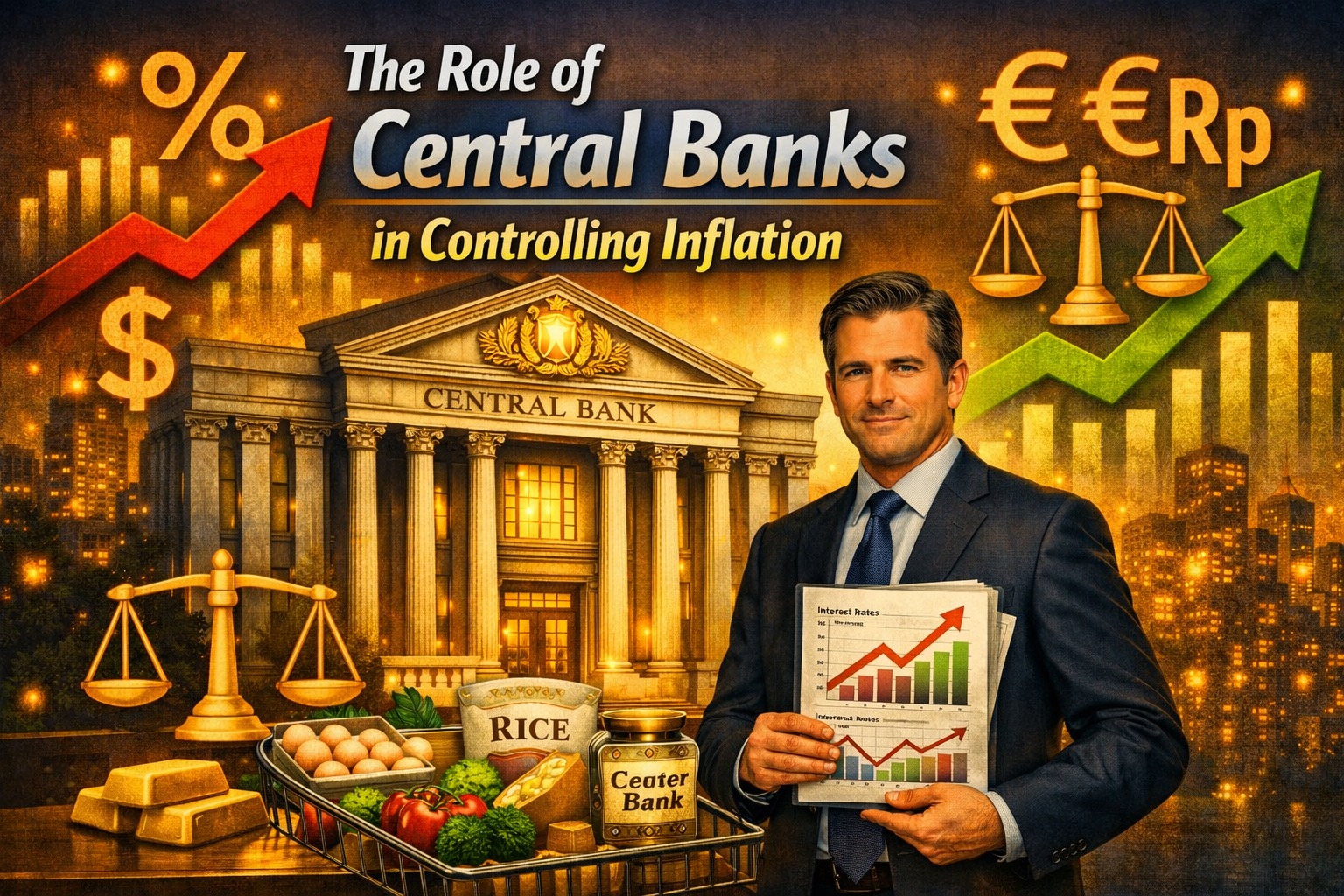
Inflation is one of the most closely watched indicators in the global economy. When prices rise too quickly, purchasing power falls, savings lose value, and economic stability can be threatened. This is why central banks play a crucial role in keeping inflation under control and maintaining long-term economic balance.
WHAT IS INFLATION AND WHY IT MATTERS
Inflation refers to the gradual increase in the prices of goods and services over time. While a small and steady level of inflation is considered healthy for economic growth, excessive inflation can harm households and businesses.
High inflation reduces the real value of money, making everyday expenses more expensive. On the other hand, very low inflation or deflation can slow economic activity and discourage spending. Because of these risks, most countries aim for a moderate inflation target, often around 2%.
THE MAIN RESPONSIBILITIES OF CENTRAL BANKS
Central banks are independent financial institutions responsible for maintaining monetary stability. Their primary goals typically include:
- Controlling inflation
- Maintaining financial system stability
- Supporting sustainable economic growth
- Managing national currency value
By balancing these objectives, central banks help ensure that economies grow without overheating or falling into recession.
MONETARY POLICY AS THE PRIMARY TOOL
The main method used by central banks to control inflation is monetary policy. This involves adjusting the supply of money and the cost of borrowing to influence economic activity.
When inflation rises too fast, central banks tighten monetary policy. When inflation falls too low or the economy slows, they loosen policy to stimulate spending and investment.
INTEREST RATES AND INFLATION CONTROL
One of the most powerful tools available to central banks is setting interest rates.
When inflation is high:
- Central banks increase interest rates
- Borrowing becomes more expensive
- Consumers spend less
- Businesses invest less
- Demand decreases and inflation slows
When inflation is low:
- Central banks reduce interest rates
- Loans become cheaper
- Spending and investment increase
- Economic activity grows
This process helps stabilize price growth over time.
OPEN MARKET OPERATIONS
Central banks also use open market operations to regulate the money supply. This involves buying or selling government bonds in financial markets.
- Buying bonds injects money into the economy
- Selling bonds removes money from circulation
By adjusting liquidity in the financial system, central banks can influence inflation and economic momentum.
RESERVE REQUIREMENTS AND MONEY SUPPLY
Another tool is the reserve requirement, which determines how much money commercial banks must keep in reserve.
Higher reserve requirements:
- Reduce lending capacity
- Slow down economic activity
- Help reduce inflation
Lower reserve requirements:
- Encourage lending
- Increase money circulation
- Support economic growth
Although used less frequently today, this tool remains part of the central bank toolkit.
INFLATION TARGETING STRATEGY
Many modern central banks follow an inflation-targeting framework. This means they publicly announce an inflation goal and adjust policies to achieve it.
This approach:
- Builds public trust
- Anchors inflation expectations
- Reduces economic uncertainty
- Improves long-term planning for businesses
Clear communication is essential, as expectations about future inflation often influence current economic behavior.
CHALLENGES IN CONTROLLING INFLATION
Despite their powerful tools, central banks face several challenges:
- Global supply shocks
- Energy price volatility
- Geopolitical instability
- Pandemic disruptions
- Changes in consumer behavior
These external factors can limit how quickly monetary policy affects inflation.
THE FUTURE OF CENTRAL BANK POLICY
As economies become more interconnected and digitalized, central banks must adapt their strategies. Digital currencies, fintech innovation, and global financial integration are reshaping the monetary landscape.
Future policy will likely rely on stronger data analysis, faster communication, and more flexible tools to maintain price stability.
CONCLUSION
Central banks play a vital role in maintaining economic stability by controlling inflation. Through interest rate adjustments, open market operations, and clear communication strategies, they help protect purchasing power and support sustainable growth. While challenges continue to evolve, the importance of central banks in safeguarding economic balance remains stronger than ever.
About the Author
Gusti Ayu Tita P
Author — STEKOM University
An active author focused on academic issues, educational technology, and human resource development in the campus environment.