The Role of Civic Engagement in Social Change
Gusti Ayu Tita P
30 Juli 2026
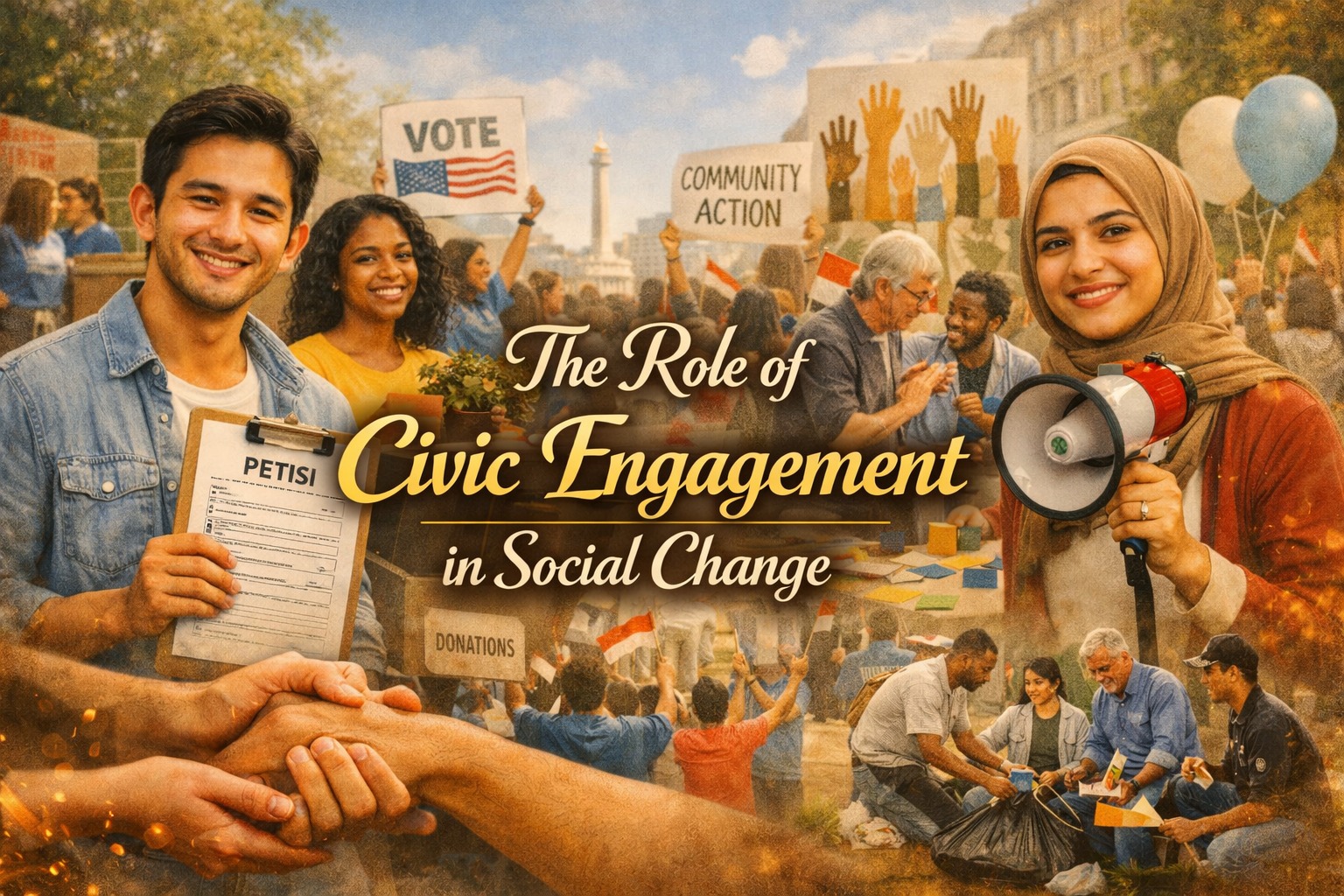
Social change rarely happens overnight. It is often the result of people working together to improve their communities, influence public policies, and promote fairness. Civic engagement refers to the active participation of individuals in activities that benefit society, whether through volunteering, voting, community organizing, or public discussions. These actions help strengthen democracy and encourage governments and organizations to respond to public needs.
In today's interconnected world, civic engagement has become more important than ever. Technology allows people to raise awareness, organize campaigns, and collaborate with others across different regions. By understanding the role of civic participation, individuals can contribute to meaningful and lasting improvements in society.
UNDERSTANDING CIVIC ENGAGEMENT
Civic engagement is the process of participating in activities that improve the well-being of a community or society. It includes both individual and collective actions, such as volunteering, attending public meetings, joining nonprofit organizations, or participating in peaceful advocacy. Every person can contribute regardless of age, background, or profession. These efforts create stronger relationships between citizens and public institutions while encouraging accountability.
People who actively engage in their communities often develop a better understanding of social issues and possible solutions. They become more informed about public policies and community needs. As a result, they are more likely to support initiatives that promote equality, education, environmental protection, and public welfare. Civic engagement ultimately helps build a society where citizens share responsibility for positive development.
WHY CIVIC ENGAGEMENT MATTERS FOR SOCIAL CHANGE
Social change depends on people who are willing to identify problems and work toward solutions. Civic engagement gives citizens the opportunity to express their concerns and collaborate with others who share similar goals. When communities participate actively, decision-makers gain valuable insights into public priorities. This process leads to more inclusive and responsive policies.
Strong civic participation also encourages transparency and accountability. Governments, businesses, and organizations are more likely to act responsibly when citizens remain informed and involved. In addition, active communities can respond more effectively during challenges such as economic difficulties, public health crises, or environmental issues. These collective efforts contribute to sustainable and meaningful social progress.
COMMON FORMS OF CIVIC ENGAGEMENT
There are many ways individuals can participate in civic life. Voting remains one of the most influential forms because it allows citizens to choose representatives and influence public policies. Volunteering for local charities, supporting educational programs, and participating in neighborhood improvement projects are also valuable contributions. Even small actions can create significant long-term impacts.
Modern technology has expanded opportunities for civic participation through online campaigns, digital petitions, educational webinars, and social media awareness initiatives. These platforms make it easier for people to connect, exchange ideas, and mobilize support for important causes. However, responsible communication and fact-checking remain essential to ensure productive public discussions.
CHALLENGES TO EFFECTIVE CIVIC ENGAGEMENT
Despite its benefits, several obstacles can reduce public participation. Limited access to education, misinformation, political polarization, and lack of trust in institutions may discourage individuals from becoming involved. Busy lifestyles and economic pressures can also limit opportunities for community participation. Addressing these barriers requires continuous efforts from governments, educational institutions, and civil society organizations.
Another challenge is ensuring that civic engagement remains respectful and constructive. Productive dialogue requires listening to different perspectives while maintaining mutual respect. Communities that encourage open communication and collaboration are more likely to find practical solutions. Promoting civic education can also help people understand their rights, responsibilities, and the importance of active participation.
HOW INDIVIDUALS CAN MAKE A POSITIVE IMPACT
Every individual has the ability to contribute to positive social change through consistent civic engagement. Simple actions such as volunteering, participating in community meetings, supporting local initiatives, or sharing accurate information can make a meaningful difference. Small contributions often inspire others to become involved, creating a larger collective impact over time.
Developing strong communication, leadership, and critical thinking skills further enhances civic participation. People who stay informed and collaborate with others are better prepared to address community challenges effectively. By working together with respect and responsibility, citizens help build stronger, more inclusive, and more resilient societies for future generations.
CONCLUSION
The role of civic engagement in social change is essential because it empowers individuals to actively shape the future of their communities. Through volunteering, voting, advocacy, education, and responsible public participation, citizens contribute to stronger democratic institutions and more inclusive societies. Although challenges exist, consistent civic involvement creates opportunities for lasting improvements. By participating thoughtfully and collaboratively, everyone can help build a more equitable, sustainable, and prosperous future.
About the Author
Gusti Ayu Tita P
Author — STEKOM University
An active author focused on academic issues, educational technology, and human resource development in the campus environment.