The Role of Customs in Preventing Illegal Smuggling
Gusti Ayu Tita P
8 Agustus 2026
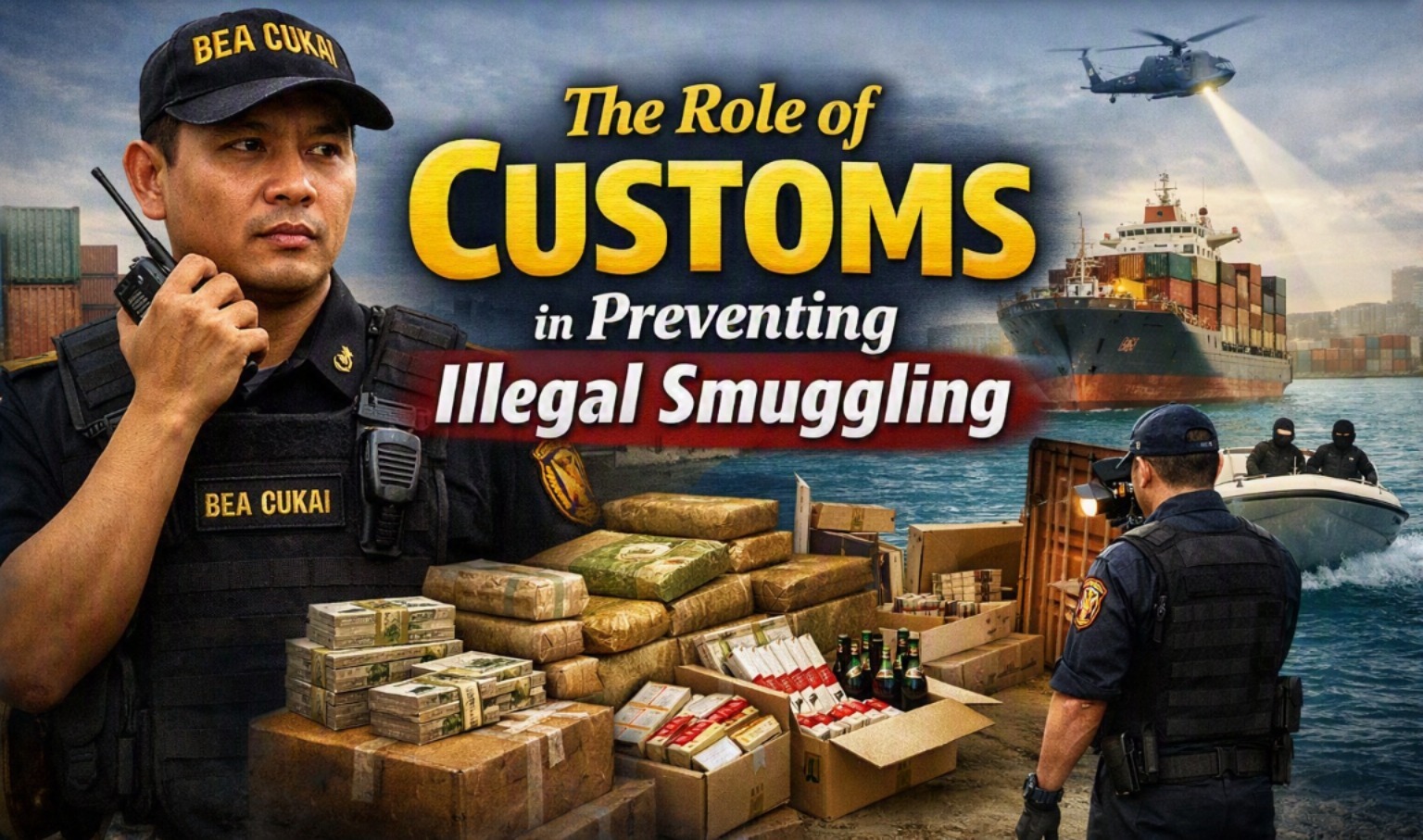
Illegal smuggling is a serious challenge that can threaten national security, public safety, government revenue, and legitimate international trade. Smuggling occurs when goods are moved across borders illegally or when traders deliberately violate customs regulations to avoid duties, restrictions, or law enforcement. Because international trade involves large numbers of shipments moving by land, sea, and air, controlling every shipment individually is not practical. This is why Customs administrations play an important role in identifying risks and preventing illegal goods from entering or leaving a country.
Modern Customs does more than inspect luggage or cargo at border checkpoints. Customs administrations use risk management, intelligence, technology, document checks, physical inspections, and international cooperation to detect suspicious shipments. Their work also supports legitimate businesses by creating a safer and more reliable trading environment. According to the World Customs Organization, modern risk management helps Customs identify risks earlier in the supply chain and use enforcement resources more effectively.
IDENTIFYING AND ASSESSING SMUGGLING RISKS
One of the most important roles of Customs is identifying shipments that may present a high risk of smuggling. Customs officers can analyze information such as cargo declarations, shipment routes, commodity descriptions, trader information, and other available data. This process allows authorities to focus their attention on shipments that require closer examination instead of physically inspecting every shipment. Risk-based control helps Customs maintain security while allowing legitimate trade to move efficiently.
Risk management is especially important because international trade involves a very large volume of goods. Criminal networks may attempt to exploit weaknesses in supply chains, inaccurate information, or gaps between different jurisdictions. Modern Customs administrations therefore use intelligence and data analysis to recognize unusual patterns and emerging threats. The WCO identifies intelligence-enhanced risk management as an important principle of modern Customs administration.
CHECKING CARGO AND CUSTOMS DOCUMENTS
Customs also prevents smuggling by examining cargo declarations and supporting documents. Importers and exporters are generally required to provide information about the goods they are moving across borders. Customs can compare declared information with applicable regulations and available intelligence to determine whether a shipment requires further examination. Inconsistencies in descriptions, quantities, classification, origin, or other information may indicate a compliance problem that needs investigation.
When necessary, Customs officers can conduct physical inspections and non-intrusive examinations using appropriate inspection equipment. These measures help authorities detect goods that may not match the information provided in customs declarations. The objective is not simply to delay shipments but to distinguish legitimate trade from potentially illegal activity. Effective controls therefore combine document analysis, risk assessment, technology, and targeted inspection.
USING TECHNOLOGY TO DETECT ILLEGAL SHIPMENTS
Technology has become increasingly important in modern Customs enforcement. Customs administrations can use digital systems, data analysis, communication networks, and non-intrusive inspection technologies to strengthen border controls. These tools can help officers process large amounts of information and identify suspicious patterns more efficiently. Technology is particularly useful as global trade becomes more digital and shipment volumes continue to increase.
The growth of e-commerce has also created new challenges because international trade increasingly involves large numbers of smaller shipments. The WCO notes that Customs must manage issues such as data quality, small shipments, unfamiliar traders, and potential misuse of low-value shipment arrangements. Digital tools and specialized analysis can therefore help Customs respond to risks while maintaining efficient clearance for legitimate goods.
COOPERATING WITH OTHER LAW ENFORCEMENT AGENCIES
Customs cannot effectively combat smuggling alone. Cooperation between Customs, police, border agencies, prosecutors, and other authorities can improve the detection and investigation of organized cross-border crime. Information sharing allows authorities to connect suspicious shipments with wider investigations and identify patterns that may not be visible to one agency working independently. This cooperation is especially important when illegal activities involve multiple countries.
International cooperation is equally important because smuggling networks can operate across several jurisdictions. Customs administrations can exchange information and participate in coordinated operations through international mechanisms and networks. The WCO highlights secure information-sharing systems and cooperation between Customs and other law enforcement bodies as important tools for disrupting illicit trade.
PROTECTING GOVERNMENT REVENUE AND FAIR TRADE
Smuggling can cause significant financial losses for governments because illegally imported goods may avoid customs duties, taxes, or other required payments. This can reduce public revenue that could otherwise support public services and national development. Smuggling can also create unfair competition because businesses that follow the law may face higher costs than those that avoid their obligations. Customs enforcement therefore helps protect both government revenue and legitimate businesses.
The problem is not limited to physically hiding goods. Customs administrations also address forms of commercial fraud, including undervaluation, incorrect classification, misuse of origin rules, and other practices that can reduce lawful revenue. The WCO identifies these activities as important customs revenue risks. Strong compliance controls and targeted enforcement can help create a more level playing field for businesses that follow applicable regulations.
PROTECTING PUBLIC SAFETY AND SOCIETY
The role of Customs extends beyond economic protection because smuggled goods can create serious risks to public safety and society. Depending on national laws and circumstances, illegal shipments can involve counterfeit products, prohibited goods, environmentally harmful materials, or other restricted commodities. Some illicit goods may threaten consumers, communities, or the environment when they enter legitimate supply chains. Customs therefore acts as an important layer of protection at international borders.
The WCO describes Customs as having a broader role in protecting society and securing global supply chains. Recent international Customs efforts have emphasized stronger vigilance, better intelligence, modern technology, and cooperation between agencies. These approaches allow Customs administrations to respond to changing forms of illicit trade while continuing to facilitate legitimate commerce.
STRENGTHENING CUSTOMS CAPACITY AND INTERNATIONAL COOPERATION
Smuggling methods can change as technology, transportation systems, and international trade develop. For this reason, Customs officers need continuous training, updated technology, reliable intelligence, and clear enforcement procedures. International organizations such as the WCO support Customs administrations through standards, training, information-sharing tools, and operational cooperation. Stronger institutional capacity helps Customs respond to new risks without unnecessarily disrupting legitimate trade.
International cooperation also makes border enforcement more effective because information about suspicious activities can be shared across jurisdictions. Coordinated operations can help authorities respond to risks that cross national borders. The WCO's recent work emphasizes that vigilance, commitment, information sharing, and cooperation are essential to combating increasingly adaptable forms of illicit trade.
CONCLUSION
Customs has a central position in the international supply chain because it operates where goods cross national borders. By combining risk management, document verification, inspections, technology, intelligence, and cooperation, Customs can identify and disrupt illegal shipments. Its responsibilities also include protecting government revenue, supporting fair competition, and helping safeguard public safety. These functions make Customs an important part of a country's broader enforcement and trade system.
Preventing smuggling is not simply about stopping individual shipments. It requires a long-term and coordinated approach involving Customs administrations, other government agencies, businesses, international organizations, and trading partners. As international trade continues to evolve, Customs must continue improving its technology, skills, intelligence capabilities, and international cooperation. Effective Customs enforcement ultimately helps create safer borders, fairer trade, stronger supply chains, and a more secure society.
About the Author
Gusti Ayu Tita P
Author — STEKOM University
An active author focused on academic issues, educational technology, and human resource development in the campus environment.