The Role of Digital Communities in Collaboration and Innovation
Gusti Ayu Tita P
7 Agustus 2026
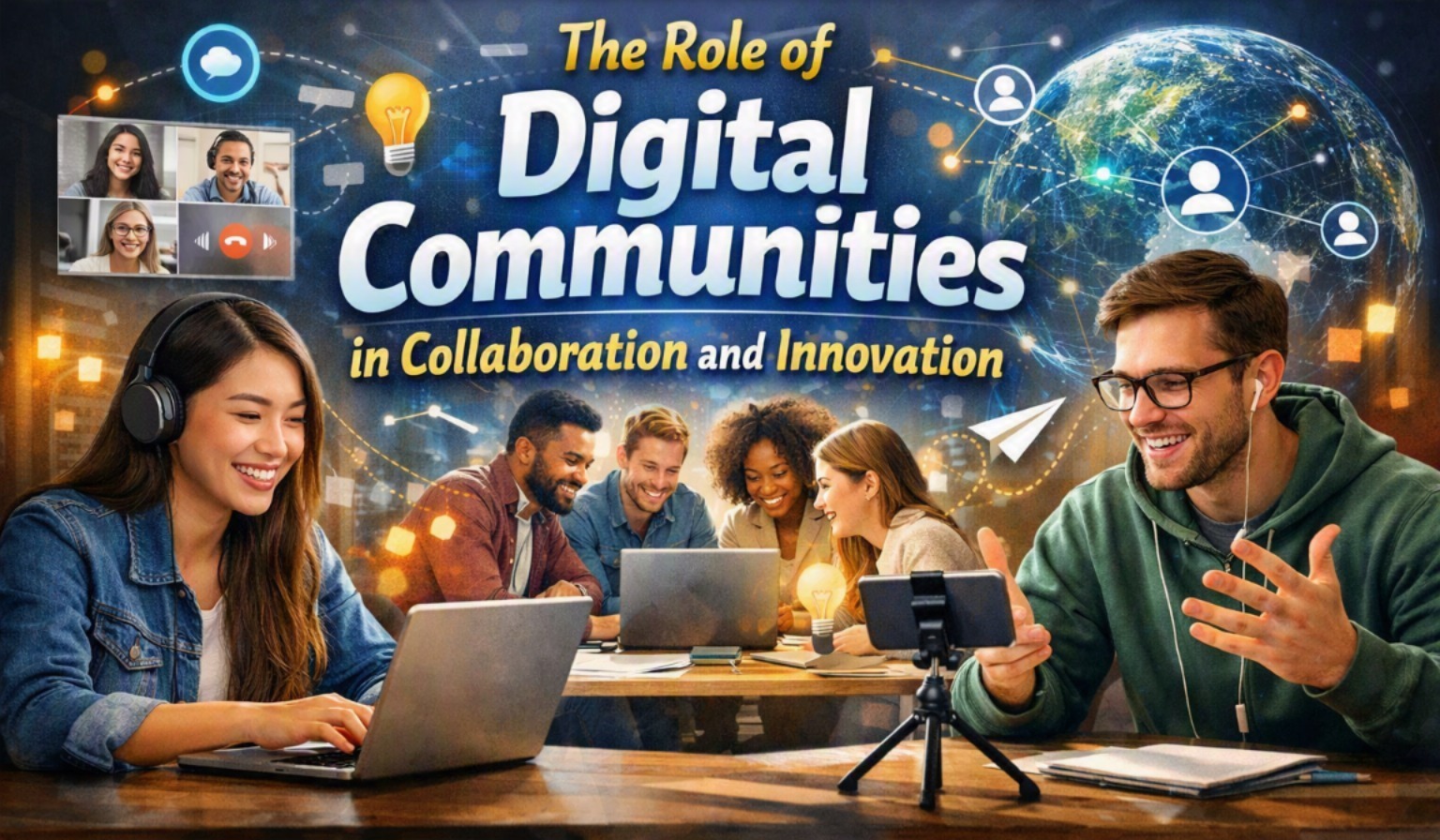
Digital communities have become an important part of modern life, connecting people from different backgrounds, industries, and countries through online platforms. These communities allow members to share knowledge, exchange ideas, and solve problems together regardless of physical distance. Businesses, students, professionals, and creators increasingly rely on digital communities to build relationships and discover new opportunities. As technology continues to advance, the role of digital communities in supporting collaboration and innovation becomes even more significant.
WHY DIGITAL COMMUNITIES MATTER?
Digital communities provide a space where people with similar interests or goals can interact efficiently. Members can ask questions, offer advice, and discuss ideas in real time, making information easier to access than ever before. This environment encourages continuous learning and helps individuals improve their knowledge through practical experiences shared by others.
Beyond learning, digital communities also strengthen professional and personal networks. Members often discover new partnerships, career opportunities, or business collaborations through regular interactions. As trust grows within the community, people become more willing to contribute valuable insights that benefit everyone involved.
HOW DIGITAL COMMUNITIES IMPROVE COLLABORATION?
One of the greatest advantages of digital communities is their ability to encourage effective collaboration across different locations and time zones. Online discussion forums, collaboration platforms, and messaging applications allow members to communicate quickly without geographical limitations. Teams can exchange documents, brainstorm ideas, and coordinate projects more efficiently than through traditional communication methods.
Digital communities also promote collective problem-solving. Instead of relying on one person's expertise, members contribute different perspectives that often lead to better solutions. This collaborative culture helps organizations complete projects faster while improving the quality of decisions and encouraging creative thinking.
THE CONNECTION BETWEEN DIGITAL COMMUNITIES AND INNOVATION
Innovation often begins with the exchange of ideas, and digital communities create the perfect environment for that process. Members regularly introduce new concepts, discuss industry trends, and provide constructive feedback that helps refine products, services, or business strategies. Open discussions inspire participants to think beyond conventional approaches and explore fresh possibilities.
In addition, digital communities accelerate innovation by connecting experts from multiple fields. A developer, designer, marketer, and entrepreneur can work together within the same community to develop practical solutions. This diversity of expertise leads to creative innovation that may not emerge in isolated work environments.
BENEFITS FOR BUSINESSES AND PROFESSIONALS
Businesses use digital communities to better understand customer needs and market trends. Customer feedback collected through online communities provides valuable insights that help companies improve products and services. This direct interaction also strengthens customer relationships and builds brand loyalty through active engagement.
Professionals benefit by expanding their networks and improving their skills through discussions with experienced members. Many communities offer webinars, workshops, and educational resources that support career development. By actively participating, individuals gain new knowledge while increasing their visibility within their professional industries.
STRATEGIES TO BUILD A STRONG DIGITAL COMMUNITY
Building a successful digital community requires clear objectives, active participation, and consistent communication. Community leaders should encourage respectful discussions, share valuable content regularly, and create opportunities for members to contribute their expertise. A positive environment motivates members to remain active and engaged over the long term.
It is equally important to maintain trust and transparency within the community. Clear guidelines, fair moderation, and responsive communication help create a safe space where members feel comfortable expressing ideas. When people feel appreciated and respected, collaboration becomes stronger and innovation naturally follows.
CONCLUSION
Digital communities play a vital role in promoting collaboration, knowledge sharing, and innovation in today's connected world. They enable individuals and organizations to exchange ideas, solve challenges, and build meaningful relationships without geographical barriers. By participating actively and fostering positive interactions, communities become valuable sources of creativity and continuous improvement. As digital technology continues to evolve, strong digital communities will remain essential for driving future innovation and sustainable growth.
About the Author
Gusti Ayu Tita P
Author — STEKOM University
An active author focused on academic issues, educational technology, and human resource development in the campus environment.