
The Role of Governors in Driving Regional Economic Growth
Gusti Ayu Tita P
12 Agustus 2026
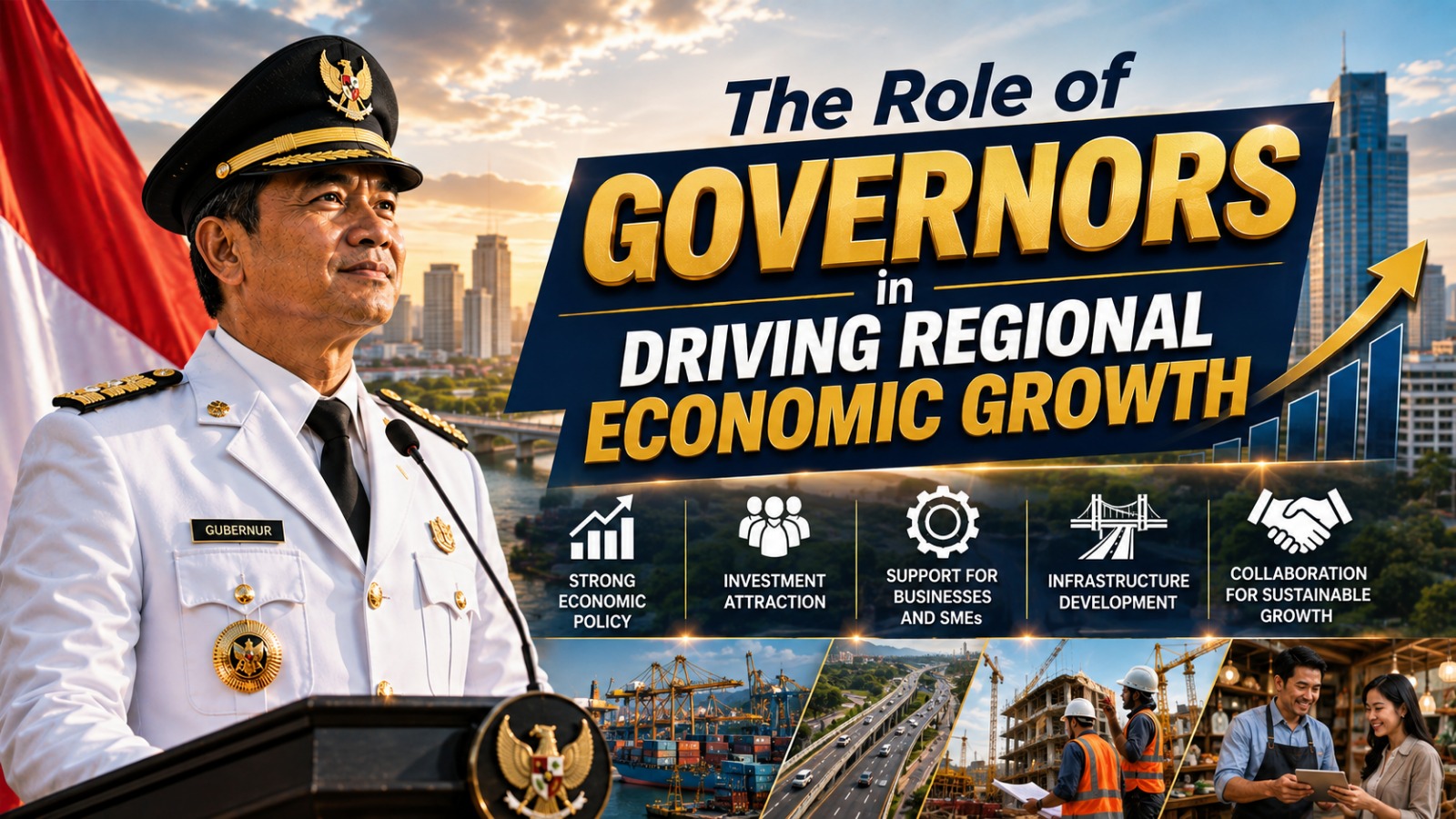
Regional economic growth is an important part of improving people’s quality of life and creating stronger local economies. Governors have a strategic role in guiding economic policies and development programs within their provinces. They help identify regional potential, coordinate government agencies, and create conditions that support business and investment. Effective leadership can help ensure that economic growth produces wider benefits for local communities.
Economic development cannot depend on government policies alone. Governors need to work with local governments, businesses, educational institutions, communities, and other stakeholders. Strong cooperation can encourage innovation, create employment opportunities, and improve the competitiveness of regional industries. With careful planning, regional economic growth can become more inclusive and sustainable.
SUPPORTING LOCAL ECONOMIC POTENTIAL
Every region has different economic strengths and resources. Some provinces may have strong agricultural, fisheries, manufacturing, tourism, creative, or service sectors. Governors can identify these strengths and develop policies that help local industries become more productive and competitive. Supporting sectors that match local conditions can create stronger economic foundations for the region.
Regional potential should not only be focused on producing raw materials. Governments can encourage processing, innovation, branding, and better distribution so local products have greater value. Cooperation with businesses and educational institutions can help introduce better technology and production methods. This approach can increase local income while creating new opportunities for communities.
DEVELOPING SMALL AND MEDIUM BUSINESSES
Small and medium businesses are important contributors to regional economic activity and employment. Governors can support these businesses through training, business assistance, access to markets, and improved public services. Digital technology can also help local businesses reach customers beyond their immediate communities. Stronger small businesses can contribute to household income and local economic resilience.
Business development should also include opportunities for entrepreneurs to improve their skills and access financing. Regional governments can work with financial institutions and business organizations to create appropriate support programs. Local products can be promoted through exhibitions, regional events, tourism programs, and digital platforms. When small businesses grow, they can create additional employment and strengthen local supply chains.
ATTRACTING QUALITY INVESTMENT
Investment can provide capital, technology, and new employment opportunities for regional economies. Governors can help create a business environment that is transparent, efficient, and predictable within their authority. Clear information about regional opportunities can also make it easier for investors to understand potential sectors. Better infrastructure and reliable public services can further increase regional attractiveness.
However, investment should be managed responsibly. Economic projects need to comply with regulations and consider environmental and social impacts. Governors should encourage investment that creates meaningful local benefits rather than focusing only on the amount of capital entering the region. Responsible investment can support long term economic growth while protecting community interests.
IMPROVING INFRASTRUCTURE AND CONNECTIVITY
Infrastructure plays a major role in supporting economic activity. Roads, bridges, transportation systems, ports, markets, electricity, water services, and digital connectivity can influence how efficiently people and businesses operate. Governors can prioritize infrastructure development according to regional needs and their respective government authority. Better connectivity can reduce distribution barriers and connect local producers with wider markets.
Infrastructure development should also address areas that remain difficult to access. Balanced investment can help reduce differences between urban centers and less developed regions. Maintenance is equally important because infrastructure that is poorly maintained can reduce economic efficiency. Reliable infrastructure can support trade, tourism, investment, and the movement of workers and goods.
STRENGTHENING HUMAN RESOURCES
A strong regional economy requires skilled and adaptable workers. Governors can support vocational education, job training, certification programs, and partnerships between educational institutions and businesses. Training should be connected to actual labor market needs so that people develop skills that employers require. This can help reduce the gap between education and employment.
Human resource development should also include digital and interpersonal skills. Communication, teamwork, problem solving, creativity, and adaptability are increasingly important in modern workplaces. Programs can be designed for students, job seekers, workers, and entrepreneurs based on regional needs. Better human resources can increase productivity and strengthen the competitiveness of local industries.
CREATING MORE EMPLOYMENT OPPORTUNITIES
Economic growth becomes more meaningful when it creates decent employment opportunities for local communities. Governors can encourage sectors that have strong potential to absorb workers, such as manufacturing, agriculture, tourism, services, and small businesses. Workforce development programs can help residents meet the requirements of available jobs. Employment growth can increase household income and strengthen consumer activity.
Entrepreneurship can also become an important source of employment. Supporting new businesses can give people opportunities to become employers rather than only job seekers. Governments can provide training, information, mentoring, and access to relevant business networks. A combination of investment, local business development, and entrepreneurship can create a broader employment ecosystem.
REDUCING REGIONAL ECONOMIC INEQUALITY
Economic growth should benefit different communities and not remain concentrated in a few areas. Governors can direct development programs toward regions that have limited infrastructure, fewer economic opportunities, or restricted access to public services. Supporting these areas can help residents participate more actively in the regional economy. Balanced development can also reduce differences in income and living standards.
Policies to reduce inequality should be based on reliable data and local conditions. Governments need to identify which communities face the greatest economic barriers and determine the most appropriate interventions. Programs should also be evaluated regularly to measure their actual impact. Inclusive economic development can create broader participation and make regional growth more resilient.
STRENGTHENING COOPERATION AND GOVERNANCE
Regional economic growth requires cooperation among provincial governments, municipalities, businesses, universities, financial institutions, communities, and national agencies. Governors can help coordinate these stakeholders so that economic programs support shared objectives. Cooperation can encourage investment, innovation, workforce development, and access to wider markets. It can also help solve economic problems that involve multiple regions or sectors.
Good governance is equally important for maintaining public trust and ensuring effective use of resources. Economic programs should be transparent, accountable, and evaluated based on measurable results. Governors need to monitor implementation and make adjustments when policies do not produce the expected outcomes. Strong governance can make regional economic strategies more credible and effective.
CONCLUSION
Governors play a strategic role in driving regional economic growth by developing local potential, supporting businesses, attracting responsible investment, improving infrastructure, and strengthening human resources. They also have an important role in creating employment opportunities and reducing economic inequality. These efforts need to be connected through clear planning and effective coordination.
Regional economic growth is most valuable when it improves people’s opportunities and quality of life. Governors therefore need to promote development that is productive, inclusive, and sustainable. Through cooperation with businesses, communities, educational institutions, and other government levels, regional economies can become more competitive and resilient while creating broader benefits for society.
About the Author
Gusti Ayu Tita P
Author — STEKOM University
An active author focused on academic issues, educational technology, and human resource development in the campus environment.















