
The Role of Governors in Improving Public Services
Gusti Ayu Tita P
12 Agustus 2026
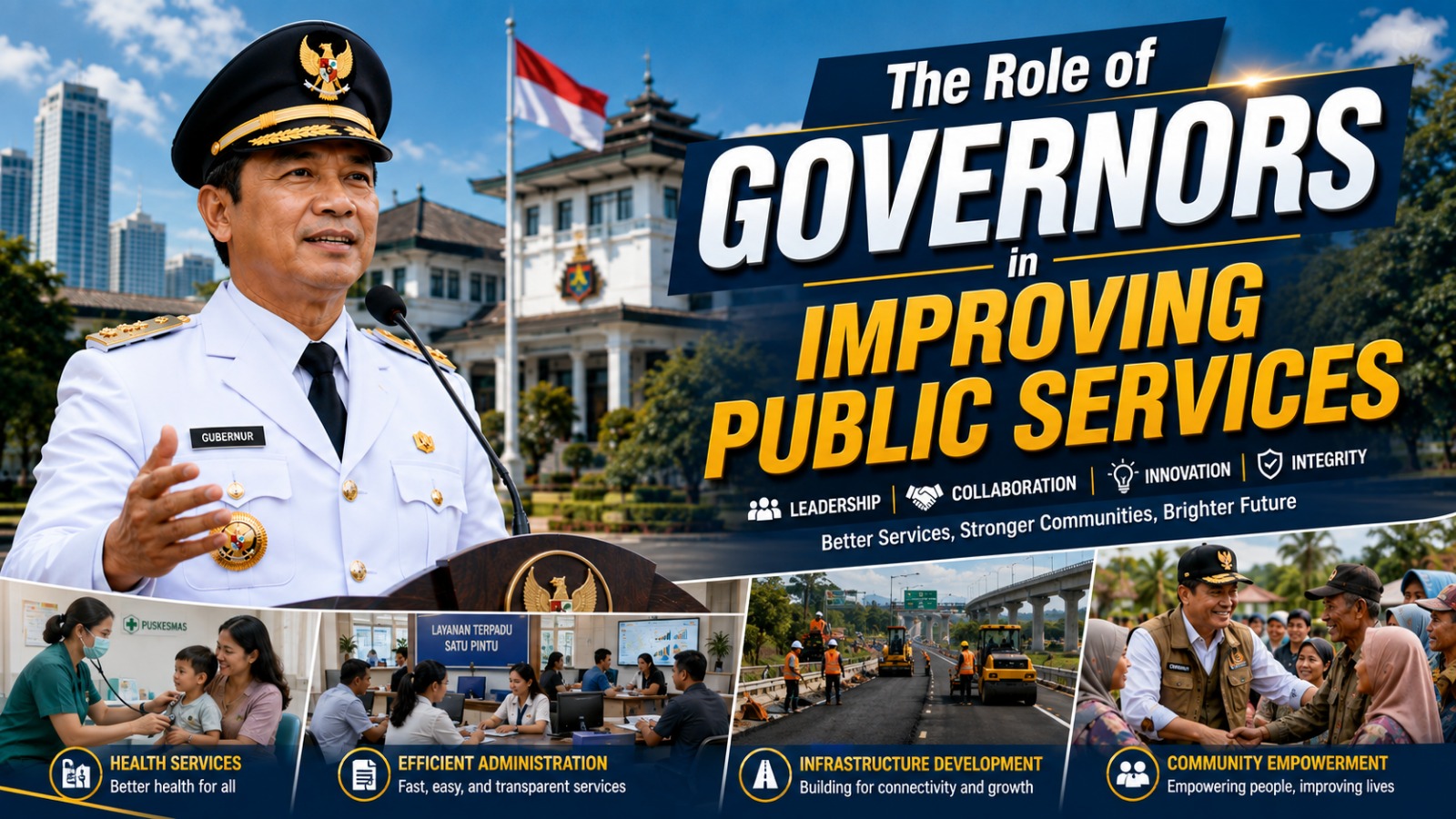
Public services are an essential part of government because they directly affect people's daily lives. Citizens need services that are accessible, efficient, transparent, fair, and responsive to their needs. At the regional level, governors have an important role in improving public services that fall within provincial government responsibilities.
The role of governors is not limited to creating policies. Governors also need to guide regional agencies, improve public sector performance, encourage digital transformation, and monitor service quality. With effective leadership and proper coordination, regional governments can provide better services and increase public trust.
SETTING PUBLIC SERVICE POLICIES
Governors help establish the direction of public service policies within their legal authority. These policies should be based on community needs, regional conditions, government priorities, and applicable regulations. Reliable data can help the government identify which services require improvement. Clear policies also provide guidance for regional agencies when delivering services to citizens.
Public service policies should consider differences between urban and rural areas. Some communities may need better digital services, while others may require easier access to basic services and government offices. Governors need to ensure that policies respond to these different conditions. This approach can make public services more relevant and inclusive.
IMPROVING THE QUALITY OF GOVERNMENT OFFICIALS
Government officials have a direct influence on the quality of public services. Governors can support training and professional development programs to improve the skills of regional government employees. Officials need to understand service standards, administrative procedures, communication, and ethical responsibilities. Professional employees can provide services more efficiently and respectfully.
Integrity is equally important in public service delivery. Officials should treat citizens fairly and avoid discrimination or actions that violate regulations. Clear procedures and professional standards can reduce unnecessary difficulties for service users. Improving both competence and integrity can strengthen the overall quality of regional public services.
EXPANDING DIGITAL PUBLIC SERVICES
Digital technology offers opportunities to make government services faster and easier to access. Governors can encourage regional agencies to develop digital platforms for information, administration, and selected public services. Online systems can reduce unnecessary paperwork and help citizens access services without always visiting government offices. Digitalization can also help agencies manage information more efficiently.
However, digital services should not create new barriers for people who have limited internet access or digital skills. Regional governments need to maintain appropriate offline service options when necessary. Data security and privacy must also be considered when developing digital systems. Technology should support better services rather than simply replacing traditional procedures.
MAKING SERVICES EASIER TO ACCESS
Accessibility is an important measure of public service quality. Citizens should be able to understand where to obtain a service, what requirements are needed, how long the process takes, and whether any official fees apply. Governors can encourage regional agencies to simplify procedures within their authority. Clear information can prevent confusion and reduce unnecessary administrative delays.
Accessibility also means considering people with different needs and circumstances. Public facilities and service channels should take into account people with disabilities, residents in remote areas, and citizens with limited access to technology. Regional governments can use different service channels to reach these communities. Inclusive services help ensure that government programs benefit a wider part of society.
STRENGTHENING PUBLIC COMPLAINT SYSTEMS
A strong complaint system allows citizens to report problems with government services. Governors can encourage regional agencies to provide complaint channels that are easy to find and use. Complaints can provide valuable information about weaknesses in service delivery. They can also help government officials identify problems that may not appear in routine performance reports.
However, receiving complaints is not enough. Government agencies need clear procedures for reviewing and responding to reports. Repeated complaints should be analyzed to identify the underlying causes and prevent the same problems from continuing. An effective complaint system can therefore become an important tool for continuous improvement.
PROMOTING TRANSPARENCY
Transparency helps citizens understand how public services are delivered. Information about requirements, procedures, service standards, processing times, and official costs should be communicated clearly. Governors can encourage regional agencies to make important service information easy to access. Clear information can reduce misunderstandings and limit dependence on unofficial sources.
Transparency also supports public oversight of government performance. When citizens can access relevant information, they are better able to understand and evaluate government programs. Public officials become more accountable for their decisions and performance. Greater transparency can therefore contribute to stronger public confidence in regional government.
MONITORING AND EVALUATING SERVICE QUALITY
Public services need regular monitoring to ensure that standards are being followed. Governors and regional agencies can evaluate service performance through indicators such as processing times, complaint numbers, service coverage, and citizen satisfaction. These measurements can show whether improvements are actually producing better results. Evaluation should be carried out regularly rather than only when serious problems occur.
The results of evaluations can be used to improve policies and procedures. If a service is too complicated, the government can review the process and identify possible improvements. If a particular region has limited access, additional solutions may be considered according to government authority and resources. Continuous evaluation helps public services become more responsive to changing community needs.
BUILDING COOPERATION BETWEEN GOVERNMENT AGENCIES
Many public needs involve more than one government institution. Governors can encourage coordination between regional agencies and, when appropriate, with district and city governments, central government institutions, and other stakeholders. Better coordination can reduce overlapping programs and improve the delivery of services that require cooperation between institutions.
Cooperation can also support the development of shared systems, professional training, and information exchange within applicable rules. Each institution must continue to operate according to its legal responsibilities. Strong coordination allows different agencies to work toward common service goals. This can make regional government more efficient and responsive.
CONCLUSION
The role of governors in improving public services includes setting policies, developing government officials, expanding digital services, improving accessibility, strengthening complaint systems, promoting transparency, and monitoring performance. These efforts need to be implemented within the authority and responsibilities established by law.
Good public services are not simply about completing administrative procedures quickly. Services should also be fair, accessible, transparent, reliable, and responsive to citizens. Through effective leadership, continuous evaluation, and strong cooperation, governors can help regional governments deliver services that better meet community needs.
About the Author
Gusti Ayu Tita P
Author — STEKOM University
An active author focused on academic issues, educational technology, and human resource development in the campus environment.















