
The Role of Governors in Regional Development
Gusti Ayu Tita P
12 Agustus 2026
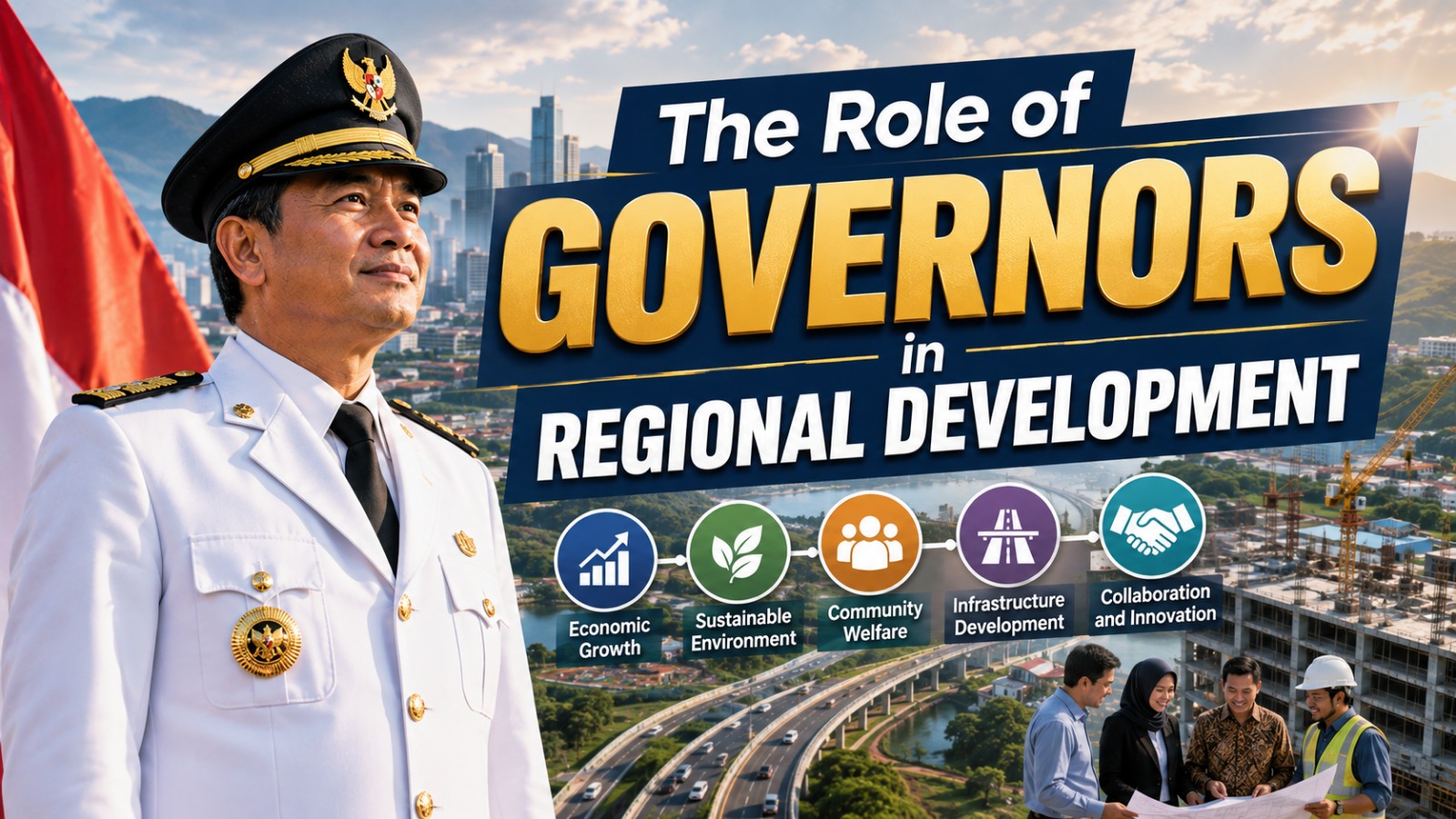
Governors play an important role in leading regional governments and supporting development within their provinces. They help set development priorities based on local needs, economic potential, and public conditions. Their role covers many areas, including infrastructure, education, healthcare, economic growth, and public services. Effective leadership is essential to ensure that development programs provide meaningful benefits for local communities.
Regional development requires more than government policies alone. Governors need to coordinate with local governments, national institutions, businesses, communities, and other stakeholders. Good coordination can help ensure that development programs are properly planned and implemented. Through effective governance and long term planning, governors can help create more competitive, inclusive, and sustainable regions.
SETTING REGIONAL DEVELOPMENT PRIORITIES
One of the main roles of governors is to establish development priorities for their regions. These priorities should reflect local conditions, available resources, economic potential, and the needs of communities. A region with strong agricultural potential, for example, may need policies that support farmers, irrigation, logistics, and agricultural technology. Meanwhile, regions with strong tourism potential may require better transportation, tourism facilities, and workforce development.
Development priorities also need to be based on realistic planning and available budgets. Governors work with regional government agencies and legislative institutions to formulate development programs and budgets according to applicable regulations. Clear priorities help prevent public resources from being spread across too many programs without strong results. Regular evaluation is also necessary to ensure that development remains aligned with regional goals.
DEVELOPING REGIONAL INFRASTRUCTURE
Infrastructure is a major foundation for regional development. Governors can support the development and maintenance of roads, bridges, public transportation, water systems, digital connectivity, and other public facilities within their authority. Good infrastructure can make it easier for people to travel, distribute goods, access services, and conduct business. It can also improve connections between urban centers and less developed areas.
Infrastructure development should be based on actual regional needs and long term benefits. Governors need to consider accessibility, economic impact, environmental sustainability, and the needs of communities when setting infrastructure priorities. Proper maintenance is equally important because existing infrastructure can lose its benefits if it is not maintained. Well planned infrastructure can strengthen economic activity and improve the quality of life.
SUPPORTING REGIONAL ECONOMIC GROWTH
Governors can contribute to regional economic growth by supporting local industries, small businesses, investment, agriculture, tourism, and creative sectors. Each region has different economic strengths, so development strategies should be adapted to local conditions. Supporting local businesses can create employment opportunities and increase household income. Governments can also help businesses through training, market access, infrastructure, and appropriate public services.
Investment can also support economic development when managed properly. Governors can help create a business environment that is transparent, predictable, and supportive of responsible investment. However, economic growth should not come at the expense of environmental protection or community interests. A balanced approach can encourage investment while ensuring that development produces broader social benefits.
IMPROVING EDUCATION AND HEALTHCARE
Education and healthcare are essential components of regional development because they directly affect the quality of human resources. Governors can support better access to education by improving school facilities, supporting teachers, expanding educational programs, and addressing inequalities between regions. Education programs should also respond to changing labor market needs. A stronger education system can help young people develop skills that are relevant to future employment.
Healthcare is equally important for building a productive population. Regional governments can support healthcare facilities, medical personnel, public health programs, and access to essential services according to their responsibilities. Preventive healthcare and public awareness can also help reduce health problems. Better education and healthcare can strengthen human capital and support sustainable economic development.
CREATING EMPLOYMENT OPPORTUNITIES
Employment is an important indicator of regional economic well being. Governors can encourage job creation by supporting sectors with strong growth and employment potential. These may include manufacturing, agriculture, tourism, services, digital industries, and small businesses depending on regional characteristics. Workforce training can also help residents develop skills that match employer needs.
Employment policies should focus not only on the number of jobs but also on the quality and sustainability of employment. Cooperation between government, educational institutions, training centers, and businesses can help reduce skill gaps. Governors can also support entrepreneurship programs that encourage people to create their own businesses. More employment opportunities can contribute directly to higher household incomes and reduced poverty.
REDUCING REGIONAL INEQUALITY
Regional development should provide benefits to communities across different areas rather than concentrating growth in major cities alone. Governors can help reduce inequality by directing infrastructure, education, healthcare, and economic programs toward areas with greater development challenges. Remote and less developed communities may require additional support to access basic services and economic opportunities. More balanced development can help reduce differences in living standards.
Reducing inequality also requires accurate data and targeted policies. Governments need to identify which communities face the greatest barriers and design programs that respond to their specific conditions. Social and economic programs should be monitored to ensure that support reaches the intended beneficiaries. Inclusive development can strengthen social stability while creating broader opportunities for economic participation.
STRENGTHENING PUBLIC SERVICES AND GOVERNANCE
Effective public services are an important part of successful regional development. Governors are responsible for ensuring that regional government institutions provide services according to their authority and applicable standards. Services should be accessible, transparent, responsive, and focused on public needs. Digital systems can also be used to make certain government services faster and easier to access.
Good governance requires accountability and continuous evaluation. Governors need to monitor government agencies and assess whether programs are achieving their intended results. Transparency in public spending and decision making can strengthen public trust. Strong governance can make development programs more efficient and help ensure that public resources are used responsibly.
BUILDING COLLABORATION WITH DIFFERENT STAKEHOLDERS
Regional development cannot be achieved by governors and government agencies alone. Cooperation with mayors, regents, national institutions, businesses, universities, community organizations, and residents is often necessary. Collaboration allows different groups to contribute knowledge, resources, technology, and practical experience. It can also help address problems that cross administrative boundaries.
Public participation is particularly important because residents understand local problems and needs directly. Governors can encourage participation through public consultations, development planning forums, community programs, and accessible complaint channels. Feedback from residents can help improve government policies and services. Strong collaboration can make regional development more responsive and sustainable.
CONCLUSION
Governors have a strategic role in regional development through leadership, policy making, coordination, and supervision. Their responsibilities include setting development priorities, supporting infrastructure, strengthening the regional economy, improving education and healthcare, creating employment, and reducing inequality. Effective regional development also depends on responsible public services and good governance.
Successful development requires cooperation among government institutions, businesses, communities, and other stakeholders. Governors need to ensure that regional policies are based on real needs, available resources, accurate information, and long term objectives. With effective leadership and inclusive planning, regional development can create stronger economies, better public services, and improved quality of life for local communities.
About the Author
Gusti Ayu Tita P
Author — STEKOM University
An active author focused on academic issues, educational technology, and human resource development in the campus environment.















