The Role of Historic Tombs in Introducing History to Younger Generations
Gusti Ayu Tita P
4 September 2026
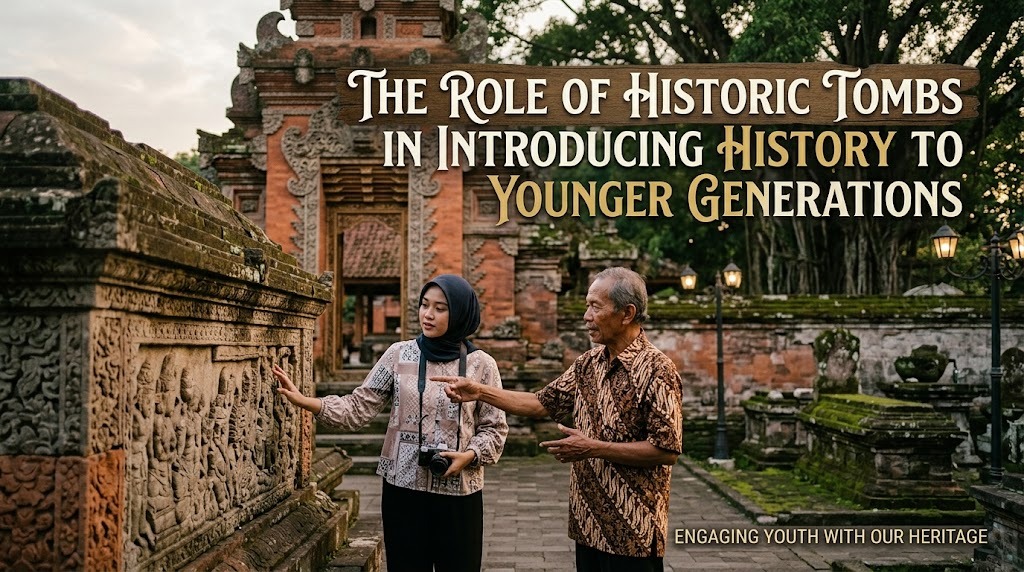
Historic tombs can become meaningful learning resources for younger generations because they provide a direct connection to people, events, and traditions from the past. Unlike historical information found only in textbooks, tombs are physical places that students can observe and study. Their architecture, inscriptions, location, and cultural traditions can make history easier to understand. With appropriate education and preservation, these sites can encourage young people to appreciate and protect cultural heritage.
HISTORIC TOMBS AS REAL HISTORICAL EVIDENCE
Historic tombs can introduce young people to historical evidence through physical objects and structures. Students may learn about inscriptions, architectural styles, symbols, and burial traditions connected to a particular period. These elements can help them understand that history is supported by evidence that can be observed, recorded, and interpreted.
Learning from authentic sites can also encourage critical thinking. Students can compare information from a tomb with textbooks, historical documents, museum collections, and other reliable sources. This approach teaches them that understanding history involves examining different types of evidence rather than simply memorizing dates and names.
CONNECTING YOUNG PEOPLE WITH CULTURAL HERITAGE
Historic tombs can help younger generations develop a stronger connection with cultural heritage. Burial sites may represent local traditions, historical figures, religious practices, or important community memories. Learning about these connections can help students understand how the past influenced the communities they see today.
This connection can encourage a sense of responsibility for heritage preservation. When young people understand the cultural value of a site, they may become more willing to respect visitor rules, avoid damaging historic structures, and share accurate information with others. Education can therefore turn young people into active supporters of heritage conservation.
MAKING HISTORY EDUCATION MORE INTERESTING
Traditional classroom lessons can sometimes feel distant when students only read about historical events. Visiting or exploring a historic tomb can provide a more engaging learning experience because students can see physical evidence connected to the subject they are studying. Teachers can use the site to discuss history, architecture, culture, and social traditions at the same time.
Digital resources can provide similar experiences for students who cannot visit the location. Virtual tours, photographs, videos, 3D models, and digital archives can bring historic tombs into the classroom. These resources can make history education more interactive while reducing unnecessary pressure on fragile heritage sites.
USING HISTORIC FIGURES TO TEACH HISTORY
Some historic tombs are associated with important historical figures whose lives can provide useful lessons. Students can explore the person's background, achievements, social environment, and role in historical events. The tomb can serve as a starting point for broader research rather than being treated as the only source of information.
Teachers can encourage students to compare different accounts of a historical figure. Historical records, inscriptions, oral traditions, and academic research may provide different perspectives. This method helps students understand historical context and develop the ability to distinguish reliable evidence from unsupported claims.
ENCOURAGING RESPONSIBLE VISITS AND RESEARCH
Introducing younger generations to historic tombs should include lessons about responsible behavior. Students should learn that burial sites may be sacred, sensitive, or culturally significant places. They should follow site regulations, avoid touching fragile structures, keep the area clean, and respect people who may be visiting for religious or personal reasons.
Educational visits can also include simple research activities. Students might document permitted architectural features, observe inscriptions, record historical information, or create educational presentations. These activities can develop research skills, observation skills, and cultural awareness while maintaining respect for the site.
PREPARING FUTURE HERITAGE PROTECTORS
Young people are important to the long-term future of heritage conservation. Early exposure to historic tombs can inspire students to become researchers, archaeologists, historians, museum professionals, educators, or conservation specialists. Even students who choose different careers can contribute by respecting and promoting cultural heritage.
Schools, communities, museums, and heritage institutions can work together to create meaningful educational programs. Workshops, guided visits, exhibitions, digital projects, and student research can provide practical ways for young people to participate. These experiences can help ensure that historic tombs remain valued and protected by future generations.
CONCLUSION
Historic tombs can play an important role in introducing history to younger generations. They provide authentic historical evidence, strengthen connections with cultural heritage, and create opportunities for engaging education. Through responsible visits, digital technology, research activities, and community programs, young people can learn about the past while developing respect for heritage. Educating the next generation today can help ensure that historic tombs remain protected and meaningful in the future.
About the Author
Gusti Ayu Tita P
Author — STEKOM University
An active author focused on academic issues, educational technology, and human resource development in the campus environment.