The Role of KRL in Reducing Traffic Congestion in Cities
Gusti Ayu Tita P
11 Agustus 2026
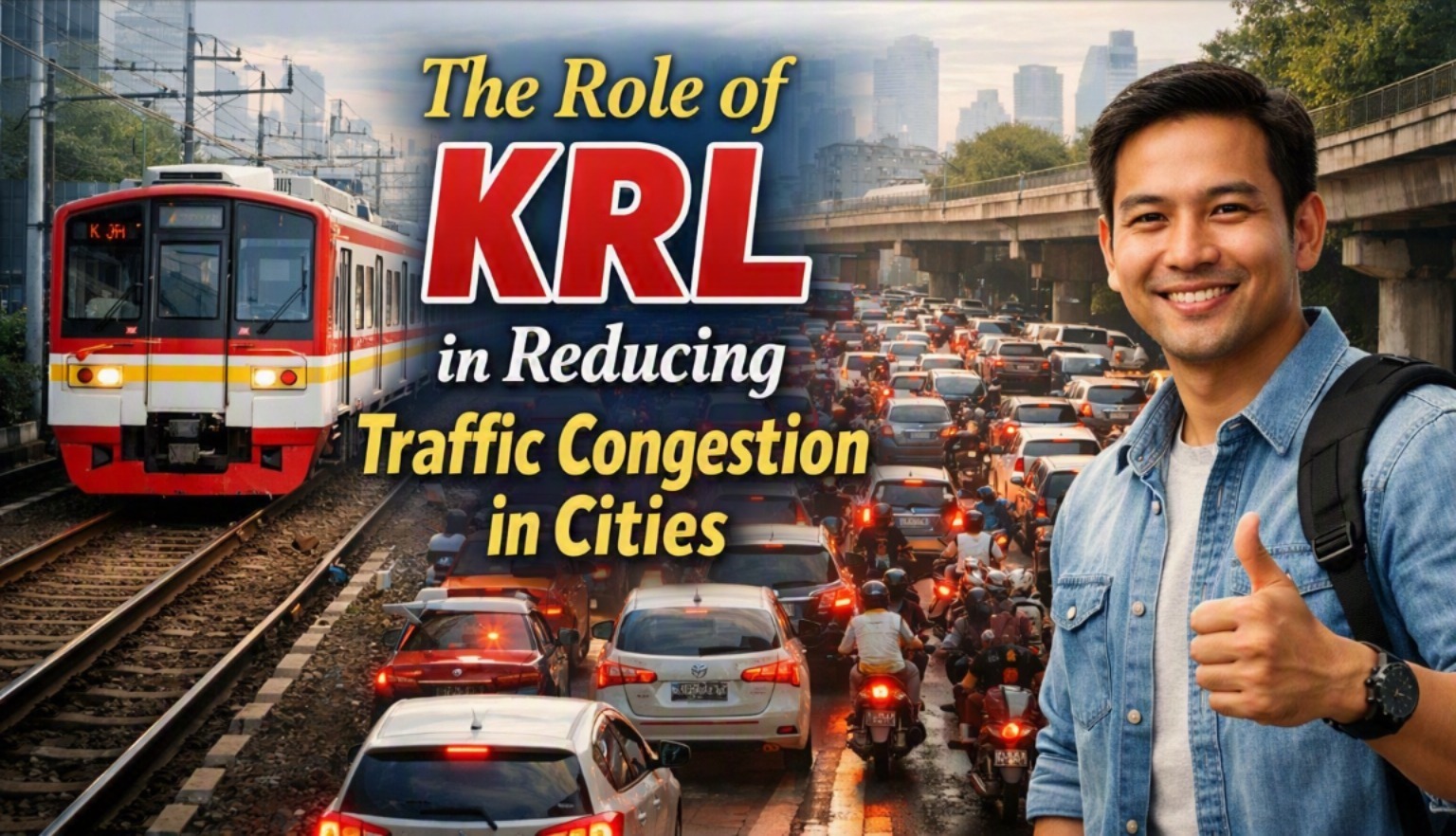
Traffic congestion is a common problem in many growing cities, especially during morning and evening rush hours. A large number of private cars and motorcycles use the same limited road space, causing slower travel times, higher fuel consumption, and increased air pollution. In this situation, KRL or commuter rail can play an important role as a practical form of mass public transportation. By carrying many passengers on the same train, KRL can reduce the number of private vehicles using urban roads. In Indonesia, the growing use of Commuter Line services shows the important role of rail-based transportation in supporting daily urban mobility.
HOW KRL HELPS REDUCE TRAFFIC CONGESTION?
One of the main ways KRL reduces congestion is by moving large numbers of passengers at the same time. A single train can carry many people who might otherwise travel using separate cars or motorcycles. When more commuters choose KRL for their daily journeys, the number of vehicles competing for road space can decrease. This is particularly important in densely populated urban areas where road expansion is often difficult. Therefore, reliable commuter rail can become an important part of a city's strategy to manage traffic congestion.
KRL also provides a fixed route and scheduled service, allowing passengers to plan their journeys more efficiently. Unlike road vehicles, trains operate on dedicated railway tracks and are not directly affected by ordinary road traffic jams. KAI Commuter continues to provide information about schedules, fares, and routes to help passengers plan their trips. This reliability can encourage people to consider public transportation instead of using private vehicles for everyday travel.
KRL SUPPORTS EFFICIENT URBAN MOBILITY
KRL does more than reduce the number of vehicles on the road. It also supports efficient urban mobility by connecting residential areas with business districts, educational institutions, and other important destinations. Many commuters can travel from suburban areas to city centers without having to drive their own vehicles for the entire journey. This creates a more practical travel option for people who need to commute regularly.
The growing number of KRL users demonstrates the importance of this transportation system. During the first half of 2026, KAI Commuter reported more than 181.6 million Commuter Line users in the Jabodetabek area, an increase of 7.02 percent compared with the same period in 2025. This shows that rail-based public transportation is increasingly being used for daily urban activities.
REDUCING DEPENDENCE ON PRIVATE VEHICLES
A major factor behind traffic congestion is the high dependence on private vehicles. When people drive individually, a large amount of road space is required to transport relatively small numbers of passengers. KRL offers an alternative by allowing many passengers to travel together in one train. The more people who shift from private vehicles to mass transportation, the greater the potential reduction in traffic volume.
The Indonesian government has also recognized the importance of mass public transportation in addressing urban congestion and air pollution. The Ministry of Transportation has promoted various forms of urban mass transit, including KRL, MRT, LRT, and BRT, while emphasizing better integration between different transportation modes. This approach makes public transportation more accessible and can encourage a gradual shift away from private vehicle use.
KRL CAN IMPROVE TRAVEL TIME AND PREDICTABILITY
Traffic congestion can make travel times unpredictable because road conditions can change quickly. Accidents, road construction, weather, and high vehicle volumes may cause significant delays. KRL provides a more predictable travel option because trains use dedicated tracks and follow planned routes and schedules. For daily commuters, this predictability can make it easier to organize work, education, and other activities.
A dependable train service can also reduce the stress associated with driving through congested roads. Passengers can use their travel time to rest, read, work, or prepare for their activities instead of concentrating on traffic. However, the effectiveness of KRL depends on reliable operations, adequate capacity, station accessibility, and good connections with other modes of transportation.
INTEGRATION MAKES KRL MORE EFFECTIVE
KRL can have a stronger impact on congestion when it is integrated with other public transportation services. Not every passenger lives close to a railway station, so access to buses, feeder services, walking routes, cycling facilities, and other transport options is important. Good first mile and last mile connections make it easier for people to reach stations without using private cars or motorcycles. This allows public transportation to become a complete travel network rather than a standalone service.
Transportation integration is also important for reducing unnecessary transfers and making journeys more convenient. The Ministry of Transportation has highlighted the need to develop mass transportation together with first mile and last mile integration so that people can access public transit more easily. When KRL is connected effectively with other modes, more people can use it for their entire daily journey.
KRL ALSO SUPPORTS A MORE SUSTAINABLE CITY
Reducing traffic congestion can provide benefits beyond shorter travel times. Fewer private vehicles on urban roads can contribute to lower fuel consumption and reduced vehicle emissions, particularly when public transportation is widely used. KAI Commuter has also described Commuter Line as an environmentally friendly form of urban transportation. This makes KRL relevant not only to traffic management but also to broader urban sustainability goals.
A city that provides attractive public transportation can create a better balance between mobility, economic activity, and environmental protection. However, KRL alone cannot solve every urban transportation problem. Road management, public transport integration, pedestrian facilities, cycling infrastructure, and good urban planning are also necessary to create an efficient transportation system.
CONCLUSION
The future role of KRL will depend on its ability to meet the changing needs of growing cities. Increasing passenger demand requires sufficient train capacity, reliable schedules, safe stations, and comfortable facilities. KAI Commuter has continued to improve its services, including the operation of new KRL train sets and efforts to increase capacity on selected services. These improvements are important for maintaining public confidence in commuter rail.
Ultimately, KRL can become one of the most important solutions for reducing urban traffic congestion when supported by effective policies and integrated transportation planning. Encouraging people to choose public transportation requires more than simply providing trains. Services must be reliable, accessible, affordable, safe, and convenient. With continuous improvement and strong integration with other transportation modes, KRL can help cities achieve more efficient, sustainable, and organized mobility.
About the Author
Gusti Ayu Tita P
Author — STEKOM University
An active author focused on academic issues, educational technology, and human resource development in the campus environment.