
The Role of Language Skills in Modern Education
Gusti Ayu Tita P
12 Oktober 2026
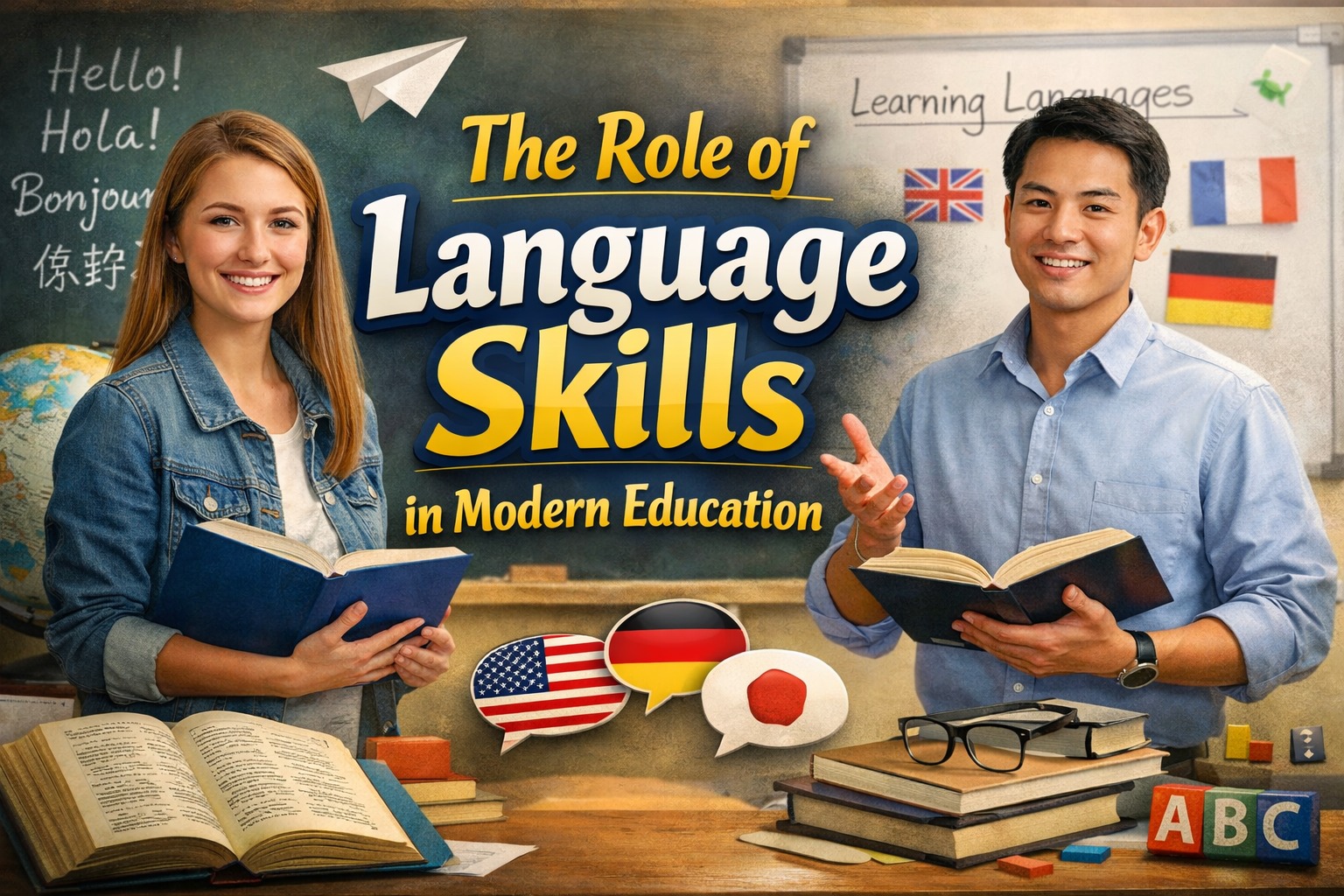
In today's rapidly changing world, language skills have become one of the most valuable abilities students can develop. Modern education no longer focuses only on memorizing facts and formulas but also on building strong communication abilities that help students succeed in academic and professional environments. The ability to understand, express, and exchange ideas clearly has become an essential requirement in schools and universities worldwide. As technology continues to connect people across countries and cultures, mastering language becomes increasingly important. For this reason, educators place significant emphasis on developing language competencies from an early age.
IMPORTANCE OF LANGUAGE SKILLS IN THE LEARNING PROCESS
Language skills play a central role in helping students absorb knowledge effectively. Reading skills enable learners to understand textbooks, research papers, and digital learning materials, while listening skills improve comprehension during lectures and discussions. Students with strong language abilities often find it easier to analyze information and solve problems logically. These advantages contribute directly to better academic performance.
In addition, writing and speaking skills allow students to communicate their thoughts clearly and confidently. Classroom participation, presentations, assignments, and examinations all depend heavily on effective communication. When students can explain their ideas accurately, they are more likely to engage actively in learning activities. As a result, language competence becomes a foundation for educational success rather than simply another subject to study.
HOW LANGUAGE SKILLS SUPPORT CRITICAL THINKING?
Modern education encourages students to become critical thinkers rather than passive receivers of information. Strong language abilities help learners evaluate arguments, compare perspectives, and interpret complex ideas more effectively. Reading various sources of information also broadens understanding and encourages deeper analysis of important issues. This process helps students develop independent opinions based on evidence and reasoning.
Furthermore, communication skills allow students to express their conclusions in a structured and convincing manner. Debates, group projects, and discussions require learners to defend their ideas while respecting different viewpoints. Such activities strengthen both intellectual and interpersonal abilities simultaneously. Therefore, language development contributes directly to stronger analytical and reasoning skills.
THE IMPACT OF DIGITAL TECHNOLOGY ON LANGUAGE LEARNING
The rise of digital technology has transformed the way students learn languages and communicate with others. Online courses, educational applications, and virtual classrooms provide access to learning resources that were previously unavailable to many students. Interactive platforms allow learners to practice reading, listening, speaking, and writing in more engaging ways. Technology has made language education more flexible and accessible than ever before.
At the same time, the digital environment requires students to possess strong communication abilities to navigate information responsibly. Emails, online presentations, video conferences, and collaborative projects all rely on effective language use. Students who can communicate clearly in digital spaces often enjoy greater academic and professional opportunities. Consequently, language proficiency has become an essential digital-age skill.
LANGUAGE SKILLS AND FUTURE CAREER OPPORTUNITIES
Employers increasingly value candidates who possess excellent communication skills alongside technical expertise. Businesses operate in global markets where interaction with clients, colleagues, and partners from different countries is common. Employees who can communicate effectively often perform better in teamwork, leadership, and customer relations. These skills frequently influence promotion opportunities and career growth.
Moreover, multilingual individuals often gain access to wider professional networks and international careers. The ability to understand multiple languages creates opportunities in industries such as education, business, technology, tourism, and media. As globalization continues to expand, language proficiency becomes a competitive advantage in the job market. Investing in language education today can therefore create significant benefits in the future.
STRATEGIES FOR IMPROVING LANGUAGE SKILLS IN EDUCATION
Educational institutions can strengthen language abilities by encouraging active communication inside and outside the classroom. Reading books regularly, participating in discussions, and practicing writing exercises are effective ways to improve proficiency. Teachers can also use collaborative projects and presentations to build confidence and communication competence. Consistent practice remains one of the most important factors in language development.
Students themselves also play an important role in improving their abilities. Watching educational videos, listening to podcasts, and interacting with people from different backgrounds can significantly enhance language exposure. Combining traditional learning methods with digital resources often produces better results. With dedication and continuous practice, anyone can develop strong and valuable language skills.
CONCLUSION
The role of language skills in modern education extends far beyond grammar and vocabulary lessons. They support academic achievement, improve critical thinking, strengthen digital communication, and increase career opportunities. In an increasingly interconnected world, the ability to communicate effectively has become a fundamental requirement for success. Educational institutions and students alike must recognize the long-term value of language development. By investing in these essential skills, learners prepare themselves for the challenges and opportunities of the future.
About the Author
Gusti Ayu Tita P
Author — STEKOM University
An active author focused on academic issues, educational technology, and human resource development in the campus environment.