The Role of Leadership in Reducing Harmful Office Politics
Gusti Ayu Tita P
28 Juni 2026
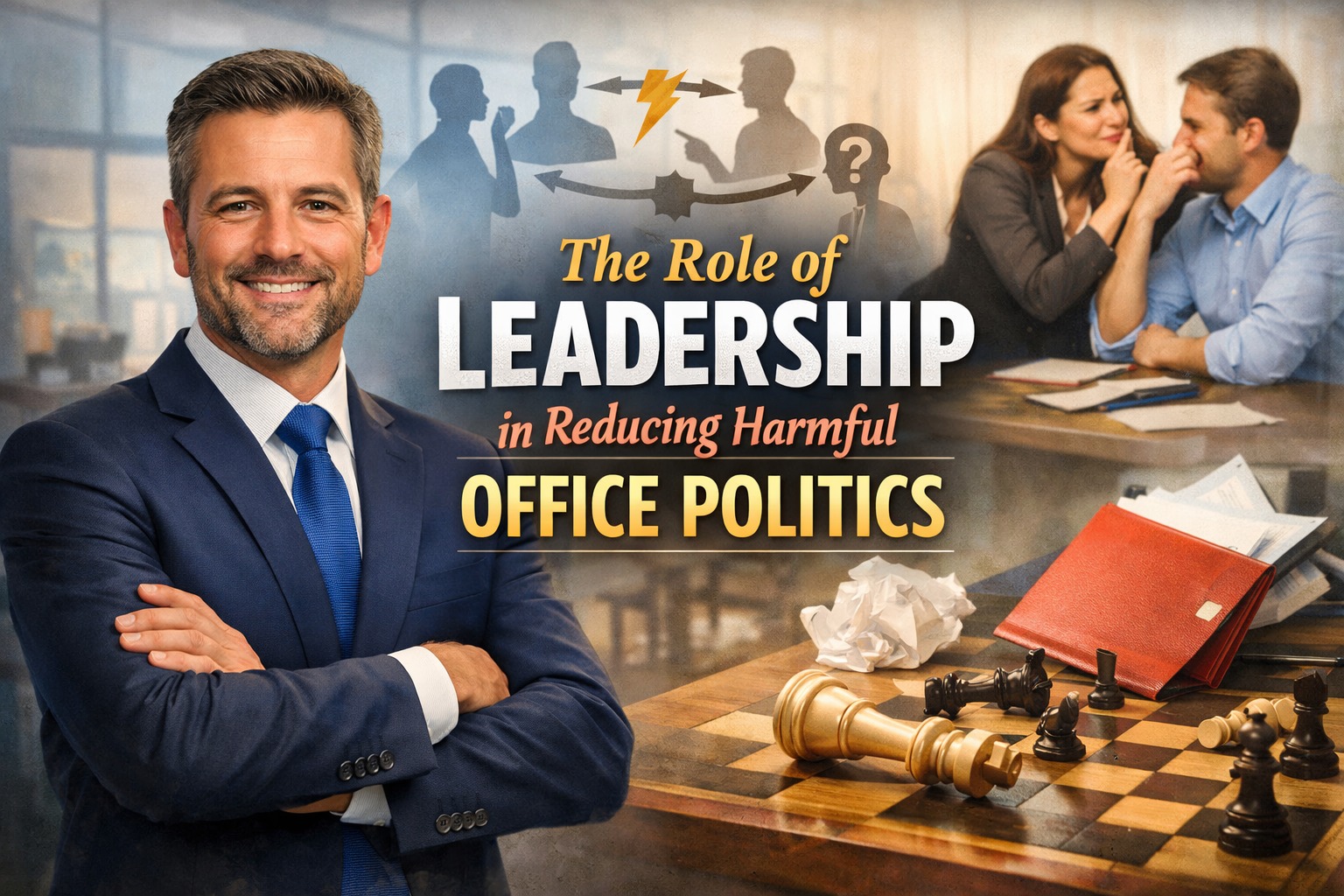
Office politics is a common reality in many workplaces. While some forms of workplace influence can support collaboration and career growth, harmful office politics often create conflict, mistrust, and reduced productivity. Employees may become more focused on personal agendas than organizational goals, leading to a negative work environment.
The role of leadership is crucial in preventing and reducing harmful office politics. Effective leaders create a culture of fairness, transparency, and accountability that discourages manipulative behavior. By setting clear expectations and promoting ethical conduct, leaders can build a workplace where employees feel valued and motivated to contribute positively.
UNDERSTANDING HARMFUL OFFICE POLITICS
Harmful office politics refers to behaviors that prioritize personal gain over team success or organizational objectives. These behaviors may include favoritism, gossip, information hoarding, blame-shifting, and manipulation. When left unchecked, such actions can damage employee morale and weaken trust among colleagues.
Employees working in politically charged environments often experience increased stress and lower job satisfaction. Productivity may decline as individuals spend more time navigating workplace conflicts rather than focusing on their responsibilities. Understanding the impact of harmful office politics is the first step toward creating a healthier workplace culture.
LEADERS SET THE TONE FOR WORKPLACE CULTURE
The behavior of leaders significantly influences how employees interact with one another. When leaders demonstrate integrity, fairness, and professionalism, employees are more likely to adopt similar behaviors. Leadership actions often communicate workplace values more effectively than written policies.
A positive workplace culture begins when leaders consistently model ethical decision-making. Employees observe how leaders handle conflicts, distribute opportunities, and recognize achievements. By maintaining fairness and consistency, leaders reduce the likelihood of political behavior becoming normalized within the organization.
PROMOTING TRANSPARENCY AND OPEN COMMUNICATION
One of the most effective ways to reduce harmful office politics is through transparent communication. Employees are less likely to engage in rumors or speculation when leaders openly share relevant information about decisions, goals, and organizational changes. Transparency helps build trust and reduces uncertainty.
Leaders should encourage open discussions and provide channels where employees can express concerns without fear of retaliation. Regular team meetings, feedback sessions, and clear communication policies foster a culture of openness. When information flows freely, opportunities for manipulation become significantly limited.
ENSURING FAIRNESS IN DECISION MAKING
Perceived unfairness often fuels office politics. Employees may engage in political behavior when they believe promotions, rewards, or opportunities are based on favoritism rather than merit. Effective leaders address this issue by implementing fair and objective processes.
Performance evaluations, promotions, and recognition programs should be based on measurable criteria. Leaders should communicate these standards clearly and apply them consistently across all employees. Fair treatment increases trust in leadership and reduces the motivation for political maneuvering.
BUILDING ACCOUNTABILITY AT ALL LEVELS
A workplace with strong accountability systems is less vulnerable to harmful office politics. Leaders must establish clear expectations regarding professional conduct and ensure that all employees are held responsible for their actions. Accountability helps create an environment where unethical behavior is not tolerated.
When leaders address inappropriate conduct promptly and fairly, employees gain confidence in organizational processes. Consistent accountability also reinforces the message that workplace success should be earned through performance and collaboration rather than manipulation or influence.
ENCOURAGING COLLABORATION OVER COMPETITION
Excessive internal competition can contribute to political behavior. Leaders play an important role in shifting the focus from individual rivalries to team collaboration. When employees work toward shared objectives, they are more likely to support one another and less likely to engage in destructive political tactics.
Organizations can encourage collaboration by recognizing team achievements, promoting cross-functional projects, and rewarding cooperative behavior. A collaborative culture strengthens relationships among employees and creates a more supportive work environment.
DEVELOPING TRUST THROUGH CONSISTENT LEADERSHIP
Trust is one of the strongest defenses against harmful office politics. Employees are more likely to remain engaged and cooperative when they trust their leaders. Trust develops when leaders consistently act in alignment with organizational values and follow through on commitments.
Leaders who listen actively, communicate honestly, and make fair decisions strengthen employee confidence. Over time, this trust reduces suspicion and workplace tension. As trust grows, political behavior loses much of its influence because employees feel secure within the organization.
CONCLUSION
The role of leadership in reducing harmful office politics cannot be overstated. Leaders who promote transparency, fairness, accountability, and collaboration create workplaces where employees can focus on meaningful contributions rather than political games. Strong leadership helps build trust, improve morale, and support long-term organizational success.
By setting a positive example and implementing fair workplace practices, leaders can significantly reduce harmful office politics. The result is a healthier, more productive, and more engaged workforce that works together toward common goals.
About the Author
Gusti Ayu Tita P
Author — STEKOM University
An active author focused on academic issues, educational technology, and human resource development in the campus environment.