The Role Of Local Brands In Strengthening Indonesia’s Creative Economy
Gusti Ayu Tita P
31 Agustus 2026
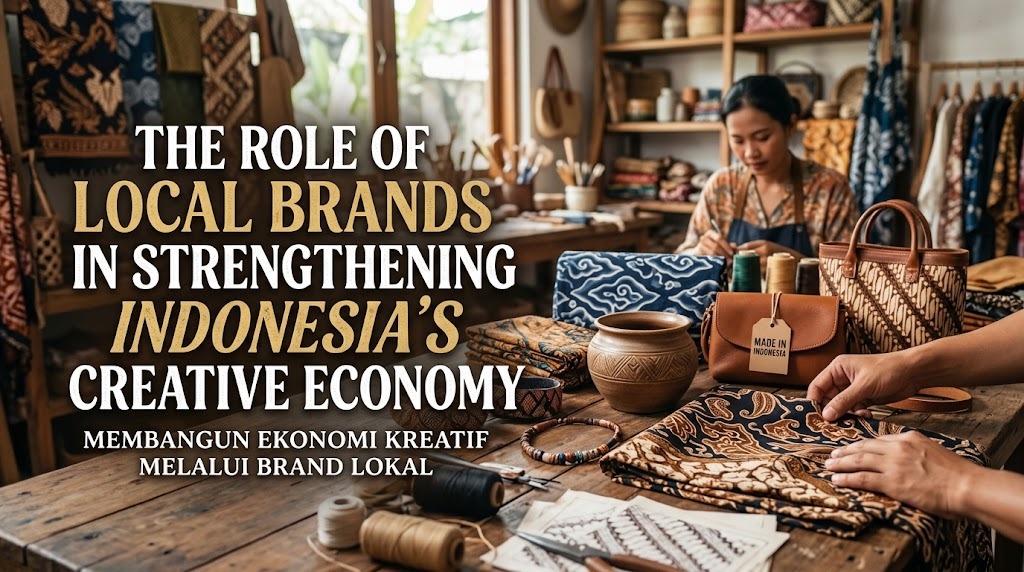
Local brands have become an important part of Indonesia’s creative economy. They create products by combining creativity, local resources, cultural inspiration, and modern consumer needs. From fashion and food to crafts, beauty products, and digital services, local businesses contribute to a wide range of creative industries. Their growth also creates opportunities for communities and entrepreneurs to turn creative ideas into sustainable businesses.
The development of local brands is supported by digital technology, social media, and e commerce. These tools allow businesses to introduce their products to consumers beyond their local areas. As more local brands improve their quality and develop unique identities, they can compete in both domestic and international markets. This makes local brands an important force in strengthening Indonesia’s creative economy.
CREATING JOB OPPORTUNITIES
Local brands can contribute to economic growth by creating employment opportunities. A growing business needs people to handle production, design, marketing, customer service, packaging, finance, and distribution. This creates opportunities for individuals with different skills and educational backgrounds. Small businesses can also provide income opportunities for local communities.
The impact can become wider when a brand works with local suppliers and producers. For example, a fashion business may work with local tailors, fabric producers, photographers, designers, and delivery services. A food business can involve farmers, packaging producers, and distributors. As a result, the development of one local brand can support several other businesses within its supply chain.
SUPPORTING CREATIVE ENTREPRENEURSHIP
Local brands encourage people to transform creative ideas into business opportunities. Entrepreneurs can develop products based on their interests, skills, cultural backgrounds, or observations of market needs. This encourages innovation and gives individuals opportunities to become business owners. Creative entrepreneurship can also help young people develop practical skills outside formal education.
Building a local brand requires more than creating a good product. Entrepreneurs need to learn about marketing, financial management, customer service, branding, and business planning. These experiences can improve the overall quality of the entrepreneurial ecosystem. When more people gain business experience, the creative economy can become more dynamic and competitive.
PRESERVING INDONESIAN CULTURE
Indonesia has a rich cultural heritage that can become a valuable source of inspiration for local brands. Traditional patterns, crafts, food, materials, stories, and artistic traditions can be developed into modern creative products. This allows cultural elements to remain relevant while being introduced to contemporary consumers. Local brands can therefore play a role in connecting cultural heritage with modern markets.
However, cultural elements should be used responsibly. Businesses need to respect cultural origins and communities when incorporating traditional knowledge or designs into commercial products. Collaboration with local artisans and communities can create economic benefits while supporting cultural preservation. When handled properly, culture can become both an identity and a sustainable economic asset.
INCREASING PRODUCT INNOVATION
Innovation is essential for local brands to remain competitive. Businesses need to understand changing consumer preferences and continuously improve their products. Innovation can involve product design, materials, packaging, functionality, production methods, or customer experience. It does not always require completely new ideas because existing products can also be improved in meaningful ways.
Local businesses can use customer feedback to identify opportunities for improvement. Reviews, comments, surveys, and purchasing patterns can provide useful information about what consumers want. By combining creativity with market research, brands can develop products that are both distinctive and relevant. This approach can increase their ability to compete with larger businesses.
EXPANDING MARKET ACCESS THROUGH DIGITAL TECHNOLOGY
Digital technology has changed the way local brands reach consumers. Through social media, online marketplaces, and websites, businesses can promote their products without depending entirely on physical stores. A small business can potentially reach customers from different cities and countries through digital platforms. This creates new opportunities for businesses that previously had limited access to larger markets.
Digital platforms also make communication with customers easier. Businesses can respond to questions, collect feedback, share product information, and build communities around their brands. The use of digital marketing can also help businesses understand which content and promotional strategies generate the strongest response. This information can support better marketing decisions.
BUILDING INDONESIA’S BRAND IMAGE
Successful local brands can contribute to a stronger image of Indonesian products. When consumers see local products with good quality, attractive design, and professional branding, their perception of domestic products can improve. This can encourage consumers to evaluate products based on their actual value rather than simply their country of origin. A strong reputation for local products can benefit the broader creative economy.
Some local brands also have opportunities to enter international markets. Products with distinctive Indonesian characteristics can attract consumers who are interested in unique designs, cultural stories, or locally produced goods. To compete internationally, brands need to maintain consistent quality and professional standards. Strong local brands can therefore become representatives of Indonesian creativity in global markets.
ENCOURAGING LOCAL ECONOMIC GROWTH
The growth of local brands can contribute to the development of local economies. When consumers purchase domestic products, businesses receive revenue that can be used to maintain operations, improve products, and expand their activities. Business growth can increase demand for local workers, suppliers, and supporting services. This creates economic activity that extends beyond the brand itself.
Local economic growth can become stronger when businesses build partnerships within their communities. Collaboration among entrepreneurs, artisans, suppliers, creative professionals, and institutions can create a supportive business ecosystem. Such cooperation can help small businesses access knowledge, resources, and new markets. A healthy ecosystem makes it easier for creative businesses to grow sustainably.
FACING CHALLENGES IN THE CREATIVE ECONOMY
Despite their potential, local brands face several challenges. They may have to compete with large domestic companies and international brands that have greater financial resources, established distribution networks, and strong marketing capabilities. Small businesses can also experience difficulties related to production capacity, funding, technology, and human resources. These challenges require careful planning and continuous improvement.
Local brands should focus on areas where they can create a meaningful advantage. Unique products, strong storytelling, customer relationships, quality, and flexibility can become important strengths for smaller businesses. Collaboration and digital technology can also help reduce some limitations. By adapting to market changes, local brands can improve their resilience and competitiveness.
THE FUTURE OF LOCAL BRANDS IN INDONESIA
The future of local brands is closely connected to the continued growth of the creative economy. Consumers are increasingly exposed to diverse products and can discover new brands through digital platforms. This creates opportunities for businesses that can combine creativity, quality, technology, and strong brand identity. Local brands that understand their target consumers can develop stronger and more sustainable positions in the market.
Long term growth requires consistency rather than relying only on temporary trends. Businesses need to continue improving their products, developing their teams, understanding customers, and maintaining trust. Government programs, education, access to finance, digital infrastructure, and business partnerships can also support the growth of creative businesses. With the right ecosystem, local brands can make an increasingly significant contribution to Indonesia’s economy.
CONCLUSION
Local brands play an important role in strengthening Indonesia’s creative economy by creating jobs, encouraging entrepreneurship, supporting cultural preservation, and promoting innovation. Their activities can generate economic benefits for not only business owners but also workers, suppliers, artisans, and other supporting industries. Digital technology has further expanded their ability to reach consumers across regions and potentially international markets.
The future of Indonesia’s creative economy depends partly on the ability of local businesses to develop sustainably. Quality, innovation, cultural identity, digital adaptation, and customer trust will remain important factors in building competitive brands. With stronger collaboration and continuous improvement, local brands can become valuable contributors to Indonesia’s economic development while showcasing the creativity and diversity of the country.
About the Author
Gusti Ayu Tita P
Author — STEKOM University
An active author focused on academic issues, educational technology, and human resource development in the campus environment.