The Role of Managers in Building a Positive Work Culture
Gusti Ayu Tita P
16 Juli 2026
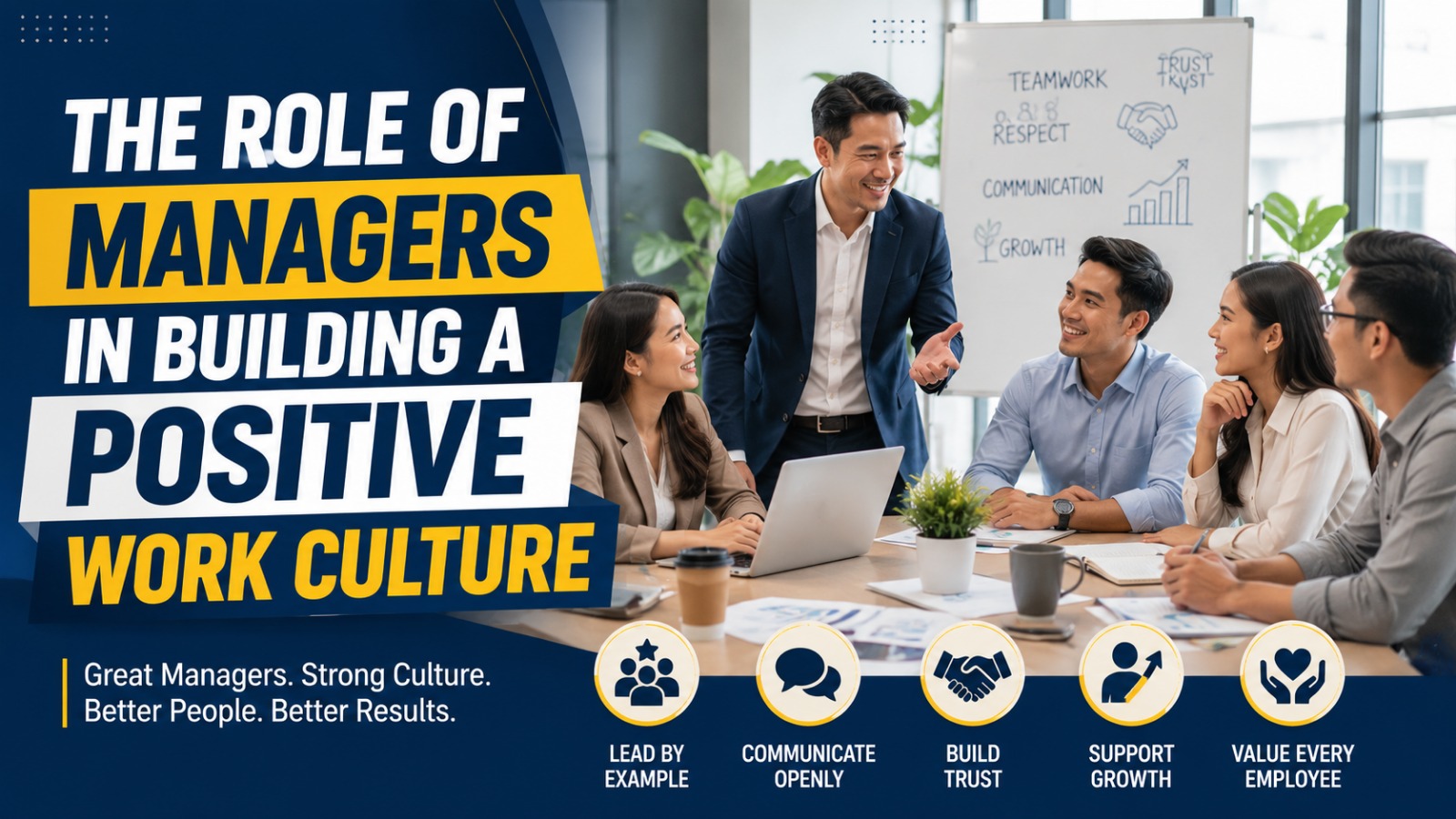
A positive work culture is one of the most valuable assets an organization can have. It creates an environment where employees feel respected, motivated, and encouraged to perform at their best. While every team member contributes to workplace culture, managers play the most influential role in shaping daily experiences, communication, and teamwork. Their leadership style directly affects employee satisfaction, productivity, and long-term business success.
When managers focus on building trust, promoting collaboration, and supporting employee growth, they create a workplace where people enjoy contributing their skills. A healthy work culture also reduces workplace conflict, improves employee retention, and strengthens the company's reputation. Understanding the role of managers in developing this environment is essential for every modern organization.
BUILDING TRUST THROUGH EFFECTIVE LEADERSHIP
A manager serves as a role model for the entire team. Employees often observe how their manager communicates, solves problems, and handles challenges. When leaders consistently demonstrate honesty, fairness, and integrity, employees become more confident in the organization's direction. Trust grows naturally when managers keep their promises and treat everyone with equal respect.
Managers should also encourage open communication by listening to employee concerns and providing constructive feedback. Team members are more likely to share ideas when they know their opinions are valued. This level of trust strengthens cooperation and creates a workplace where everyone feels safe expressing their thoughts without fear of unfair judgment.
ENCOURAGING OPEN COMMUNICATION
Strong communication is the foundation of every successful workplace. Managers should provide clear expectations, explain organizational goals, and regularly update employees about important changes. Clear communication minimizes misunderstandings and helps employees stay focused on shared objectives. It also increases confidence because employees understand what is expected of them.
At the same time, communication should never be one-sided. Effective managers actively seek employee feedback through meetings, discussions, or surveys. Listening carefully to different perspectives allows managers to identify problems early and find practical solutions before they become larger issues. Employees who feel heard are generally more engaged and committed to their work.
SUPPORTING EMPLOYEE GROWTH AND DEVELOPMENT
One of the most important responsibilities of a manager is helping employees develop their skills. Providing training opportunities, mentoring, and regular coaching enables employees to improve their performance and prepare for future responsibilities. Continuous learning benefits both individuals and the organization because skilled employees contribute more effectively.
Managers should also recognize employee achievements and celebrate progress. Simple appreciation, positive feedback, or public recognition can significantly increase motivation. Employees who feel valued are more likely to remain loyal to the company and continue improving their performance over time.
PROMOTING TEAMWORK AND COLLABORATION
A positive work culture thrives when employees work together toward common goals. Managers should create opportunities for collaboration by encouraging teamwork, knowledge sharing, and mutual support. Assigning responsibilities fairly and promoting respect among team members helps prevent unhealthy competition. As a result, employees become more willing to assist one another.
Managers also play a key role in resolving workplace conflicts quickly and professionally. Instead of allowing disagreements to damage relationships, effective leaders encourage respectful discussions and focus on finding solutions. A collaborative workplace increases creativity, strengthens relationships, and improves overall productivity.
MAINTAINING FAIRNESS AND EMPLOYEE WELL BEING
Employees expect managers to make decisions based on fairness rather than personal preferences. Equal treatment builds confidence and strengthens trust throughout the organization. Managers should evaluate employee performance objectively and provide equal opportunities for growth, recognition, and career advancement. Fair leadership creates a more inclusive and supportive work environment.
Employee well being should also remain a priority. Managers can support work-life balance by encouraging reasonable workloads, respecting personal time, and recognizing signs of stress. A workplace that values employee health often experiences higher morale, lower absenteeism, and stronger long-term performance.
CREATING A CULTURE OF CONTINUOUS IMPROVEMENT
Successful managers understand that workplace culture is never static. They regularly evaluate team performance, gather employee feedback, and look for opportunities to improve the working environment. Encouraging innovation and welcoming new ideas helps organizations remain competitive while keeping employees engaged. Continuous improvement becomes part of the company's everyday mindset.
Managers should also lead by example when adapting to change. Employees are more willing to embrace new processes when they see their leaders demonstrating confidence and flexibility. A culture focused on learning, improvement, and collaboration creates sustainable success for both employees and the organization.
CONCLUSION
The role of managers in building a positive work culture extends far beyond supervising daily tasks. Great managers inspire trust, encourage communication, support employee development, promote teamwork, and maintain fairness across the organization. Their actions directly influence employee satisfaction, motivation, and productivity.
Organizations that invest in effective leadership create workplaces where employees feel respected, valued, and motivated to succeed. By consistently practicing positive leadership behaviors, managers can build a work culture that supports innovation, long-term growth, and lasting organizational success.
About the Author
Gusti Ayu Tita P
Author — STEKOM University
An active author focused on academic issues, educational technology, and human resource development in the campus environment.