The Role Of MBG In Improving Nutrition And Health Among Indonesian Children
Gusti Ayu Tita P
20 Agustus 2026
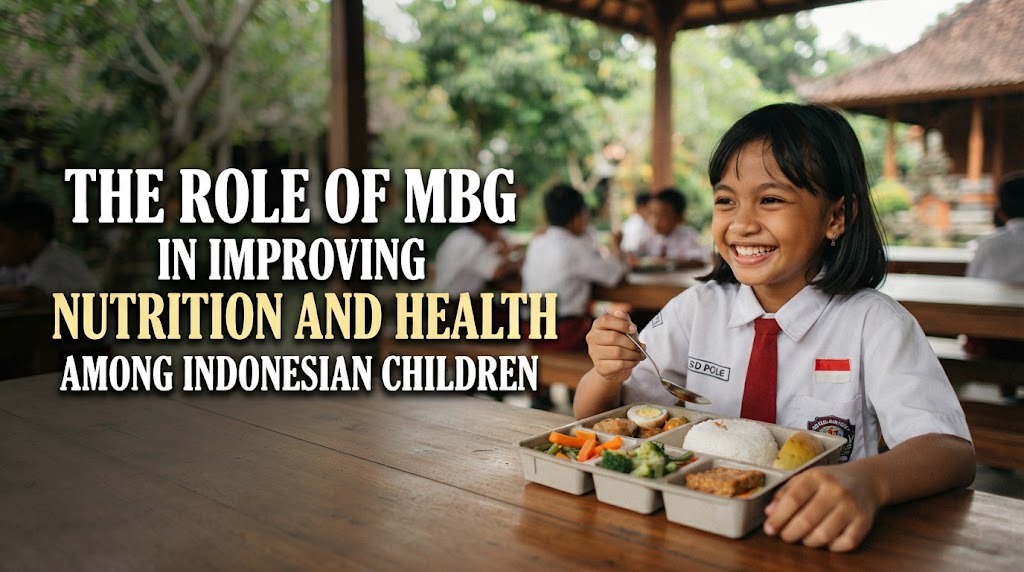
Indonesia continues to face challenges in improving children’s nutrition and health, especially among families with limited access to nutritious food. Poor nutrition during childhood can affect physical growth, learning ability, immunity, and long-term health. To address these challenges, the Indonesian government has introduced Makan Bergizi Gratis (MBG) as a major public nutrition program. The program provides nutritious meals to eligible students and other target groups while also supporting healthier eating habits. With proper implementation, MBG can become an important part of efforts to improve the quality of Indonesia’s future generations.
WHAT IS MBG AND WHY IS IT IMPORTANT
Makan Bergizi Gratis (MBG) is a government program designed to provide nutritious meals free of charge to targeted beneficiaries, particularly children in educational settings. The program is intended to improve access to balanced food and support children's nutritional needs during their growth and development. A nutritious meal generally needs to provide important nutrients such as protein, carbohydrates, healthy fats, vitamins, and minerals. By making nutritious food more accessible, MBG can help reduce differences in food access between children from different economic backgrounds.
MBG is also important because nutrition is closely connected to children's physical and cognitive development. Children who receive adequate nutrition are better supported in maintaining energy for daily activities and learning. The program can also introduce children to healthier food choices and balanced eating patterns. However, its success depends on food quality, safety, menu diversity, distribution, and consistent monitoring.
HOW MBG CAN IMPROVE CHILDREN'S NUTRITION
One of the main roles of MBG is increasing children's access to balanced and nutritious meals. For some children, school meals may provide an important additional source of nutrients that are not always available at home. Meals containing adequate protein, vegetables, fruit, and other nutrient-rich foods can support healthy growth. Regular access to nutritious food may also help address inadequate dietary intake among children who are vulnerable to food insecurity.
The program can also support efforts to prevent malnutrition and micronutrient deficiencies when menus are carefully planned. Nutritional needs vary according to age, growth stage, and individual circumstances, so meal planning should consider appropriate nutritional standards. Local food ingredients can be used to create diverse menus while supporting local agriculture and food producers. This approach makes MBG not only a nutrition intervention but also a potential part of a broader food security strategy.
THE CONNECTION BETWEEN NUTRITION AND CHILD HEALTH
Good nutrition plays a fundamental role in maintaining children's health and immunity. Essential nutrients help the body grow, repair tissues, produce energy, and support normal immune function. Children who consistently receive sufficient and balanced nutrition have better nutritional foundations for healthy development. Therefore, providing nutritious meals can contribute to broader public health objectives.
Nutrition also has a strong relationship with learning and school participation. Children need sufficient energy and nutrients to remain active and focused during school activities. A healthy meal can help children meet part of their daily nutritional requirements and may reduce distractions related to hunger. Nevertheless, MBG should complement, rather than replace, healthy meals and good nutrition practices at home.
MBG AND CHILDREN'S LEARNING DEVELOPMENT
Nutrition and education are closely connected because children's ability to learn is influenced by their overall physical condition. Hunger can make it more difficult for students to concentrate and participate actively in classroom activities. Providing nutritious meals at school can help create better conditions for students to engage in learning. In the long term, improved nutrition can support the development of human resources.
MBG can also become an opportunity to strengthen nutrition education. Schools can teach students why vegetables, fruits, protein sources, and adequate water are important for the body. Children can learn to recognize healthy eating patterns through both classroom lessons and practical experiences with nutritious meals. This combination can encourage healthier habits that continue beyond the school environment.
SUPPORTING HEALTHY EATING HABITS
The impact of MBG should not be measured only by the food served each day. The program can also encourage children to develop healthy eating habits from an early age. Exposure to diverse nutritious foods can help children become more familiar with balanced meals. When schools, families, and communities provide consistent nutrition messages, children are more likely to understand the importance of making healthy food choices.
Families have an important role in reinforcing these habits at home. Parents can complement school meals by providing nutritious breakfasts, dinners, fruits, vegetables, and sufficient drinking water. Schools can also communicate menu information and nutrition guidance to parents. Through cooperation between schools, families, health workers, and communities, the benefits of MBG can extend beyond school hours.
CHALLENGES IN IMPLEMENTING MBG
Although MBG has significant potential, implementing a large-scale nutrition program presents several challenges. Food safety and hygiene must be maintained throughout preparation, transportation, storage, and distribution. Meals also need to arrive on time and in suitable condition so that children can consume them safely. Strong standards and regular monitoring are therefore essential.
Another challenge is ensuring nutritional quality and menu diversity across different regions. Indonesia has diverse cultures, food traditions, geographic conditions, and local food availability. Menus may need to be adapted to local circumstances while still meeting nutritional requirements. Effective coordination, trained personnel, adequate facilities, and transparent monitoring can help improve program implementation.
THE ROLE OF MBG IN REDUCING NUTRITION INEQUALITY
One potential benefit of MBG is helping reduce differences in access to nutritious food among children. Children from households with different economic conditions may not have the same opportunities to consume balanced meals every day. A well-designed school meal program can provide a common nutritional support system for eligible students. This can be particularly meaningful in areas where food access remains a challenge.
However, reducing nutrition inequality requires more than providing meals. Broader efforts are also needed, including nutrition education, sanitation, healthcare access, clean water, and social protection. MBG can work most effectively when it is integrated with other programs that address the wider causes of poor nutrition. A coordinated approach can create stronger and more sustainable health outcomes for children.
HOW MBG CAN SUPPORT INDONESIA'S FUTURE
Investing in children's nutrition is an investment in Indonesia's human resources. Healthy children have stronger foundations for growth, education, productivity, and participation in society. By improving access to nutritious food, MBG has the potential to contribute to healthier childhood development. The benefits of good nutrition can extend into adolescence and adulthood.
For this reason, the success of MBG should be evaluated through measurable outcomes rather than only the number of meals distributed. Nutritional status, food safety, school participation, dietary quality, and program effectiveness are among the areas that require continuous evaluation. Reliable data and regular improvements can help ensure that public resources produce meaningful benefits. With responsible implementation, MBG can become an important component of Indonesia's long-term investment in children's health and development.
CONCLUSION
Makan Bergizi Gratis (MBG) has an important potential role in improving nutrition and health among Indonesian children. By increasing access to nutritious meals, the program can support healthy growth, energy, immunity, and learning readiness. Its impact can become stronger when nutrition programs are combined with education, family involvement, healthcare, sanitation, and food safety measures. Successful implementation also requires careful planning, monitoring, and adaptation to local conditions. Ultimately, MBG can contribute to building a healthier generation when its implementation consistently prioritizes nutritional quality, safety, equity, and sustainability.
About the Author
Gusti Ayu Tita P
Author — STEKOM University
An active author focused on academic issues, educational technology, and human resource development in the campus environment.