
The Role Of MBG In Preventing Nutritional Problems Among Children And Teenagers
Gusti Ayu Tita P
20 Agustus 2026
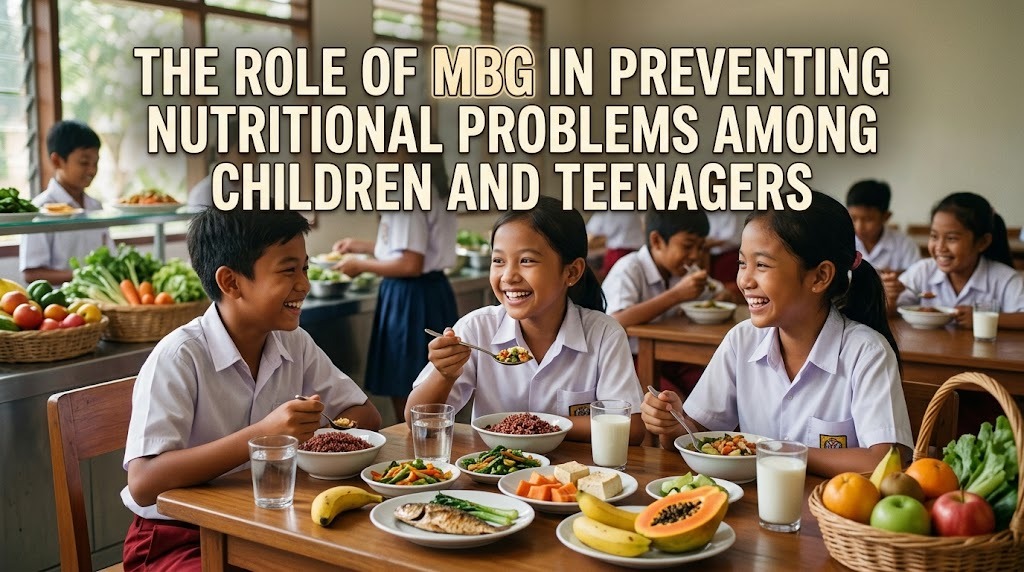
Makan Bergizi Gratis (MBG) is a government nutrition initiative that aims to improve access to nutritious food for targeted beneficiaries, including children and students. Children and teenagers need adequate nutrition because they experience significant physical, cognitive, and emotional development during these stages of life. Nutritional problems can occur when the body does not receive enough, too much, or an inappropriate balance of nutrients. These problems may affect growth, health, learning, and future wellbeing. Through nutritious meals and supporting education, MBG can become one part of Indonesia's broader efforts to improve the nutritional condition of its younger generation.
UNDERSTANDING NUTRITIONAL PROBLEMS IN CHILDREN AND TEENAGERS
Nutritional problems can include undernutrition, micronutrient deficiencies, overweight, and obesity. These conditions can have different causes, including inadequate dietary intake, poor diet quality, illness, limited access to nutritious food, and unhealthy eating patterns. Children and teenagers require different amounts of nutrients depending on their age, development, body size, and activity level. Therefore, preventing nutritional problems requires attention to both food quantity and food quality.
Teenagers also experience rapid physical changes that increase their nutritional needs. During adolescence, adequate nutrition supports growth, bone development, muscle development, and hormonal changes. At the same time, teenagers may develop independent eating habits that include frequent consumption of highly processed foods or sugary drinks. Nutrition education and access to healthier food can help them make better choices.
HOW MBG CAN IMPROVE ACCESS TO NUTRITIOUS FOOD
One important role of MBG is increasing children's access to balanced and nutritious meals during school hours. Some families may face difficulties providing a wide variety of nutritious foods every day because of economic or other household circumstances. A school meal program can provide an additional source of essential nutrients. This can help reduce differences in access to nutritious food among eligible students.
The quality of meals remains essential. A nutritious MBG menu can combine staple foods, protein sources, vegetables, fruits, and other nutrient-rich ingredients. Menu diversity can help children obtain different nutrients rather than relying heavily on a single food group. Local foods can also be incorporated when they meet appropriate nutritional and safety requirements.
SUPPORTING PREVENTION OF UNDERNUTRITION
Undernutrition can occur when children do not receive enough energy or nutrients to meet their needs. Prolonged inadequate nutrition can interfere with healthy growth and development. Providing nutritious meals at school can help children obtain additional energy and nutrients during the day. MBG can therefore contribute to broader efforts to prevent inadequate dietary intake.
However, preventing undernutrition requires more than providing one meal. Children's overall diet, health status, sanitation, access to healthcare, and household food security also influence nutritional outcomes. Families, schools, health workers, and communities need to work together to identify and address nutritional risks. Children who show signs of nutritional problems may require appropriate assessment and support from qualified health professionals.
ADDRESSING MICRONUTRIENT NEEDS
Micronutrients such as iron, iodine, zinc, calcium, and vitamins are needed in smaller quantities but play important roles in normal growth and body functions. Inadequate intake of certain micronutrients can contribute to health problems. A varied diet containing different food groups can help children obtain a wider range of essential nutrients. MBG can support this by incorporating nutrient-rich foods into school meal menus.
Menu planning should focus on overall nutritional quality rather than simply increasing the number of ingredients. Foods such as fish, eggs, legumes, vegetables, fruits, and appropriately fortified foods can contribute different nutrients. The appropriate combination depends on nutritional requirements and local food availability. Dietary diversity is therefore an important principle for designing nutritious meals.
HELPING PREVENT OVERWEIGHT AND OBESITY
Nutritional problems are not limited to undernutrition. Overweight and obesity are also important concerns when children regularly consume more energy than their bodies need, particularly in combination with low physical activity. Diets high in added sugars, unhealthy fats, and highly processed foods can contribute to unhealthy dietary patterns. MBG can support healthier eating by emphasizing balanced meals rather than foods with poor nutritional value.
Schools can also use MBG to teach students about portion awareness, dietary balance, physical activity, and healthier food choices. The goal should not be to encourage restrictive dieting among children or teenagers. Instead, young people should learn how to maintain balanced eating habits appropriate for their stage of development. Healthy nutrition should be promoted alongside positive attitudes toward food and body wellbeing.
DEVELOPING HEALTHY EATING HABITS
Children's eating habits can develop from their daily experiences at home and school. MBG can provide opportunities for students to become familiar with vegetables, fruits, protein-rich foods, and balanced meals. Repeated exposure to nutritious foods may help children understand that healthy meals can include many different flavors and ingredients. This can support healthier food preferences over time.
Nutrition education can strengthen the impact of the program. Teachers can explain the role of different nutrients and why children need a variety of foods. Parents can reinforce these lessons by providing nutritious options at home. Consistent messages from schools and families can help children and teenagers develop habits that remain useful as they grow older.
SUPPORTING HEALTHY GROWTH AND DEVELOPMENT
Adequate nutrition provides a foundation for physical and cognitive development. Children need nutrients to support the growth of bones, muscles, organs, and the brain. Teenagers also require adequate nutrition during the rapid growth that occurs during adolescence. MBG can provide additional nutritional support during these important stages.
Good nutrition can also support children's energy for learning and physical activities. Students who regularly experience hunger may find it more difficult to focus during school activities. A nutritious meal can help reduce short-term hunger and provide energy for daily tasks. However, nutrition is only one part of healthy development and should be supported by adequate sleep, physical activity, healthcare, and a safe environment.
STRENGTHENING FOOD SAFETY AND QUALITY
Food safety is essential when providing meals to large numbers of children and teenagers. Ingredients must be handled carefully from preparation and storage to transportation and serving. Food handlers need proper hygiene practices and appropriate training. Schools and program managers should also have procedures for identifying and responding to food safety concerns.
Nutritional quality needs to be monitored at the same time. Meals should meet appropriate standards and provide meaningful nutritional value. Regular evaluation can identify problems with menus, portion sizes, food acceptance, or distribution. Safe and nutritious meals should always remain the main priority of MBG.
THE ROLE OF FAMILIES AND SCHOOLS
MBG can have a greater impact when schools and families actively support the program. Schools can provide nutrition education, promote hygiene, and encourage students to consume balanced meals. Teachers can also help students understand the importance of making healthy food choices. Schools can communicate feedback about meal quality and student acceptance to program managers.
Families remain essential because MBG cannot cover children's entire daily nutritional requirements. Parents can provide nutritious meals outside school and encourage healthy habits such as drinking enough water and eating a variety of foods. Families can also seek professional health advice when a child shows signs of nutritional problems. Cooperation between home and school can create a more consistent approach to preventing nutrition-related problems.
MONITORING AND EVALUATING NUTRITIONAL OUTCOMES
Regular monitoring is necessary to determine whether MBG is achieving its intended goals. Program evaluation can examine food quality, dietary diversity, food safety, meal acceptance, and program coverage. Where appropriate, nutritional indicators can also be assessed through established health monitoring systems. Reliable data can help identify areas where additional intervention is needed.
Evaluation should consider both benefits and possible challenges. Program managers can use feedback from students, parents, teachers, nutrition professionals, and communities to improve implementation. Changes to menus and distribution systems should be based on evidence and appropriate nutritional guidance. Continuous improvement can make MBG more effective in supporting children's long-term nutritional wellbeing.
CONCLUSION
MBG can play an important supporting role in preventing nutritional problems among children and teenagers by improving access to balanced and nutritious meals. The program can contribute to efforts addressing inadequate dietary intake and micronutrient deficiencies while also promoting healthier eating patterns that may help prevent overweight and obesity. Its effectiveness depends on nutritional quality, food safety, dietary diversity, nutrition education, and regular monitoring. Families, schools, health professionals, and communities must work together because one school meal cannot meet every nutritional need. With careful implementation and continuous evaluation, MBG can contribute to building a healthier and better-nourished young generation in Indonesia.
About the Author
Gusti Ayu Tita P
Author — STEKOM University
An active author focused on academic issues, educational technology, and human resource development in the campus environment.















