The Role of Ministry Civil Servants in Strengthening Good Governance
Gusti Ayu Tita P
27 Juli 2026
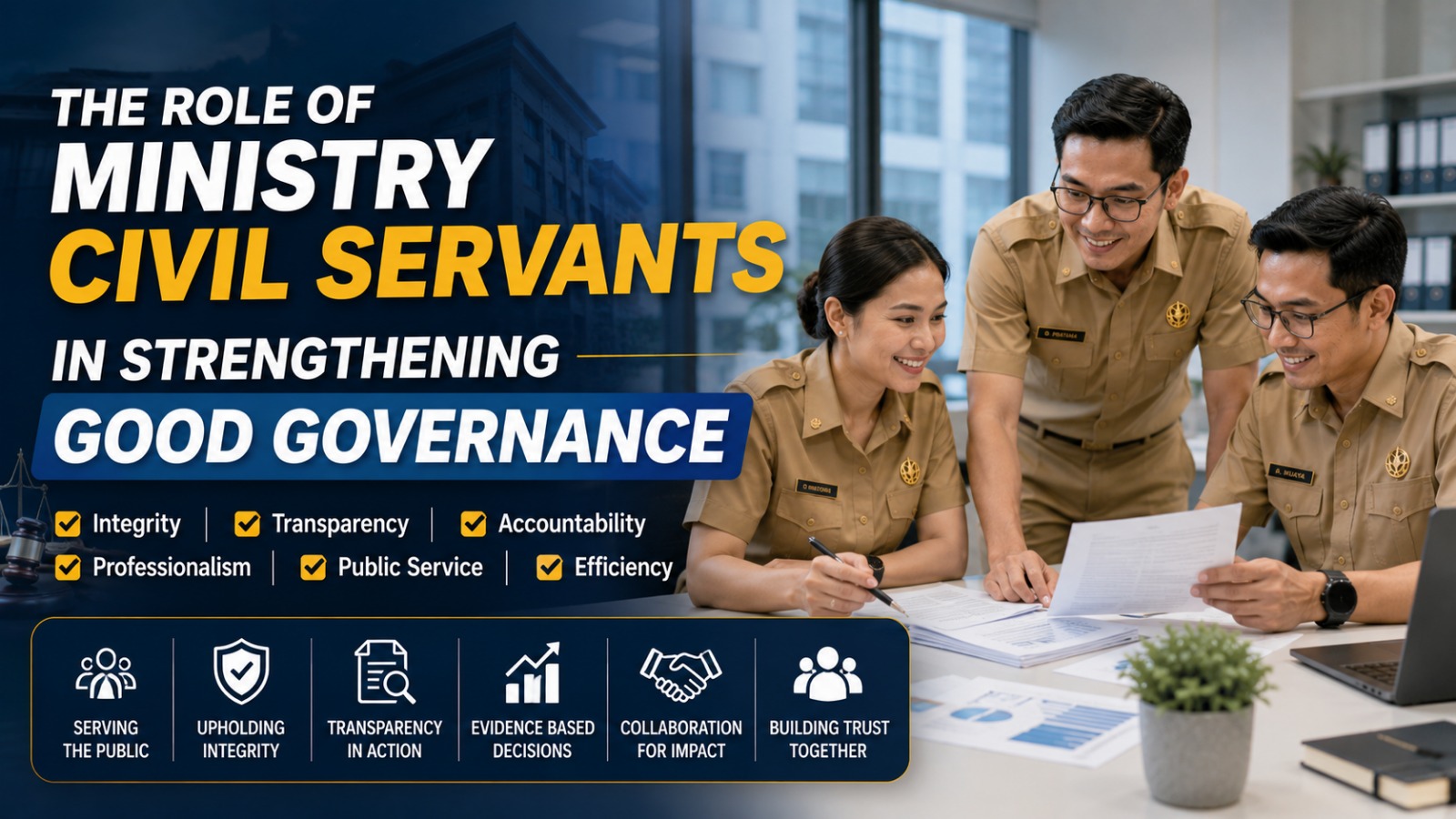
Good governance is an important foundation for creating an effective, transparent, accountable, and trustworthy government. In government ministries, civil servants have a significant role in ensuring that public policies and government programs are implemented properly. Their daily work influences administrative processes, public services, and the way government institutions respond to citizens' needs.
Ministry civil servants are expected to work based on integrity, professionalism, accountability, transparency, and public interest. These values help ensure that government institutions operate responsibly and provide services fairly. By performing their duties effectively and ethically, civil servants can contribute to stronger governance and greater public trust.
UNDERSTANDING GOOD GOVERNANCE IN GOVERNMENT
Good governance refers to the way public institutions manage resources, make decisions, implement policies, and provide services responsibly. It emphasizes principles such as transparency, accountability, participation, effectiveness, efficiency, and the rule of law. These principles help ensure that government authority is exercised for the benefit of society.
Good governance is not only the responsibility of senior officials or policymakers. Every ministry civil servant contributes to its implementation through daily decisions and actions. Whether managing administrative documents, processing public information, or delivering services, civil servants have a responsibility to follow regulations and uphold professional standards.
PROMOTING INTEGRITY AND ETHICAL CONDUCT
Integrity is one of the most important foundations of good governance. Ministry civil servants are expected to perform their duties honestly and avoid using public authority for personal interests. They should also manage government resources responsibly and act according to applicable laws and regulations.
Ethical conduct helps prevent practices that can damage public trust, including conflicts of interest and misuse of authority. Civil servants who consistently demonstrate integrity can strengthen the credibility of their institutions. When ethical behavior becomes part of organizational culture, government operations can become more trustworthy and accountable.
STRENGTHENING TRANSPARENCY IN PUBLIC ADMINISTRATION
Transparency allows citizens to understand how government institutions work and how public services are delivered. Ministry civil servants have an important role in providing accurate and accessible information within the limits of applicable laws and data protection requirements. Clear information about procedures, requirements, and service standards can help citizens understand their rights and responsibilities.
Transparent administration can also reduce confusion and improve public oversight. When government processes are open and information is communicated clearly, citizens can better evaluate the quality of public services. This openness can strengthen trust and encourage government institutions to continuously improve their performance.
IMPROVING ACCOUNTABILITY AND RESPONSIBILITY
Accountability means that government institutions and their employees must be able to explain and take responsibility for their actions and decisions. Ministry civil servants should carry out their duties according to established procedures and be prepared to provide appropriate documentation or explanations when required. Accountability is essential for ensuring that public resources and authority are used responsibly.
Strong public accountability also supports better organizational performance. Clear responsibilities make it easier to evaluate whether programs and services have achieved their intended objectives. Through proper monitoring and evaluation, ministries can identify weaknesses, correct problems, and improve future policies and programs.
DELIVERING EFFECTIVE AND QUALITY PUBLIC SERVICES
One of the clearest ways civil servants contribute to good governance is by delivering high-quality public services. Citizens expect services that are accessible, fair, efficient, responsive, and reliable. Ministry civil servants are responsible for carrying out many processes that directly or indirectly affect the public experience of government services.
Improving service quality requires more than completing administrative procedures. Civil servants need to understand public needs, communicate clearly, and respond appropriately to complaints or feedback. A strong commitment to public service can help ministries create services that are more responsive and aligned with the expectations of society.
ENCOURAGING COLLABORATION AND PUBLIC PARTICIPATION
Good governance cannot be achieved through isolated efforts. Government ministries often need to collaborate with other institutions, local governments, civil society, and communities. Civil servants can support this process by communicating effectively, sharing relevant information, and coordinating responsibilities across organizational boundaries.
Public participation is also important because citizens are directly affected by government policies and services. Feedback, consultations, and complaint mechanisms can provide valuable information for improving government programs. By encouraging meaningful public participation, civil servants can help ensure that policies and services are more responsive to community needs.
BUILDING A CULTURE OF CONTINUOUS IMPROVEMENT
Good governance requires continuous evaluation and improvement. Government institutions operate in an environment where technology, regulations, and public expectations continue to change. Ministry civil servants therefore need to remain open to learning and be willing to improve existing processes when better approaches are available.
A culture of continuous improvement can be supported through training, performance evaluation, innovation, and constructive feedback. Civil servants should view mistakes as opportunities to identify weaknesses and develop better solutions, while still maintaining accountability for their responsibilities. This approach can help ministries become more adaptive, efficient, and responsive.
MINISTRY CIVIL SERVANTS AS KEY ACTORS IN GOOD GOVERNANCE
Ministry civil servants play a vital role in strengthening good governance through their daily work. Their responsibilities include implementing policies, managing public resources, maintaining administrative standards, delivering services, and supporting transparent decision-making. Although their individual tasks may vary, each role contributes to the overall performance of government institutions.
Ultimately, good governance depends on the consistent application of integrity, transparency, accountability, professionalism, and public service values. Technology and regulations can provide important support, but responsible and competent civil servants remain essential to putting these principles into practice. By performing their duties ethically, improving their skills, and responding to public needs, ministry civil servants can help build government institutions that are more effective, trustworthy, and focused on serving society.
CONCLUSION
Ministry civil servants play an important role in strengthening good governance through integrity, transparency, accountability, professionalism, and quality public service. Their daily responsibilities, from implementing policies and managing information to delivering services and supporting decision-making, directly contribute to the effectiveness and trustworthiness of government institutions.
By improving digital competence, evidence-based decision making, collaboration, public participation, and continuous improvement, civil servants can help ministries respond more effectively to changing public needs. Consistent ethical conduct and a strong commitment to the public interest can also support more transparent, accountable, and responsive government administration.
About the Author
Gusti Ayu Tita P
Author — STEKOM University
An active author focused on academic issues, educational technology, and human resource development in the campus environment.