The Role of National Roads in Regional Connectivity
Gusti Ayu Tita P
11 Agustus 2026
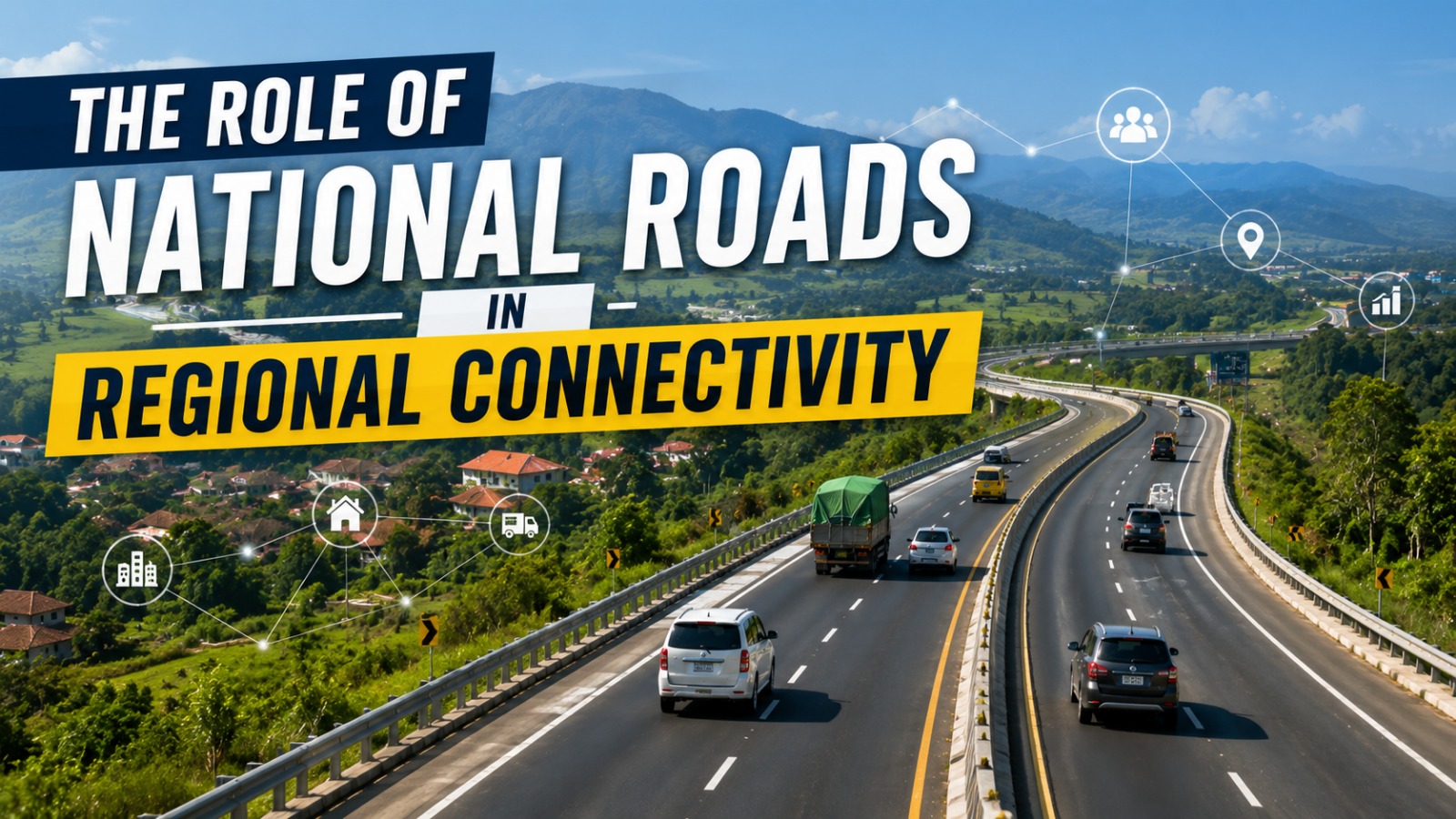
National roads play a crucial role in connecting cities, regions, economic centers, and communities. They are not simply routes for vehicles but essential infrastructure that supports mobility, trade, public services, and regional development. A well-connected road network can reduce travel barriers and help people and businesses reach important destinations more efficiently.
According to the World Bank, efficient transportation can connect people with jobs and markets while reducing the time and cost required to move goods. Strategic transport corridors can also support trade, private investment, and employment across regions. (World Bank)
CONNECTING CITIES AND REGIONS
One of the most important roles of national roads is to connect different cities and regions through reliable transportation routes. These roads often link major urban centers with smaller towns, industrial areas, ports, airports, and other strategic locations. Better connections make it easier for people to travel for work, education, healthcare, and other essential activities. As a result, regions that were previously difficult to reach can become more integrated with wider economic and social networks.
National roads also help create continuity between different levels of transportation infrastructure. A major highway can connect with regional roads, local roads, ports, and other transport facilities to form a broader network. The World Bank defines a road network as including national, regional, secondary, and other roads, showing how different road levels work together as part of a transportation system. (DataBank)
SUPPORTING REGIONAL ECONOMIC GROWTH
National roads are closely connected to regional economic development because businesses depend on efficient transportation to move raw materials, products, workers, and equipment. Farmers, manufacturers, retailers, and logistics companies can benefit when roads provide faster and more dependable access to markets. Lower travel times and more reliable transport can also improve business efficiency and help companies reach customers outside their immediate area.
Improved road connectivity can encourage investment in regions that previously had limited access to major markets. New businesses may emerge along strategic transportation corridors, while existing businesses can expand their distribution networks. Research and development experience cited by the World Bank also shows that strategic transport corridors can improve market access, stimulate private investment, and create employment opportunities. (World Bank)
IMPROVING THE MOVEMENT OF GOODS
The movement of goods is another major function of national roads. Efficient roads help shorten delivery times and improve supply chain reliability, which is especially important for agricultural products, manufacturing materials, food, and other time-sensitive goods. When transportation is predictable, businesses can plan inventory, deliveries, and production more effectively.
Good road infrastructure also supports connections between production areas and major logistics facilities. Agricultural regions, for example, need dependable routes to markets, warehouses, ports, and processing centers. Without adequate roads, transportation costs can increase and products may take longer to reach consumers. This is why transportation connectivity is an important part of regional trade and economic integration. (World Bank)
EXPANDING ACCESS TO ESSENTIAL SERVICES
National roads do more than support economic activity. They also improve access to education, healthcare, government services, and other public facilities. People living in smaller towns and rural areas may need to travel to larger cities to access specialized services. Reliable roads can make these journeys faster, safer, and more predictable.
Better connectivity can also help emergency services reach communities more effectively. Ambulances, disaster-response teams, and essential supplies depend on roads that remain functional during normal conditions and emergencies. For this reason, road development should consider not only traffic capacity but also accessibility, safety, and resilience.
STRENGTHENING RURAL AND URBAN CONNECTIONS
Regional connectivity depends on strong links between rural areas, towns, and major cities. National roads can provide the backbone that connects smaller communities to larger economic and administrative centers. This connection gives rural producers better opportunities to access markets while allowing urban businesses to reach wider sources of labor and materials.
Strong rural-urban connections can also reduce geographical isolation. When transportation becomes easier, people have more opportunities to participate in education, employment, commerce, and social activities outside their immediate communities. This can contribute to more balanced regional development by helping economic opportunities spread beyond major urban centers.
REDUCING TRAVEL TIME AND TRANSPORT COSTS
Road quality has a direct influence on travel time, fuel consumption, vehicle operating costs, and delivery efficiency. Roads that are properly designed and maintained can allow vehicles to travel more smoothly and reduce unnecessary delays. This is particularly important for freight vehicles that operate over long distances and carry goods between regions.
However, improving connectivity does not simply mean building longer roads. Effective planning should consider traffic demand, road capacity, intersections, safety features, drainage, maintenance, and connections with other transportation modes. A road that connects two regions but regularly experiences congestion or damage may not provide the level of connectivity that communities and businesses need.
SUPPORTING NATIONAL AND REGIONAL INTEGRATION
National roads can strengthen regional integration by creating physical links between areas with different economic and geographic characteristics. They allow the movement of people, goods, and services across administrative boundaries, making regions more economically connected. Strategic road corridors can therefore become important foundations for wider trade and development.
In Indonesia, for example, national road infrastructure is an important part of maintaining nationwide mobility. The Ministry of Public Works reported in December 2025 that Indonesia's non-toll national road network reached 47,603.39 kilometers, with a reported 93.65 percent level of road condition or "mantap" status at that time. (Sahabat PU) This illustrates the significant scale of infrastructure required to maintain connectivity across a geographically diverse country.
BUILDING RESILIENT AND SUSTAINABLE ROAD NETWORKS
Future national road development needs to focus on resilience and sustainability, not only expansion. Roads can be affected by flooding, landslides, extreme weather, heavy traffic, and other disruptions. Designing adequate drainage, strengthening vulnerable sections, improving maintenance systems, and using suitable construction standards can help keep important routes operational.
Sustainability should also be considered in long-term transportation planning. Better road management can reduce unnecessary travel delays and support more efficient logistics. The World Bank emphasizes the importance of resilient transport infrastructure that can withstand hazards while continuing to connect people with jobs, markets, and essential opportunities. (World Bank)
CONCLUSION
National roads are a foundation of regional connectivity because they connect communities, economic centers, public services, and transportation hubs. Their benefits extend beyond faster travel, supporting trade, employment, investment, rural development, and access to essential services. Reliable roads can help regions participate more actively in the national economy while reducing the disadvantages caused by geographical distance.
For long-term results, road development must combine good planning, regular maintenance, safety improvements, resilience, and integration with other modes of transport. When these elements are managed effectively, national roads can become more than physical routes between destinations. They can serve as strategic infrastructure that supports inclusive economic growth and stronger regional connections.
About the Author
Gusti Ayu Tita P
Author — STEKOM University
An active author focused on academic issues, educational technology, and human resource development in the campus environment.