The Role of Parents in Supporting the Growth and Development of an Only Child
Gusti Ayu Tita P
7 September 2026
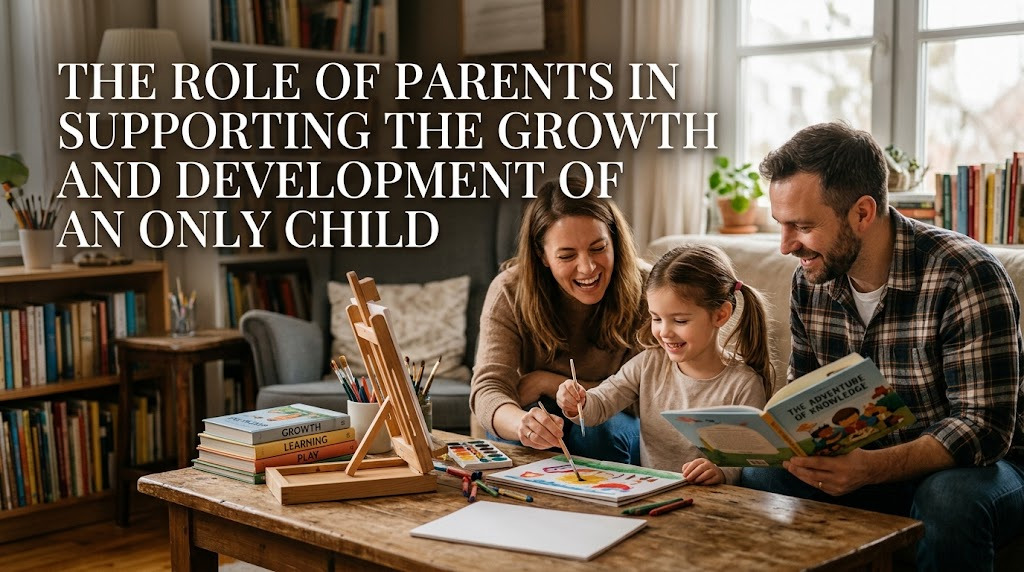
Parents play an important role in supporting the growth and development of an only child. Without siblings at home, the relationship between parents and their child may become especially important in everyday life. Parents can provide emotional support, guidance, education, and opportunities that help children understand themselves and the world around them.
However, raising an only child is not simply about providing more attention. Children also need opportunities to become independent, interact with others, make decisions, and learn from mistakes. With a balanced approach, parents can help an only child develop confidence, responsibility, social skills, emotional maturity, and independence.
PROVIDING LOVE AND EMOTIONAL SECURITY
An only child needs to feel loved and accepted regardless of their achievements. Parents can create emotional security by listening to their child's concerns and showing affection through everyday interactions. A supportive home environment can help children feel comfortable expressing their thoughts and emotions.
Parents should also avoid making love conditional on academic performance or other achievements. Children need to understand that mistakes and failures do not reduce their value within the family. This sense of security can support healthy emotional development and help children become more confident when facing challenges.
ENCOURAGING AGE-APPROPRIATE INDEPENDENCE
Parents should gradually teach an only child how to manage personal responsibilities. Simple activities such as organizing school materials, cleaning personal spaces, preparing belongings, or making appropriate choices can provide valuable learning experiences. These tasks help children understand that they are capable of handling responsibilities themselves.
At the same time, parents should avoid giving children responsibilities that are too difficult for their age. The goal is to provide guidance without excessive control. When children are given suitable opportunities to practice independence, they can gradually develop self-confidence and better decision-making skills.
SUPPORTING SOCIAL AND COMMUNICATION SKILLS
Because an only child does not have siblings at home, parents should provide other opportunities for social interaction. Friendships, school activities, sports, clubs, and hobbies can help children interact with people of different personalities. These experiences can strengthen communication, cooperation, empathy, and conflict-resolution skills.
Parents can also teach social behavior through everyday conversations. Encouraging children to listen to others, respect different opinions, share when appropriate, and consider other people's feelings can help them build healthy relationships. Being an only child does not prevent strong social development when children have meaningful opportunities to interact with others.
SETTING HEALTHY RULES AND BOUNDARIES
Clear rules are an important part of only child parenting. Parents should establish reasonable expectations about schoolwork, screen time, household responsibilities, behavior, and personal routines. Consistent boundaries help children understand what is expected of them and why certain rules exist.
Rules should be combined with explanations rather than relying only on punishment. When children understand the reasons behind boundaries, they can gradually develop self-discipline. A balanced approach helps an only child learn that freedom and responsibility should develop together.
AVOIDING EXCESSIVE PROTECTION AND PRESSURE
Parents may sometimes become overly protective because their only child is the sole focus of their attention. They may want to prevent disappointment, failure, or difficult experiences. Although this behavior usually comes from concern, excessive protection can limit a child's opportunity to develop problem-solving skills.
Parents should also be careful about placing unrealistic expectations on one child. An only child should not feel responsible for fulfilling every family dream. Encouraging personal goals and realistic expectations can help children develop their own identity without feeling that they must constantly prove their worth.
SUPPORTING EDUCATION AND PERSONAL INTERESTS
Parents can support an only child's education by showing interest in learning rather than focusing only on grades. Helping children develop good study habits, curiosity, and persistence can be more valuable than demanding perfect results. Children should also have opportunities to explore subjects and activities that match their interests.
Hobbies can contribute significantly to child development. Art, sports, music, reading, technology, and other activities can help children discover their abilities and develop creativity. Parents should provide guidance while allowing children to explore their own interests rather than deciding every activity for them.
BUILDING OPEN AND HEALTHY COMMUNICATION
Open communication allows parents to understand what an only child is experiencing. Regular conversations can help parents recognize concerns related to school, friendships, personal goals, or emotions. Listening carefully without immediately criticizing can make children feel respected and understood.
Parents should create an environment where children can ask questions and admit mistakes without fear. When communication is based on trust, respect, and empathy, children are more likely to seek parental guidance when facing difficult situations. This relationship can remain valuable as children grow into adolescence and adulthood.
CONCLUSION
Parents have a major influence on the growth and development of an only child, but effective parenting requires more than providing constant attention. Children need a combination of affection, boundaries, independence, education, social opportunities, and emotional support. A balanced environment allows an only child to develop important skills without becoming overly dependent or overwhelmed by expectations.
The goal is to help an only child become a confident, responsible, independent, empathetic, and emotionally healthy individual. Parents can achieve this by listening to their child, respecting their individuality, encouraging healthy relationships, and allowing them to learn from appropriate experiences. Ultimately, supportive parenting can help an only child recognize their potential and build a strong foundation for the future.
About the Author
Gusti Ayu Tita P
Author — STEKOM University
An active author focused on academic issues, educational technology, and human resource development in the campus environment.