
The Role of Ports in Improving Regional Connectivity
Gusti Ayu Tita P
10 Agustus 2026
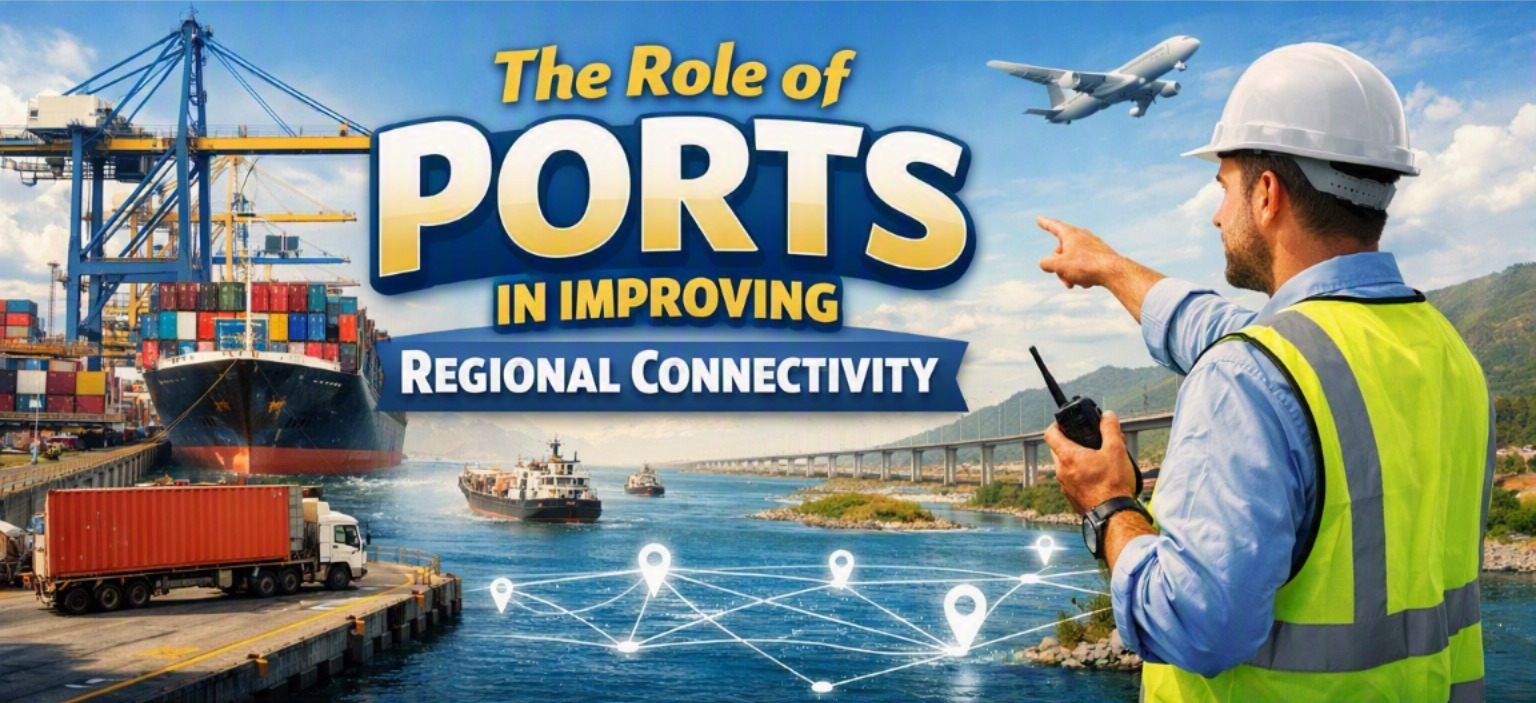
Ports are essential infrastructure for connecting regions, cities, islands, and countries through the movement of people and goods. Their role is especially important for countries with large geographical areas and many islands. By providing access to sea transportation, ports help businesses distribute products more efficiently and allow communities to reach wider markets.
Beyond transportation, ports support regional economic development, logistics efficiency, and trade growth. Well-managed ports can reduce transportation barriers, strengthen supply chains, and encourage investment in surrounding areas. For these reasons, improving port infrastructure and services is an important step toward stronger regional connectivity.
CONNECTING DIFFERENT REGIONS
One of the main roles of ports is to create reliable connections between areas that are separated by water or long distances. Ships can transport large quantities of cargo between coastal cities, islands, and international destinations. This makes ports important links between producers, distributors, retailers, and consumers.
Ports also support the movement of essential goods such as food, fuel, construction materials, and industrial products. When port connections operate efficiently, goods can reach different regions more consistently. This helps reduce geographical barriers and makes economic activities less dependent on land transportation alone.
SUPPORTING REGIONAL ECONOMIC GROWTH
Ports can become important drivers of local and regional economic growth. The arrival and departure of ships creates demand for logistics services, warehousing, transportation, maintenance, security, and other supporting activities. These activities can generate employment and provide business opportunities for local communities.
Improved connectivity can also make a region more attractive to investors and businesses. Companies are more likely to consider locations with dependable transportation networks because efficient logistics can reduce delivery delays and operating costs. As a result, port development can contribute to wider economic activity beyond the port itself.
IMPROVING LOGISTICS AND SUPPLY CHAINS
Efficient ports are an important part of a strong logistics and supply chain system. They allow cargo to move between ships, trucks, trains, warehouses, and distribution centers. Effective coordination between these transportation modes can shorten delivery times and improve the reliability of goods distribution.
Modern ports increasingly use digital systems and automated processes to manage cargo and vessel operations. Technologies such as electronic documentation, cargo tracking, automated equipment, and digital scheduling can improve efficiency. Better information sharing also helps logistics companies plan transportation more accurately and respond faster to changes in demand.
EXPANDING MARKET ACCESS
Ports help businesses reach larger domestic and international markets. Producers in one region can use maritime transportation to send their products to customers in other parts of a country or overseas. This is particularly valuable for industries that handle large or heavy goods that may be expensive to transport entirely by road or air.
Better market access can encourage businesses to increase production and improve competitiveness. Small and medium-sized enterprises can also benefit when logistics networks become more accessible and affordable. With stronger port connections, regional products have greater opportunities to reach new consumers and business partners.
SUPPORTING PASSENGER MOBILITY
Although ports are often associated with cargo, they also support passenger transportation. Ferry terminals, passenger ships, and other maritime services can connect communities across islands and coastal areas. These services are particularly important where bridges, railways, or direct road connections are unavailable.
Reliable passenger services can improve access to education, healthcare, employment, tourism, and public services. They can also make travel between regions more convenient and support social interaction. Therefore, regional connectivity through ports is not only about moving products but also about connecting people.
ENCOURAGING TOURISM AND LOCAL BUSINESS
Ports can contribute significantly to regional tourism development. Passenger terminals and cruise facilities can bring visitors to coastal cities, islands, and tourist destinations. When supported by good roads, accommodation, attractions, and public services, port connectivity can create broader economic benefits for local communities.
Tourism activity can increase demand for hotels, restaurants, transportation, shops, guides, and local products. Small businesses can benefit from a larger flow of visitors and customers. However, tourism growth should be managed responsibly to protect local environments, cultural resources, and the long-term interests of communities.
STRENGTHENING MULTIMODAL TRANSPORTATION
Ports work most effectively when they are connected to other transportation systems. Roads, railways, inland waterways, warehouses, and logistics centers need to operate as part of an integrated network. This approach is known as multimodal transportation and helps cargo move efficiently from its origin to its final destination.
Poor connections outside a port can create congestion, delays, and higher logistics costs, even when the port itself has modern facilities. Therefore, improving regional connectivity requires more than expanding port terminals. Governments and transport operators also need to improve access roads, rail connections, traffic management, and logistics facilities around ports.
USING TECHNOLOGY TO IMPROVE CONNECTIVITY
Technology plays an increasingly important role in making ports faster, safer, and more transparent. Digital platforms can help port operators, shipping companies, customs authorities, logistics providers, and other stakeholders exchange information more efficiently. Real-time tracking can also provide better visibility of cargo movements.
The use of technology can reduce manual processes, administrative delays, and operational errors. Smart port solutions may also support better energy management, security monitoring, and equipment utilization. However, successful digital transformation requires reliable infrastructure, skilled workers, strong cybersecurity, and effective coordination among stakeholders.
BUILDING SUSTAINABLE PORT CONNECTIVITY
Improving connectivity should also consider environmental sustainability. Port operations can affect air quality, water quality, coastal ecosystems, and nearby communities if they are not managed properly. Sustainable port development therefore needs to balance economic benefits with environmental protection.
Ports can reduce their environmental impact through cleaner equipment, energy-efficient facilities, waste management, shore power, and better traffic planning. Sustainable practices can improve operational efficiency while supporting long-term regional development. This makes environmental responsibility an important part of modern port connectivity.
CONCLUSION
Ports play a strategic role in improving regional connectivity by linking communities, businesses, markets, and transportation networks. They support the movement of cargo and passengers while contributing to trade, employment, tourism, and investment. Their benefits become greater when ports are connected with efficient roads, railways, logistics centers, and digital systems.
Strong regional connectivity requires integrated planning, modern infrastructure, efficient services, and sustainable operations. When these elements work together, ports can help reduce geographical barriers and create more balanced economic opportunities between regions. In the long term, well-connected ports can become important foundations for stronger, more competitive, and more sustainable regional development.
About the Author
Gusti Ayu Tita P
Author — STEKOM University
An active author focused on academic issues, educational technology, and human resource development in the campus environment.















