
The Role of Ports in Supporting National Logistics
Gusti Ayu Tita P
10 Agustus 2026
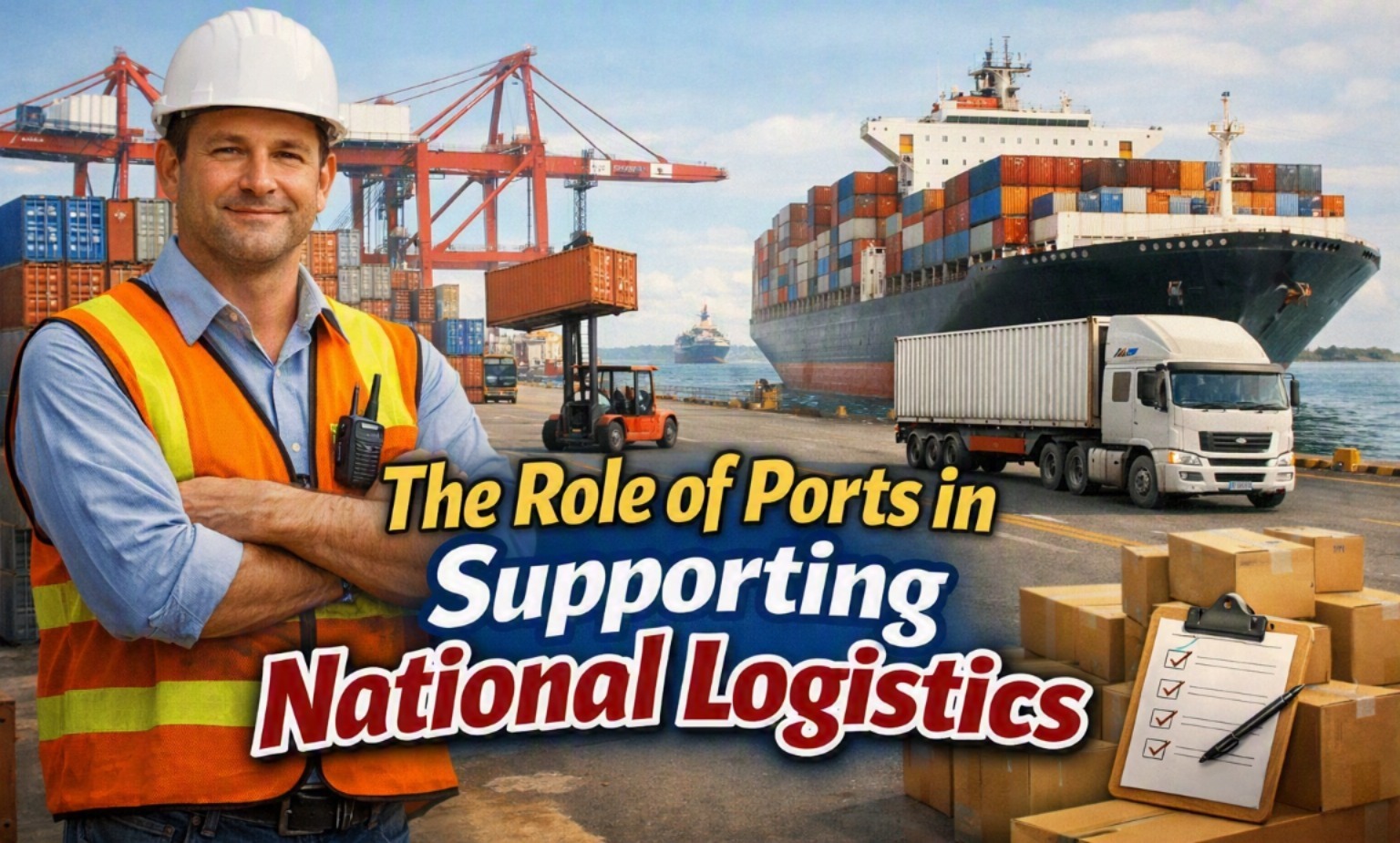
Ports are an important part of a country's national logistics system. They connect producers, suppliers, distributors, and consumers through the movement of goods by sea. In countries with large maritime areas, ports become even more important because they support connections between islands and international markets. A well-managed port can help goods move faster, safer, and more efficiently.
Beyond handling ships and cargo, ports support economic activities across many sectors. They provide important facilities for loading, unloading, storing, and distributing goods. Therefore, improving port performance can strengthen the overall logistics system and contribute to national economic growth.
CONNECTING REGIONS AND MARKETS
One of the main roles of ports is to connect different regions. Ships can transport large quantities of goods between islands and countries, making ports essential for domestic and international distribution. This connection allows agricultural products, industrial goods, raw materials, and consumer products to reach their destinations more efficiently. Ports also help businesses access wider markets without depending entirely on land transportation.
For countries with extensive coastlines and many islands, effective port connections can reduce geographical barriers. Goods from production centers can be transported to areas with higher demand through organized maritime routes. This helps create a more integrated national supply chain and supports balanced economic activity between regions.
SUPPORTING EFFICIENT GOODS DISTRIBUTION
Ports play a major role in the process of loading, unloading, storing, and transferring cargo. Modern port facilities can handle different types of goods, including containers, bulk commodities, vehicles, and liquid cargo. Efficient cargo handling reduces waiting times and helps goods continue their journey without unnecessary delays. This is especially important for businesses that depend on reliable delivery schedules.
Port efficiency also affects transportation costs. When ships can enter, load, unload, and leave a port efficiently, logistics operators can reduce unnecessary operational expenses. These savings can contribute to more competitive product prices and improve the efficiency of the entire logistics network.
REDUCING LOGISTICS COSTS AND DELIVERY TIMES
An effective port system can help reduce logistics costs by improving the movement of large volumes of cargo. Maritime transportation is often suitable for moving heavy and large quantities of goods over long distances. However, the benefits depend on efficient port operations and good connections with other transportation modes. Delays at ports can increase storage, handling, and transportation costs.
Ports therefore need efficient processes, adequate infrastructure, and reliable services. The use of digital systems, automated equipment, and better cargo management can help improve operational performance. Faster processing can shorten cargo dwell times and make the movement of goods more predictable for businesses.
SUPPORTING MULTIMODAL TRANSPORTATION
Ports are not isolated transportation facilities. They serve as important transportation hubs that connect sea transportation with roads, railways, warehouses, and distribution centers. This connection allows goods to move from ships to other modes of transportation according to their final destinations. Effective coordination between these modes is essential for creating a smooth logistics chain.
For example, containers arriving at a port may be transferred to trucks or trains before reaching factories, warehouses, or retail distribution centers. When these connections work efficiently, cargo can move with fewer interruptions. This approach supports multimodal logistics and helps businesses manage transportation more effectively.
IMPROVING NATIONAL SUPPLY CHAIN RESILIENCE
Ports also contribute to the resilience of national supply chains. A country needs reliable logistics infrastructure to maintain the movement of essential goods during disruptions. Natural disasters, extreme weather, global supply chain problems, or sudden changes in demand can affect transportation activities. Strong port infrastructure and good operational planning can help reduce the impact of such disruptions.
Resilience also requires cooperation among port operators, shipping companies, logistics providers, government agencies, and businesses. Better information sharing can help stakeholders respond more quickly to changing conditions. Developing alternative routes and maintaining adequate infrastructure can further strengthen the ability of the logistics system to continue operating.
SUPPORTING INTERNATIONAL TRADE
Ports are gateways for international trade because they facilitate the movement of imports and exports. Exporters depend on ports to send products to overseas markets, while importers use them to receive raw materials, machinery, energy products, and consumer goods. Efficient port services can therefore influence a country's ability to participate in global trade.
Competitive ports can make international trade more attractive by providing reliable services and efficient cargo handling. They also need to comply with customs, security, safety, and environmental requirements. By maintaining these standards while improving efficiency, ports can support stronger global trade connections and business competitiveness.
ENCOURAGING ECONOMIC GROWTH
The development of ports can generate broader economic benefits. Port activities create demand for transportation, warehousing, logistics services, maintenance, construction, and other supporting industries. This can create employment opportunities and stimulate economic activity in surrounding areas. Ports can also encourage investment when businesses have access to reliable logistics infrastructure.
In addition, efficient ports can support the growth of manufacturing and distribution industries. Businesses are more likely to expand when they can obtain raw materials and distribute finished products through dependable transportation networks. As a result, port development can contribute to regional and national economic development.
USING TECHNOLOGY TO IMPROVE PORT PERFORMANCE
Technology is increasingly important in modern port operations. Digitalization can help ports manage cargo information, vessel schedules, documentation, and logistics coordination more efficiently. Electronic data exchange can reduce manual processes and improve communication among different stakeholders. Technologies such as automated equipment, tracking systems, and data analytics can also support better operational decisions.
However, technology needs to be supported by skilled workers and appropriate infrastructure. Ports must invest in cybersecurity, system reliability, staff training, and maintenance. When technology and human expertise work together, ports can provide faster and more reliable logistics services.
BUILDING SUSTAINABLE AND SAFE PORTS
Modern ports must also consider safety and environmental sustainability. Port activities can affect air quality, water quality, energy consumption, and surrounding ecosystems. Measures such as cleaner equipment, efficient energy use, proper waste management, and environmental monitoring can help reduce negative impacts. Safety procedures are equally important for protecting workers, ships, cargo, and nearby communities.
Sustainable port development should balance economic needs with environmental and social responsibilities. Investment in cleaner technologies and better operational practices can support long-term port performance. A safe and sustainable port can remain productive while contributing to a healthier and more resilient logistics system.
CONCLUSION
Ports are a key component of national logistics because they connect regions, support cargo distribution, reduce transportation barriers, and facilitate international trade. Their performance affects delivery times, logistics costs, supply chain reliability, and business competitiveness. Efficient connections between ports, roads, railways, warehouses, and distribution centers are essential for creating an integrated logistics network.
As trade and supply chains continue to evolve, ports need to improve their infrastructure, technology, human resources, safety, and environmental practices. Stronger port management can help countries build a more efficient, resilient, competitive, and sustainable logistics system. For this reason, investing in modern and well-connected ports is an important step toward supporting long-term national development.
About the Author
Gusti Ayu Tita P
Author — STEKOM University
An active author focused on academic issues, educational technology, and human resource development in the campus environment.















