The Role Of Ports In Supporting Sea Transportation
Gusti Ayu Tita P
11 Agustus 2026
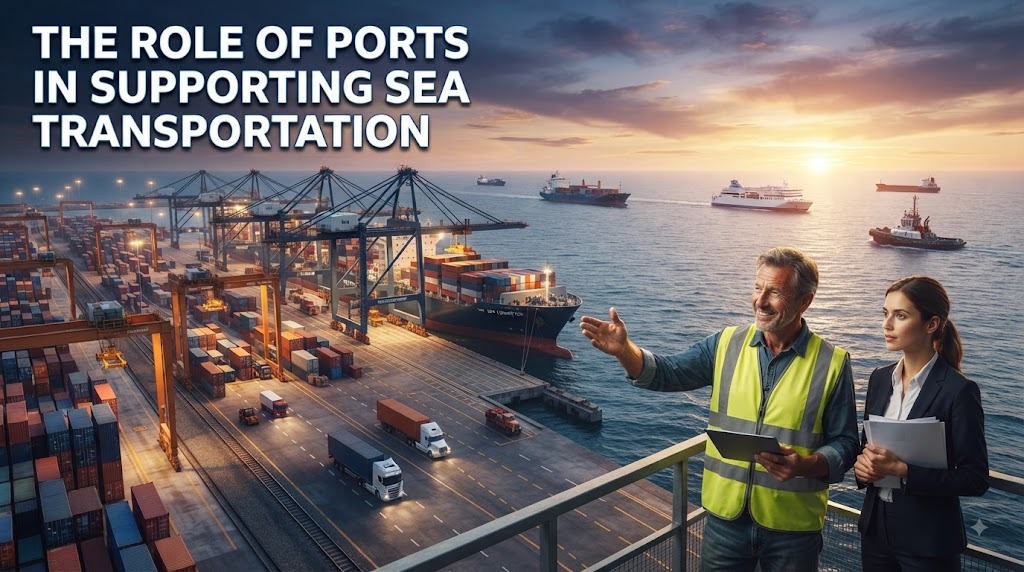
Ports are essential infrastructure in the sea transportation system because they connect ships with land-based transportation and economic activities. A port provides facilities where vessels can arrive, depart, load cargo, unload goods, and serve passengers. Without efficient ports, maritime transportation cannot operate smoothly even when shipping routes and vessels are available. Port infrastructure therefore has an important role in supporting trade, logistics, tourism, and regional development. In an island country such as Indonesia, reliable ports are especially important for connecting different regions.
Modern ports are no longer simply places where ships stop to load and unload cargo. They have developed into complex logistics centers that use technology, specialized equipment, warehouses, and transportation networks. Efficient port operations can reduce delays, improve cargo movement, and lower logistics costs. Ports also connect maritime routes with roads, railways, warehouses, and distribution centers. This makes them an important part of an integrated transportation system.
THE MAIN FUNCTION OF PORTS
The main function of a port is to provide a safe and efficient place for ships to arrive, stay, and depart. Ports provide facilities for cargo handling, passenger services, vessel maintenance, and other maritime activities. Port facilities can include docks, terminals, storage areas, navigation equipment, and cargo-handling machinery. These facilities allow ships to transfer goods between sea and land transportation.
Ports also support administrative and operational activities related to maritime transportation. Customs, immigration, quarantine, security, and other authorities may operate within or around port areas. Effective coordination between these organizations can reduce unnecessary delays. Ports must also maintain safety standards to protect workers, passengers, cargo, and vessels. Good port management is therefore essential for reliable sea transportation.
CONNECTING SEA AND LAND TRANSPORTATION
Ports serve as important connection points between maritime routes and land transportation. Goods transported by ships usually need to continue their journey by trucks, trains, or other land-based vehicles. Multimodal transportation allows cargo to move from one transportation mode to another more efficiently. This connection is particularly important for supply chains that cover long distances.
A well-connected port can reduce unnecessary cargo handling and waiting time. Roads, railways, warehouses, and distribution centers should be properly connected to port terminals. Poor connections can create congestion and increase transportation costs even when port facilities are modern. Integrated planning is therefore important for improving overall logistics performance. Strong connections between sea and land transportation can make supply chains more reliable.
SUPPORTING CARGO HANDLING
Cargo handling is one of the most important activities at a port. Containers, bulk materials, vehicles, agricultural products, and other goods require different handling methods. Cargo handling systems use cranes, conveyors, forklifts, storage areas, and specialized equipment to move goods safely. Efficient handling can reduce the time ships spend in port.
Modern cargo terminals increasingly use automated and digital systems. Technology can help operators track containers, schedule equipment, and monitor cargo movements. Proper cargo handling also reduces the risk of damage or loss during transportation. Workers need appropriate training to operate equipment safely. Efficient cargo handling contributes directly to faster and more reliable maritime logistics.
REDUCING LOGISTICS COSTS
Ports can influence the total cost of transporting goods. Delays, inefficient cargo handling, congestion, and poor infrastructure can increase expenses for shipping companies and businesses. Lower logistics costs can make regional and international trade more competitive. Efficient ports can help businesses manage transportation expenses more effectively.
Port efficiency depends on many factors, including infrastructure quality, equipment availability, management, and connectivity. Faster cargo processing can reduce vessel waiting times and storage costs. Digital systems can also improve scheduling and reduce administrative work. However, reducing costs should not compromise safety or service quality. A balanced approach can create efficient and sustainable port operations.
SUPPORTING INTERNATIONAL TRADE
Ports are major gateways for international trade because most global merchandise trade by volume is transported by sea. Exporters use ports to send products to overseas markets, while importers depend on ports to receive goods and raw materials. International trade therefore depends heavily on reliable port infrastructure and services. Efficient ports can help businesses participate in global supply chains.
Ports also support customs and regulatory processes required for international shipments. Digital documentation and coordinated inspections can make these processes more efficient. Delays at ports can affect entire supply chains and increase costs for businesses. Competitive ports can attract shipping services and logistics companies. Strong port performance can therefore contribute to a country's trade competitiveness.
SUPPORTING DOMESTIC DISTRIBUTION
Ports are also important for distributing goods within a country. In an archipelagic country, ships can transport large quantities of goods between islands. Domestic distribution helps move food, fuel, construction materials, consumer products, and industrial supplies to different regions. This function is essential for maintaining the availability of goods in remote and coastal areas.
Regular maritime services can reduce the risk of regional shortages. Ports provide the infrastructure needed to receive, store, and distribute these goods. Better connectivity can also help local producers send products to larger markets. Efficient domestic shipping can support economic activity across different islands. This makes ports an important part of national supply chains.
SUPPORTING PASSENGER TRANSPORTATION
Ports are not only used for cargo but also provide facilities for passenger transportation. Ferries, passenger ships, and other vessels depend on terminals where people can safely board and leave vessels. Passenger terminals need proper waiting areas, access facilities, security systems, and clear information services. Good passenger facilities can improve the overall travel experience.
Reliable passenger ports are particularly important for communities that depend on sea routes for daily mobility. They can connect islands with cities, educational centers, healthcare facilities, and employment opportunities. Passenger transportation can also support tourism in coastal and island destinations. Safety must remain a priority in terminal design and operations. Well-managed passenger ports can strengthen social and economic connections between regions.
SUPPORTING REGIONAL ECONOMIC DEVELOPMENT
Ports can stimulate economic activity in the areas surrounding them. Businesses involved in logistics, warehousing, transportation, ship repair, trade, and services may develop near port facilities. Regional economic development can benefit from increased commercial activity and investment. Ports can therefore become important economic centers.
Employment opportunities can also increase as port activities expand. Local businesses may supply food, equipment, transportation, maintenance, and other services to port operators and workers. However, port development should be planned carefully to avoid excessive congestion and environmental problems. Local communities should have opportunities to benefit from economic growth. Sustainable planning can make port development more valuable for regional economies.
PORTS AND SUPPLY CHAIN EFFICIENCY
Ports are important links in national and international supply chains. A delay at a port can affect transportation schedules, warehouses, factories, retailers, and consumers. Supply chain efficiency depends partly on how quickly and reliably ports process vessels and cargo. Better coordination can reduce disruptions throughout the logistics network.
Information sharing is particularly important for supply chain management. Shipping companies, terminal operators, customs authorities, logistics providers, and cargo owners need accurate information. Digital platforms can improve communication and cargo visibility. Integrated planning can also help prevent congestion. Efficient ports can make entire supply chains more predictable and resilient.
CHALLENGES IN PORT DEVELOPMENT
Port development faces several challenges, including high investment requirements, limited land, environmental concerns, congestion, and changing trade patterns. Port development challenges can be especially complex in densely populated coastal areas. Building or expanding port facilities may require extensive planning and coordination. Authorities must balance economic benefits with social and environmental considerations.
Another challenge is keeping infrastructure up to date with technological changes. Ports need to adapt to larger vessels, digital systems, automation, and new environmental standards. Workforce skills must also evolve as port operations become more technologically advanced. Cooperation between government and private-sector stakeholders can help address these challenges. Long-term planning is essential for sustainable port development.
STRATEGIES FOR IMPROVING PORT PERFORMANCE
Improving port performance requires a combination of infrastructure investment, technology, skilled workers, and effective management. Port efficiency can be improved by reducing vessel waiting times, accelerating cargo handling, and simplifying administrative processes. Better connections with roads, railways, and warehouses can also improve overall logistics performance.
Ports can gradually adopt digital and automated systems based on their operational needs. Regular maintenance can prevent infrastructure failures and reduce unexpected disruptions. Training programs can prepare workers for modern port technologies and safety requirements. Environmental considerations should also be included in development plans. These strategies can help ports provide more reliable and competitive services.
THE FUTURE OF PORTS AND SEA TRANSPORTATION
The future of ports will be strongly influenced by digitalization, automation, sustainability, and changing trade patterns. Smart ports are likely to use more sensors, artificial intelligence, automated equipment, and real-time data. These technologies can improve decision-making and resource management. Ports may also become increasingly integrated with wider digital logistics networks.
Environmental sustainability will become another major priority. Ports will need to reduce emissions, manage waste, and improve energy efficiency. Workforce development will also remain important as technology changes the skills required in maritime operations. Cooperation between ports, shipping companies, governments, and technology providers will be necessary. Modern and sustainable ports can help sea transportation become safer, faster, and more competitive.
CONCLUSION
Ports are a fundamental part of sea transportation because they connect vessels with land transportation, businesses, markets, and communities. Their functions include cargo handling, passenger services, domestic distribution, international trade, industrial logistics, and supply chain management. Efficient ports can reduce logistics costs, improve transportation reliability, and support regional economic development.
To remain effective, ports need modern infrastructure, digital technology, skilled workers, strong safety systems, efficient management, and sustainable environmental practices. Investment and long-term planning are essential to meet future transportation needs. By developing efficient and connected port systems, countries can strengthen maritime transportation and improve the movement of people and goods. Well-managed ports will continue to play a crucial role in supporting economic growth and maritime connectivity.
About the Author
Gusti Ayu Tita P
Author — STEKOM University
An active author focused on academic issues, educational technology, and human resource development in the campus environment.