
The Role of Regents in Creating Job Opportunities for Local Communities
Gusti Ayu Tita P
12 Agustus 2026
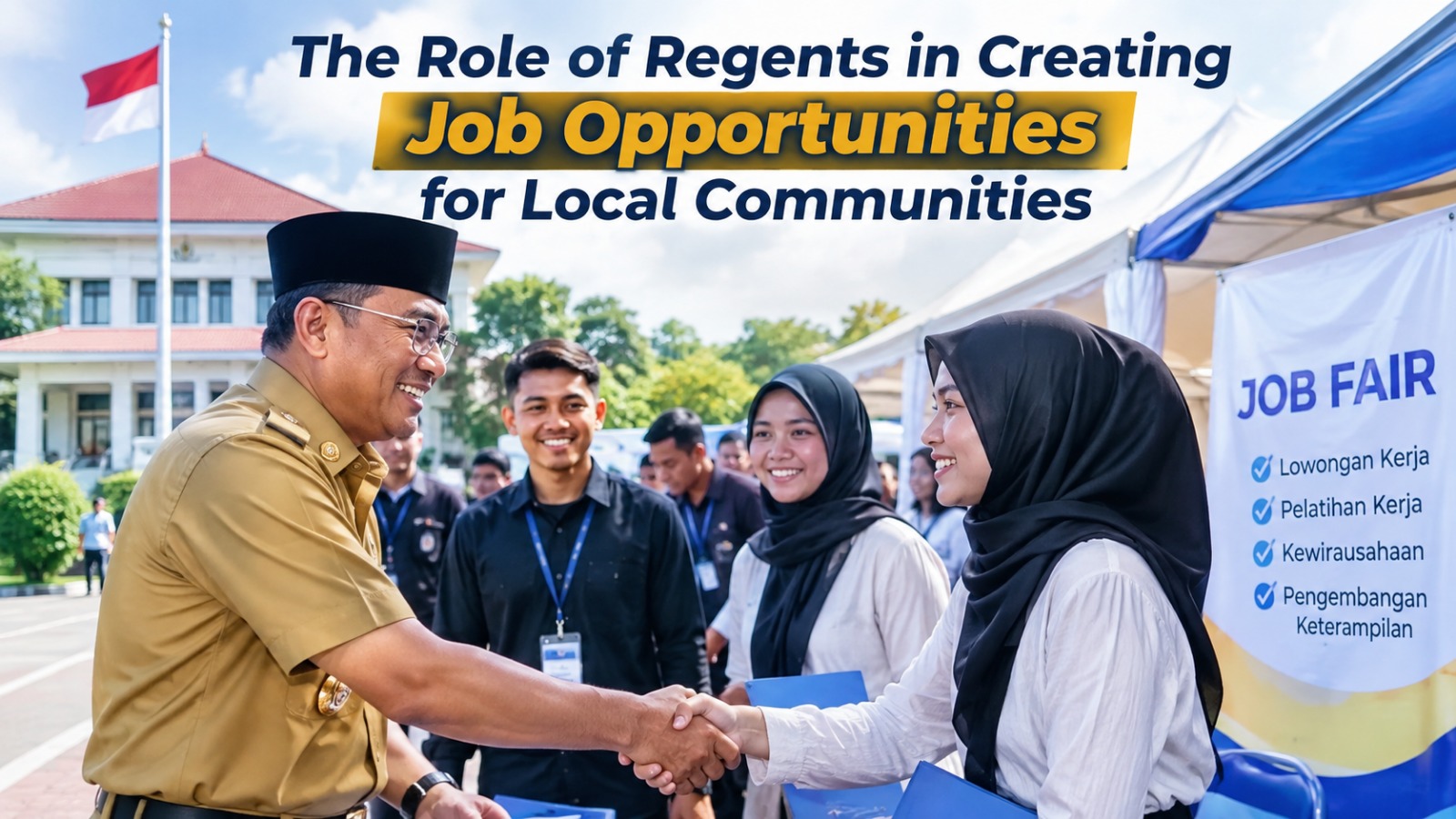
Employment is one of the most important factors affecting community welfare and regional economic growth. People need stable and productive work to earn income, support their families, and improve their quality of life. A regent has an important role in creating an environment that supports employment through regional policies, economic development, skills programs, investment facilitation, and public services within the government's authority. Although a regent does not directly create every job, regional leadership can influence the conditions that allow businesses and employment opportunities to grow. Effective job creation strategies can therefore strengthen both households and the wider regional economy.
UNDERSTANDING THE ROLE OF A REGENT IN JOB CREATION
A regent leads the administration of a regency and coordinates regional government programs that can influence economic activity. Employment opportunities are closely connected to sectors such as agriculture, fisheries, tourism, trade, manufacturing, services, and the creative economy. A regent can identify sectors with strong local potential and support policies that encourage sustainable growth. Regional economic development can create an environment where businesses have greater opportunities to expand and hire workers.
Job creation also requires cooperation between different stakeholders. Government agencies, businesses, educational institutions, training centers, community organizations, and workers all have different roles. A regent can encourage coordination so that skills programs and economic policies respond to actual labor market conditions. This approach can reduce the gap between available workers and employer requirements. Strong cooperation is an important foundation for local employment development.
SUPPORTING SMALL AND MEDIUM ENTERPRISES
Small and Medium Enterprises are important sources of employment in many communities. Local businesses can absorb workers while also generating income for business owners and their families. A regent can support SMEs through appropriate training, business information, market access, digitalization programs, infrastructure, and other forms of facilitation within regional authority. SME development can therefore become an important part of a broader job creation strategy.
Small businesses often face challenges related to management, marketing, technology, and access to markets. Government support should help entrepreneurs strengthen their ability to operate and compete independently. Local products can also be promoted through appropriate regional events and market connections. As businesses become stronger, they may have greater capacity to expand and recruit workers. A healthy SME sector can contribute significantly to local job opportunities.
DEVELOPING VOCATIONAL AND JOB-READY SKILLS
A lack of suitable skills can make it difficult for people to find employment even when job opportunities are available. A regent can support vocational training and skills development programs that reflect local labor market needs. Training can include technical abilities, digital skills, entrepreneurship, communication, workplace safety, and other relevant competencies. Workforce development can help residents become better prepared for available employment opportunities.
Training programs should be developed in cooperation with employers whenever possible. Businesses can provide information about the skills they need and help identify practical training requirements. Internships, apprenticeships, and workplace-based learning can also give participants valuable experience. Regular evaluation can determine whether training actually improves employment outcomes. This can make vocational training more effective and relevant.
ATTRACTING RESPONSIBLE INVESTMENT
Investment can create new businesses, expand existing industries, and generate employment. A regent can help create a business environment that is predictable, accessible, and supportive of responsible investment within regional authority. Clear information about regional potential, infrastructure, services, and investment opportunities can help potential investors understand the local environment. Investment and job creation can support each other when economic activities are planned responsibly.
Investment should also provide meaningful benefits to local communities. Regional government can encourage connections between investors and local workers, suppliers, entrepreneurs, and service providers where appropriate. Environmental and social considerations should also be taken into account. Investment that creates jobs while respecting applicable laws and local conditions can contribute to sustainable economic growth. This approach can strengthen the regional economy without sacrificing long-term community interests.
DEVELOPING LOCAL INDUSTRIES
Every region has economic sectors that can potentially create employment. Agriculture, fisheries, tourism, handicrafts, food processing, manufacturing, logistics, and creative industries may offer different opportunities depending on local conditions. A regent can support these sectors through infrastructure, training, market development, and coordination with relevant institutions. Local industry development can increase the number and variety of employment opportunities available to residents.
Adding value to local products can create more jobs than simply selling raw materials. For example, agricultural products can be processed, packaged, branded, and marketed to wider consumers. Tourism can also create employment in accommodation, transportation, food services, crafts, and local experiences. Government programs should encourage innovation while maintaining product quality and sustainability. Stronger local industries can increase employment opportunities and household incomes.
IMPROVING ACCESS TO EMPLOYMENT INFORMATION
People cannot apply for jobs they do not know about. A regent can support employment information systems that connect job seekers with businesses and training opportunities. Job fairs, career information platforms, employment service centers, and community outreach can make labor market information easier to access. Employment information services can be particularly useful for young people entering the workforce for the first time.
Information should be accurate, updated, and easy to understand. Job seekers also need information about required qualifications and available training opportunities. Employers can benefit from better access to potential workers with relevant skills. Regional governments can coordinate with businesses and employment institutions to improve these connections. Better information can reduce inefficiencies in the local labor market.
ENCOURAGING YOUTH ENTREPRENEURSHIP
Young people can contribute to job creation not only as employees but also as entrepreneurs. A regent can support entrepreneurship programs that provide young people with business knowledge, mentoring, digital skills, and information about markets. Youth entrepreneurship can encourage innovation and create new economic activities in local communities.
Entrepreneurship programs should focus on practical challenges rather than theory alone. Young entrepreneurs can learn about customer research, product development, budgeting, marketing, and risk management. Partnerships with experienced entrepreneurs and educational institutions can provide valuable mentoring. Digital platforms can also help young businesses reach customers outside their local area. Supporting young entrepreneurs can contribute to future job creation and regional innovation.
STRENGTHENING DIGITAL ECONOMIC OPPORTUNITIES
Digital technology has created new forms of work and business. Freelancing, online commerce, digital services, content production, remote work, and technology-based businesses can provide additional opportunities for local residents. A regent can support digital literacy, internet access, entrepreneurship training, and appropriate digital infrastructure. Digital employment opportunities can be particularly valuable for communities that face geographical barriers.
However, digital opportunities require adequate skills and reliable connectivity. Residents need to understand how to use digital tools safely and professionally. Training should cover practical skills that can lead to real economic opportunities. Local governments can cooperate with educational institutions, businesses, and technology organizations to strengthen digital capabilities. This can help communities participate more actively in the digital economy.
SUPPORTING INCLUSIVE EMPLOYMENT
Employment policies should consider people who face greater barriers to entering the workforce. Young people, women, people with disabilities, older workers, and residents in remote areas may require different forms of support. A regent can encourage inclusive employment practices through relevant programs and cooperation with employers. Inclusive employment can ensure that economic growth creates opportunities for a broader part of society.
Training and employment services should be accessible to different groups. Infrastructure and workplace accessibility may also need attention for people with disabilities. Employers can benefit from a wider talent pool when recruitment practices are inclusive. Government can support awareness and coordination while respecting the roles and responsibilities of employers. A more inclusive labor market can contribute to social equality and community welfare.
IMPROVING INFRASTRUCTURE FOR EMPLOYMENT
Infrastructure strongly affects business activity and employment. Reliable roads, transportation, electricity, telecommunications, internet connectivity, markets, and public facilities can make it easier for businesses to operate. A regent can prioritize infrastructure projects that support productive economic activity while considering regional development plans and available resources. Employment-supporting infrastructure can reduce barriers for both workers and businesses.
Rural areas may require special attention because poor connectivity can limit access to markets and jobs. Better transportation can help workers reach employment centers, while internet access can support digital businesses and remote opportunities. Infrastructure should also be properly maintained after construction. Long-term planning can ensure that public investment continues to provide economic benefits. Good infrastructure can strengthen regional competitiveness and employment growth.
CONCLUSION
Regents have an important role in creating conditions that support job opportunities for local communities. Key strategies include supporting SMEs, developing vocational skills, attracting responsible investment, strengthening local industries, improving employment information, encouraging youth entrepreneurship, expanding digital opportunities, and developing infrastructure. Job creation is most effective when regional government works closely with businesses, educational institutions, training providers, and communities. Employment programs should also be inclusive so that more residents can participate in regional economic growth. With strategic planning and responsible leadership, a regent can help build a stronger local economy, a more skilled workforce, and better employment opportunities for the community.
About the Author
Gusti Ayu Tita P
Author — STEKOM University
An active author focused on academic issues, educational technology, and human resource development in the campus environment.















