The Role of Regents in Developing Local Economies and SMEs
Gusti Ayu Tita P
12 Agustus 2026
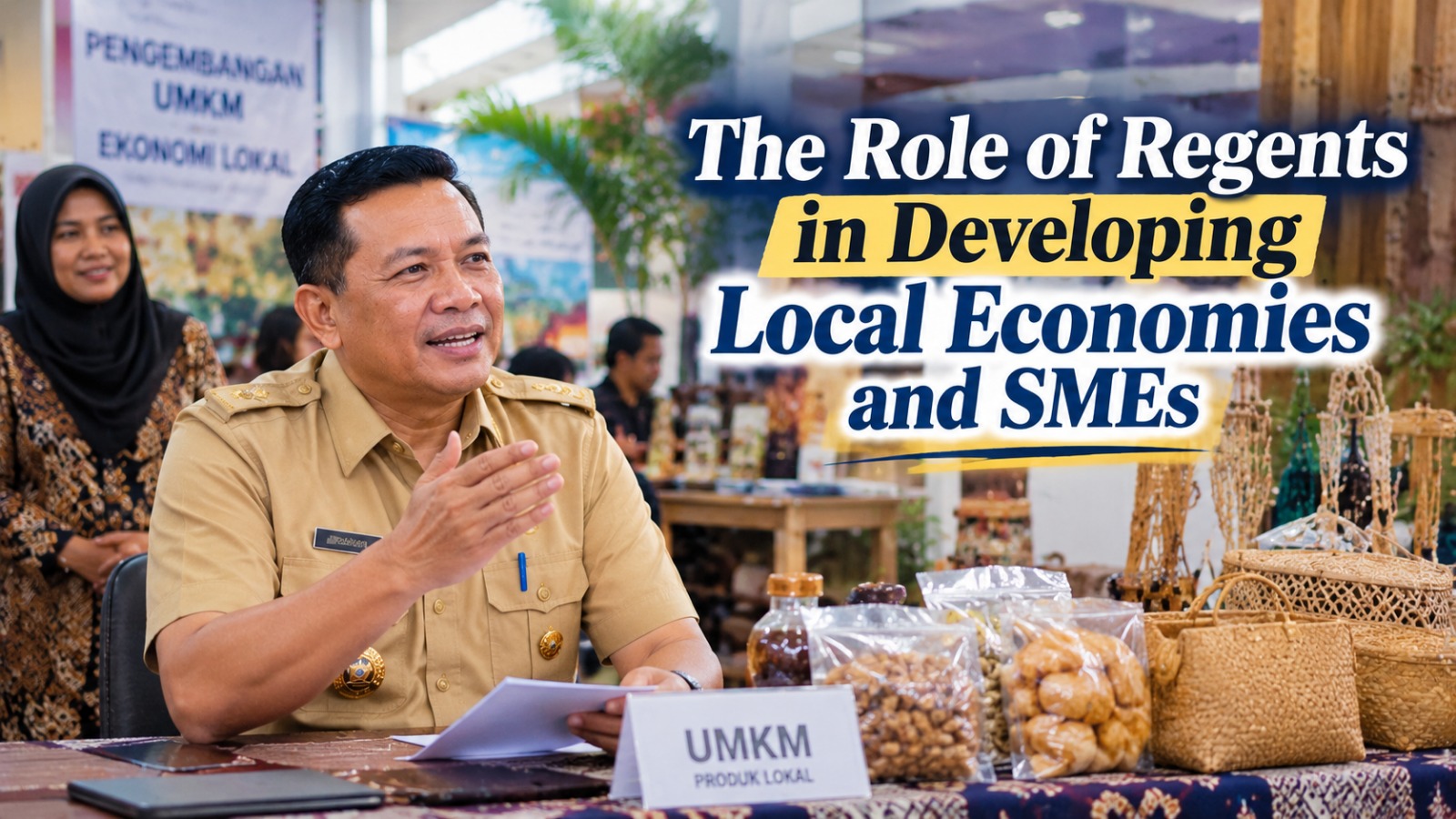
Local economic development is an important part of building a prosperous and competitive region. A regent has a strategic role in creating conditions that allow businesses, entrepreneurs, farmers, workers, and communities to grow. One of the most important areas is supporting Small and Medium Enterprises or SMEs, which can contribute to employment, household income, innovation, and local economic activity. Regional government cannot develop the economy alone, so cooperation with businesses, communities, financial institutions, and educational organizations is essential. With appropriate policies and programs, regents can help strengthen the economic foundation of their regions.
UNDERSTANDING THE ROLE OF A REGENT IN LOCAL ECONOMIC DEVELOPMENT
A regent leads regional government policies and programs that can influence the local business environment. Within the authority provided by law, the regional government can support infrastructure, public services, business facilitation, skills development, and economic programs. The regent must understand the economic characteristics of the region before determining development priorities. Regional economic development should be based on local potential, community needs, available resources, and long-term opportunities.
Different regions may have different economic strengths. Some may depend heavily on agriculture and fisheries, while others may have potential in tourism, manufacturing, trade, or creative industries. A regent should encourage policies that develop these strengths while reducing unnecessary barriers for productive businesses. Coordination between regional government agencies is important so that economic programs do not operate separately. Good coordination can create a more supportive environment for local businesses and entrepreneurs.
SUPPORTING SMALL AND MEDIUM ENTERPRISES
SMEs are an important part of many local economies because they can create employment and generate income for households. However, small businesses often face challenges related to management, marketing, technology, financing information, product quality, and market access. A regent can support programs that help entrepreneurs improve these areas within the government's authority. SME development should focus on practical needs rather than providing programs that are difficult for small businesses to use.
Business training can cover financial management, digital marketing, product development, customer service, licensing information, and business planning. Local governments can also help connect SMEs with exhibitions, marketplaces, cooperatives, larger businesses, and other market opportunities. These activities can help entrepreneurs expand beyond their immediate communities. Stronger SMEs can contribute to local economic growth and create additional employment opportunities.
IMPROVING ACCESS TO MARKETS
Having a good product is not enough if local businesses cannot reach customers. Many SMEs struggle because their markets are limited to their immediate neighborhoods. A regent can support market access by facilitating business promotion, local product exhibitions, trade events, tourism programs, and appropriate digital commerce initiatives. Market access for SMEs can increase opportunities for businesses to attract new customers and build stronger revenue streams.
Regional governments can also promote local products through appropriate public events and information platforms. Partnerships with retailers, tourism operators, distributors, and larger companies may provide additional market opportunities. However, businesses should continue improving product quality and competitiveness to maintain customer trust. Market development works best when government facilitation is combined with strong entrepreneurial effort. This can create a healthier local business ecosystem.
DEVELOPING DIGITAL SKILLS FOR BUSINESSES
Digital technology has changed how businesses promote products, communicate with customers, manage operations, and process transactions. SMEs that understand digital tools can potentially reach customers beyond their local areas. A regent can encourage digital training programs that teach entrepreneurs how to use social media, online marketplaces, digital payments, accounting applications, and other appropriate tools. Digital business skills can help local entrepreneurs adapt to changing consumer behavior.
Digital transformation should also consider businesses that have limited access to technology. Training should use simple language and practical examples so entrepreneurs can apply what they learn immediately. Improving internet access in underserved areas can further support digital participation. Local government can work with educational institutions, technology providers, and business communities to expand digital literacy. These efforts can make SMEs more competitive in a changing economy.
IMPROVING BUSINESS INFRASTRUCTURE
Business development depends heavily on reliable infrastructure. Roads, transportation, electricity, clean water, telecommunications, internet connectivity, markets, and other facilities can affect business costs and productivity. A regent can prioritize infrastructure development according to regional needs and applicable government authority. Business infrastructure should help connect producers with suppliers, workers, customers, and markets.
Rural businesses may face greater infrastructure challenges than businesses located in urban centers. Poor roads or limited internet access can increase transportation costs and restrict market opportunities. Improving connectivity can therefore support both rural development and economic inclusion. Infrastructure projects should also be properly maintained after construction. Reliable infrastructure can strengthen regional competitiveness and make local business activities more efficient.
DEVELOPING ENTREPRENEURIAL SKILLS
Entrepreneurship requires more than capital. Business owners need knowledge about customers, products, financial management, marketing, operations, and risk management. A regent can support entrepreneurship programs through training, mentoring, business competitions, and partnerships with educational institutions and business organizations. Entrepreneurship development can encourage residents to create productive economic activities rather than depending only on limited formal employment opportunities.
Young people can also benefit from entrepreneurship education. Schools, universities, and training institutions can introduce practical knowledge about business planning and innovation. Programs should encourage participants to identify real market problems and develop useful solutions. Experienced entrepreneurs can contribute as mentors and share practical knowledge. A stronger entrepreneurial culture can support local innovation and job creation.
IMPROVING ACCESS TO BUSINESS INFORMATION
Small businesses often need information about licensing, training, markets, regulations, government programs, and other business opportunities. However, information may be difficult to find or understand. Regional governments can improve communication by providing clear and accessible information through service centers, official websites, digital platforms, and community outreach. Business information services can help entrepreneurs make better decisions.
Information should be updated regularly and presented in language that is easy to understand. Entrepreneurs should also know which government institution is responsible for a particular service. Clear information can reduce confusion and unnecessary administrative difficulties. Local governments can collect feedback from business communities to identify information gaps. Better access to information can make the business environment more transparent and efficient.
ENCOURAGING RESPONSIBLE INVESTMENT
Investment can contribute to regional economic growth by creating businesses, infrastructure, technology transfer, and employment opportunities. A regent can support a business environment that is attractive to appropriate investors while ensuring that investment activities comply with applicable laws and regulations. Responsible investment should consider economic benefits as well as environmental and social impacts.
Local governments can promote regional potential by providing reliable information about investment opportunities and supporting coordination with relevant institutions. Investors also need predictable services and clear administrative procedures. At the same time, local communities should have opportunities to benefit from economic activities generated by investment. A balanced investment strategy can support sustainable regional economic growth.
STRENGTHENING LOCAL PRODUCTS AND INDUSTRIES
Every region has unique products and economic resources that can become competitive advantages. Agriculture, handicrafts, processed foods, fisheries, tourism products, and creative works can be developed into stronger local industries. A regent can support product improvement, branding, packaging, quality standards, and market promotion through appropriate programs. Local product development can increase the value of regional resources.
Local industries also need connections with supply chains and wider markets. Cooperation between producers, distributors, retailers, tourism businesses, and digital platforms can strengthen these connections. Product quality must remain consistent so customers develop confidence in local brands. Innovation can help traditional products adapt to modern consumer preferences without losing their distinctive identity. Strong local products can improve regional economic identity and competitiveness.
CREATING AN INCLUSIVE ECONOMIC ENVIRONMENT
Economic development should provide opportunities for different groups in society. Women, young entrepreneurs, rural communities, people with disabilities, and other groups may face different barriers to starting or expanding businesses. A regent can encourage inclusive programs that improve access to skills, information, markets, and appropriate support. Inclusive economic development can ensure that growth benefits a wider part of the community.
Programs should be designed according to actual barriers rather than assumptions. Consultation with business communities can help identify practical challenges. Support should also encourage independence and competitiveness instead of creating long-term dependence on government assistance. Inclusive growth can strengthen household incomes and reduce economic inequality. It can also create a more diverse and resilient local economy.
BUILDING COLLABORATION WITH DIFFERENT STAKEHOLDERS
No regional government can develop the local economy by itself. Collaboration with private companies, banks, cooperatives, universities, training institutions, business associations, and community organizations can provide additional expertise and resources. A regent can encourage partnerships that have clear objectives and measurable benefits. Public-private collaboration can help connect government programs with real business needs.
Communication among stakeholders should be maintained throughout program implementation. Businesses can provide information about market trends, while educational institutions can contribute knowledge and skills. Financial institutions can provide information about appropriate financial services, while government can focus on public infrastructure and facilitation. When different stakeholders work toward shared goals, local economic programs can become more effective. Strong collaboration can support sustainable SME growth.
CONCLUSION
Regents have an important role in creating an environment where local economies and SMEs can grow. Key strategies include improving market access, digital skills, infrastructure, entrepreneurship, business information, local products, investment opportunities, and stakeholder collaboration. SMEs should receive support that strengthens their ability to compete and become more independent. At the same time, regional economic development should remain inclusive, responsible, and sustainable. With effective policies and strong cooperation, regents can help create more dynamic local economies, stronger SMEs, greater employment opportunities, and improved community welfare.
About the Author
Gusti Ayu Tita P
Author — STEKOM University
An active author focused on academic issues, educational technology, and human resource development in the campus environment.